
Quick Answer
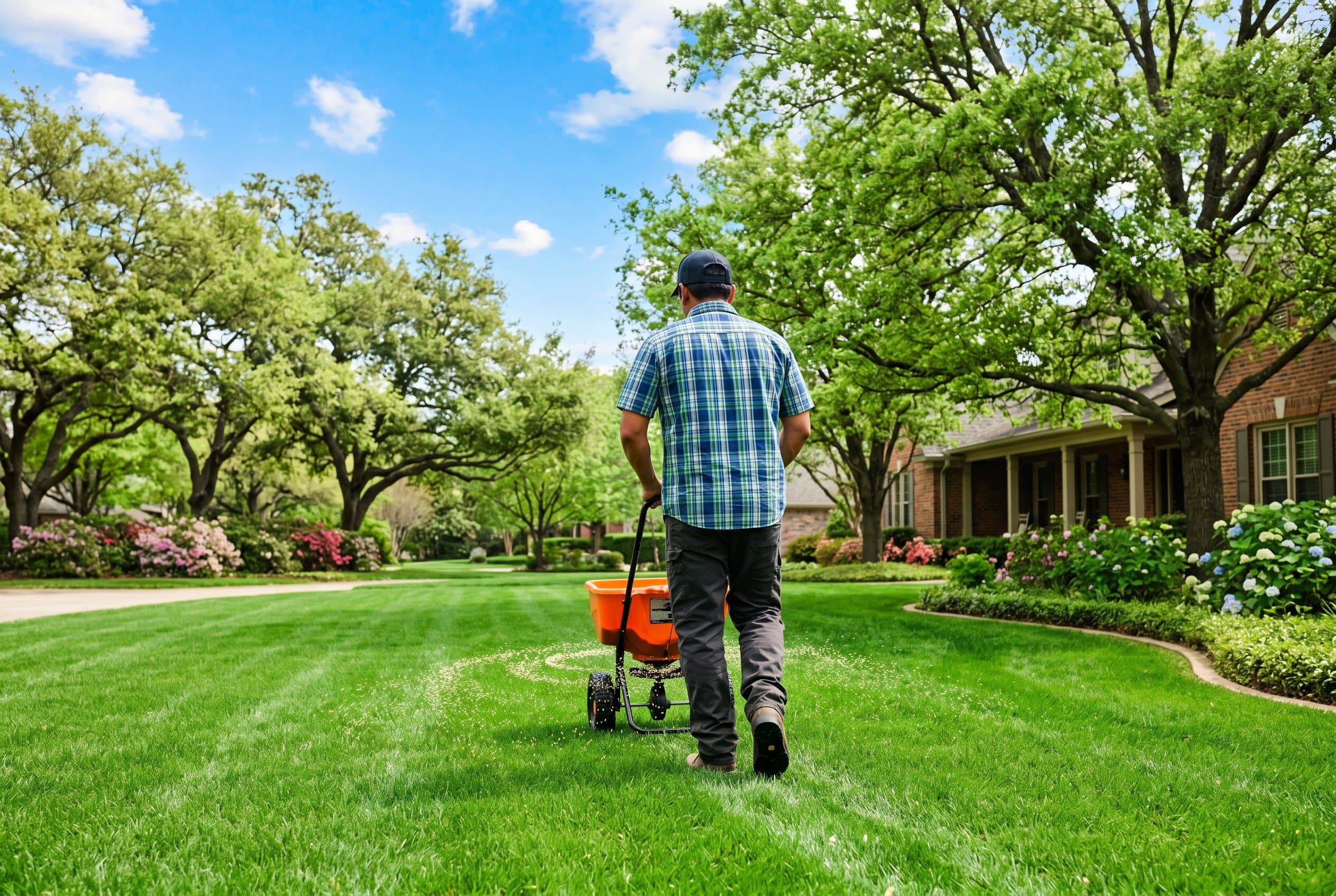
In Texas, fertilize warm-season grasses like Bermudagrass and St. Augustine from April through September, with the most critical applications in late spring (April-May) and early fall (August-September). Cool-season grasses like winter ryegrass should be fertilized in October and February during their active growing periods.
Key Takeaways
- Fertilize warm-season Texas grasses during their active growing season from April through September
- Apply nitrogen at 1-2 pounds per 1,000 square feet annually, split into 3-4 applications
- Time fertilization with soil temperature reaching 65°F consistently in spring
- Avoid fertilizing during summer stress periods (July-August) in extreme heat
- Winter ryegrass overseeding requires separate fertilization in October and February
Introduction
Texas homeowners face unique lawn care challenges across USDA zones 6b through 9a, from the humid conditions of East Texas to the arid climate of West Texas. With dominant warm-season grasses like Bermudagrass, St. Augustinegrass, Zoysiagrass, and native Buffalograss, timing your fertilizer applications correctly is crucial for maintaining a healthy lawn while avoiding common issues like chinch bugs, brown patch disease, and aggressive weeds such as crabgrass and nutsedge.
When Should I Fertilize My Lawn in Texas?
Texas lawn fertilization follows the warm-season grass growing cycle, which begins when soil temperatures consistently reach 65°F, typically in mid to late March[1]. The Texas A&M AgriLife Extension recommends a fertilization window from April through September, coinciding with active grass growth periods[2].
Spring Application (April-May): Apply your first fertilizer application in April when Bermudagrass and St. Augustine begin active growth. This timing supports recovery from winter dormancy and promotes healthy spring green-up.
Summer Management (June-August): During Texas's intense summer heat averaging 95°F, apply lighter fertilizer applications in early June. Avoid fertilizing during peak stress periods in July and August unless your lawn shows clear nutrient deficiency signs[3].
Fall Application (August-September): The most important fertilization occurs in late August to early September. This application helps grasses recover from summer stress and build root reserves before winter dormancy[1].
How Much Fertilizer Should I Apply to My Texas Lawn?
Texas warm-season grasses require 1-2 pounds of nitrogen per 1,000 square feet annually, split across multiple applications[2]. The exact amount depends on your specific grass type and growing conditions.
Bermudagrass: Requires the highest nitrogen input at 1.5-2 pounds per 1,000 square feet annually. Split this into 4 applications: 0.5 lbs in April, 0.5 lbs in June, 0.5 lbs in August, and 0.25 lbs in September.
St. Augustinegrass: Needs moderate fertilization at 1-1.5 pounds per 1,000 square feet. Apply 0.5 lbs in April, 0.5 lbs in June, and 0.5 lbs in August.
Zoysiagrass: Requires less fertilizer at 0.5-1 pound per 1,000 square feet annually. Apply 0.5 lbs in May and 0.5 lbs in August[4].
Buffalograss: As a native Texas grass, Buffalograss thrives with minimal fertilization. Apply only 0.5 pounds per 1,000 square feet in May if needed.
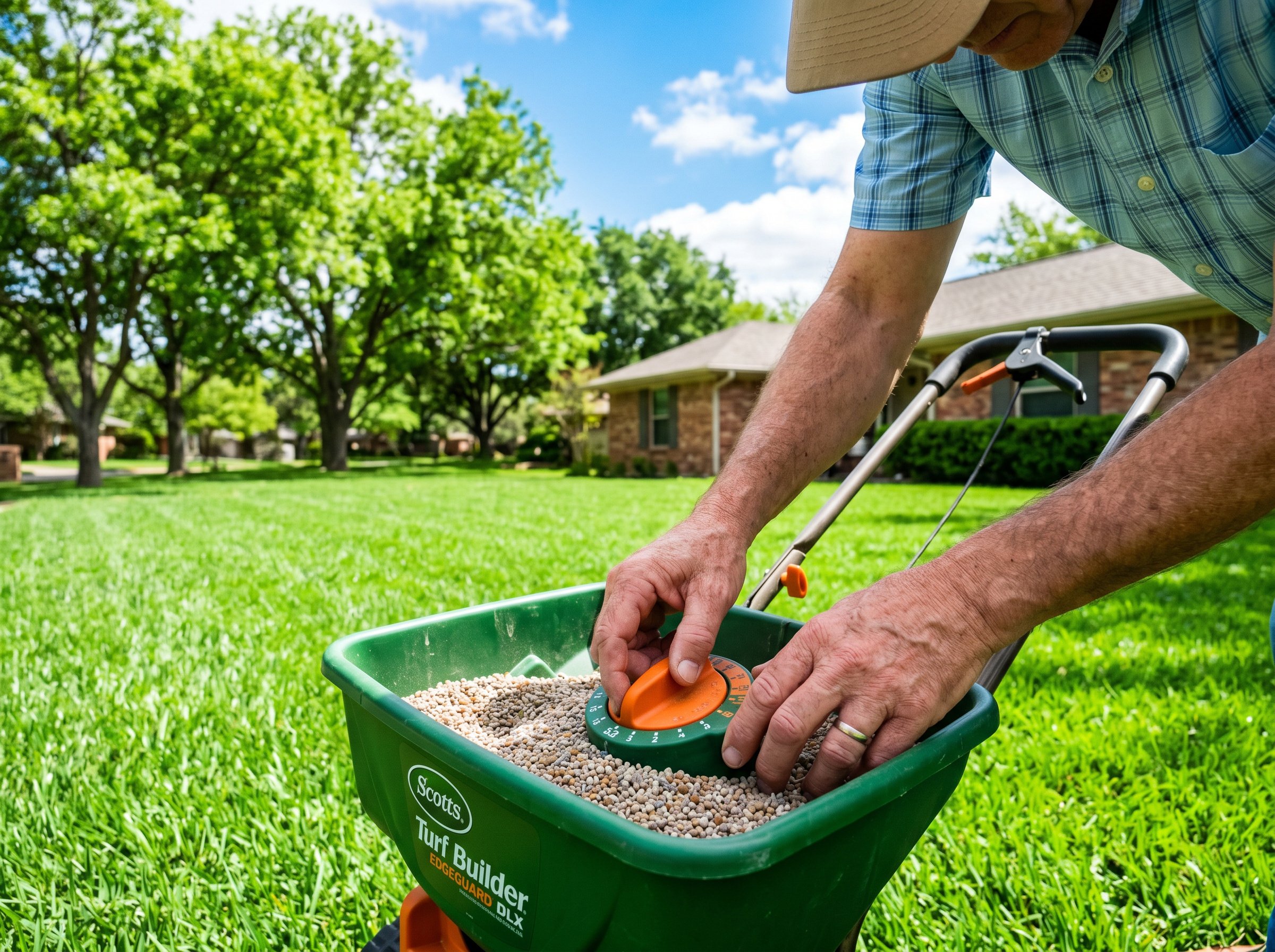
Use a complete fertilizer with a 3-1-2 or 4-1-2 ratio (nitrogen-phosphorus-potassium) for balanced nutrition. Slow-release formulations work best in Texas's climate, providing consistent nutrition over 6-8 weeks[5].
What About Winter Overseeding and Cool-Season Fertilization?
Many Texas homeowners overseed warm-season lawns with annual ryegrass in October for winter color. This practice requires a modified fertilization approach[1].
October Application: When overseeding with ryegrass, apply a starter fertilizer high in phosphorus to promote germination and establishment. Use a 18-24-12 ratio fertilizer at 1 pound per 1,000 square feet.
February Application: Apply 0.5 pounds of nitrogen per 1,000 square feet in February to maintain ryegrass color and health through late spring.
Transition Period: Stop fertilizing ryegrass by March to encourage its decline as warm-season grasses emerge from dormancy.
In North Texas, where some homeowners maintain tall fescue, fertilize in October and March with 0.75 pounds of nitrogen per 1,000 square feet per application[6].
Should I Adjust My Schedule Based on Texas Regional Differences?
Texas's diverse climate zones require slight adjustments to the standard fertilization schedule. East Texas's higher humidity and 40+ inches of annual rainfall may require reduced fertilizer rates to prevent disease issues like brown patch[2].
East Texas (Zones 8a-9a): Start fertilizing in early April but reduce rates by 25% in high-rainfall years. Monitor for gray leaf spot and brown patch, which thrive in humid conditions with excess nitrogen.
Central Texas (Zones 7b-8b): Follow the standard schedule with full fertilizer rates. The balanced climate supports optimal nutrient uptake.
West Texas (Zones 6b-7a): Delay first application until late April when consistent warmth arrives. Consider higher potassium ratios to improve drought tolerance in arid conditions.
South Texas (Zone 9a): Begin fertilizing in mid-March as grasses green up earlier. Extend the growing season through early October with light applications.
Conclusion
Success with Texas lawn fertilization requires matching your schedule to your specific grass type, regional climate, and local growing conditions. Start with soil testing to determine baseline nutrient needs, then follow the April-through-September fertilization window for warm-season grasses. Remember to adjust rates based on your location within Texas's diverse climate zones, and always water thoroughly after fertilizer applications to prevent burning and promote nutrient uptake. For best results, coordinate fertilization with proper mowing, watering, and integrated pest management practices recommended by Texas A&M AgriLife Extension.