
Quick Answer
Texas lawn care revolves around warm-season grasses like Bermudagrass, St. Augustinegrass, and Zoysiagrass that thrive in zones 6b-9a. Success depends on proper timing—fertilizing from April through September, applying pre-emergents in late February, and managing common issues like chinch bugs and brown patch disease[1]. The key is matching your care routine to Texas's hot summers, mild winters, and variable rainfall patterns.

Key Takeaways
- Choose warm-season grasses suited to your specific Texas region and soil type
- Time fertilization between April and September when grasses actively grow
- Apply pre-emergent herbicides in late February to early March before soil temperatures reach 65°F
- Monitor for region-specific pests like chinch bugs, white grubs, and fire ants
- Adjust watering based on your area's climate—more in arid west Texas, less in humid east
Introduction
Texas presents unique lawn care challenges across its diverse climate zones. From the humid pine forests of East Texas to the arid deserts of West Texas, homeowners must navigate extreme heat, variable rainfall, and aggressive pests while maintaining beautiful grass year-round. This guide provides Texas-specific strategies for growing healthy lawns that can withstand summer temperatures averaging 95°F and occasional winter lows around 35°F[2].
What Grass Types Grow Best in Texas?
Texas's warm-season grass region supports several excellent turf options, each with distinct advantages. Bermudagrass dominates across most of Texas due to its exceptional heat and drought tolerance, making it ideal for areas receiving the state's average 28 inches of annual rainfall[1]. This grass thrives in full sun and recovers quickly from wear.
St. Augustinegrass excels in East Texas's higher humidity and partial shade conditions. Its thick, carpet-like growth pattern effectively crowds out weeds, though it requires more water than Bermuda[3]. Zoysiagrass offers a premium option with superior drought tolerance and slower growth, reducing mowing frequency.
For specific regions, Buffalograss serves as an excellent native option in North and West Texas, requiring minimal water once established[4]. In North Texas only, Tall Fescue can survive as a cool-season option, though it struggles during hot summers. Many homeowners overseed with ryegrass in October for winter color when warm-season grasses enter dormancy.
When Should I Fertilize and Maintain My Texas Lawn?
Texas lawn maintenance timing aligns with warm-season grass growth patterns. Begin your season with pre-emergent herbicide application in late February to early March, targeting soil temperatures of 55-65°F to prevent crabgrass, dallisgrass, and other summer weeds[1].
Fertilization should occur from April through September when grasses actively grow. Apply a balanced fertilizer in early April as grass emerges from winter dormancy, followed by summer applications every 6-8 weeks. Avoid fertilizing during peak summer stress (July-August) unless using slow-release formulations[5].
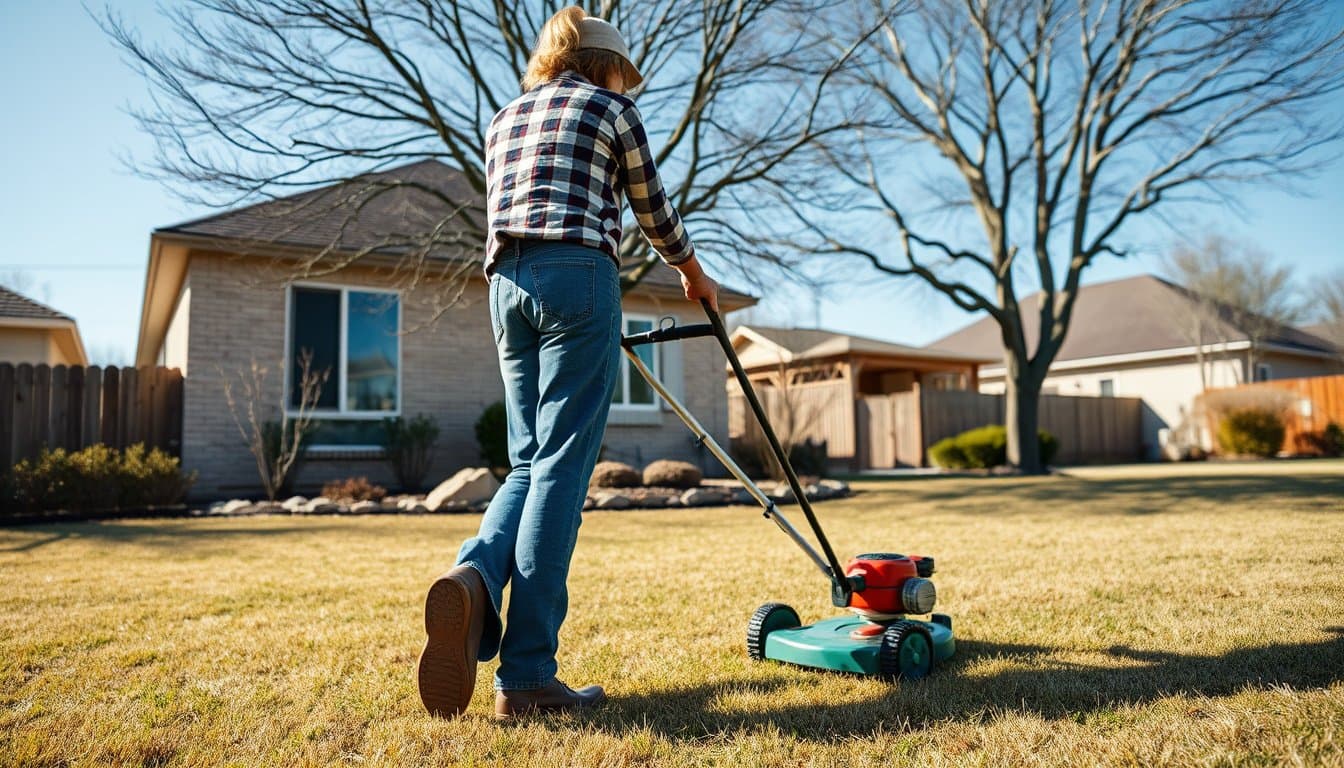
Mowing season typically runs from March through November. Begin cutting when grass shows active growth, maintaining Bermudagrass at 0.5-1.5 inches, St. Augustine at 2.5-3 inches, and Zoysia at 0.5-2 inches. Never remove more than one-third of blade length in a single cutting.
Aeration works best during peak growth in May and June when grasses can quickly recover. Core aeration relieves soil compaction common in Texas clay soils and improves water infiltration during summer heat.
How Do I Deal with Common Texas Lawn Problems?
Texas lawns face specific pest and disease pressures requiring targeted management. Chinch bugs frequently attack St. Augustinegrass during hot, dry periods, creating yellow patches that expand rapidly. Monitor closely during summer months and treat with appropriate insecticides when populations exceed treatment thresholds[6].
White grubs damage root systems, causing brown patches that peel back like carpet. Apply preventive treatments in late spring or curative treatments when grubs are detected. Fire ants create unsightly mounds while armyworms can devastate lawns overnight during fall months.
Brown patch disease thrives in Texas's humid conditions, particularly affecting St. Augustine and tall fescue during cool, wet periods[1]. Improve air circulation, reduce nitrogen fertilization, and apply fungicides preventively. Take-all root rot specifically targets St. Augustine in alkaline soils, requiring pH management and resistant cultivar selection.
Weed management focuses on crabgrass prevention through pre-emergent applications and maintaining thick, healthy turf. Nutsedge indicates drainage issues, while spurge and henbit suggest thin turf areas needing overseeding or improved fertility.
What's the Best Watering Strategy for Texas Lawns?
Water management varies significantly across Texas's diverse climate zones. East Texas homeowners benefit from higher natural rainfall and humidity but must manage fungal diseases promoted by moisture. West Texas requires more aggressive irrigation strategies to combat arid conditions and lower humidity[2].
Apply 1-1.5 inches of water weekly through deep, infrequent irrigation sessions. Water early morning (5-10 AM) to reduce evaporation and disease pressure. During peak summer heat, established Bermudagrass and Buffalograss can survive extended drought periods by entering temporary dormancy.
Monitor soil moisture using a screwdriver or soil probe—it should penetrate 6-8 inches easily in properly watered soil. Adjust irrigation based on rainfall, soil type, and grass species. Clay soils common throughout Texas require slower application rates to prevent runoff.
Conclusion
Successful Texas lawn care requires understanding your specific climate zone, grass type, and regional challenges. Start with appropriate grass selection, follow Texas-specific timing for fertilization and treatments, and stay vigilant for common pests and diseases. Remember that warm-season grasses enter dormancy from December through February—this brown period is natural and healthy. Focus your intensive care efforts during the active growing season from March through November, and your Texas lawn will reward you with beautiful, resilient turf that can handle whatever the Lone Star State's weather brings.