Quick Answer
Texas lawns can survive drought by implementing deep, infrequent watering (1-1.5 inches weekly), raising mower heights to 3-4 inches, and choosing drought-tolerant grasses like Bermudagrass and Buffalograss. Focus watering efforts on maintaining St. Augustinegrass and Zoysiagrass, while allowing Bermudagrass to naturally go dormant during severe drought periods.
Key Takeaways
- Water early morning (5-8 AM) to minimize evaporation in Texas heat
- Raise mowing height to 3-4 inches to shade roots and retain soil moisture
- Bermudagrass and Buffalograss are most drought-tolerant for Texas conditions
- Stop fertilizing during drought to avoid stressing grass further
- Consider drought-dormant grasses normal - they'll recover with rainfall
Texas homeowners face unique drought challenges across USDA zones 6b-9a, where summer temperatures averaging 95°F combine with highly variable rainfall patterns. With annual precipitation averaging just 28 inches statewide, understanding drought-specific care for warm-season grasses like Bermudagrass, St. Augustinegrass, Zoysiagrass, and Buffalograss becomes essential for maintaining healthy lawns during dry periods[1].
How Should I Water My Texas Lawn During Drought?
Proper watering technique becomes critical during Texas droughts. Apply 1 to 1.5 inches of water weekly through deep, infrequent watering sessions rather than daily light applications[2]. This approach encourages deeper root growth, helping grass access moisture stored lower in the soil profile.
Water between 5-8 AM to minimize evaporation losses, which can exceed 50% during peak afternoon hours in Texas heat[1]. Use the "tuna can test" by placing empty cans around your sprinkler coverage area - when cans collect 1 inch of water, you've applied sufficient moisture for the week.
For St. Augustinegrass, maintain consistent moisture levels as this variety struggles more with drought stress than other Texas grasses. Bermudagrass and Zoysiagrass can tolerate longer periods between watering, while Buffalograss requires the least supplemental irrigation once established[3].
Avoid watering stressed or dormant areas of Bermudagrass, as this warm-season grass naturally enters protective dormancy during severe drought and will recover when conditions improve.
What Mowing Practices Help Texas Grass Survive Drought?
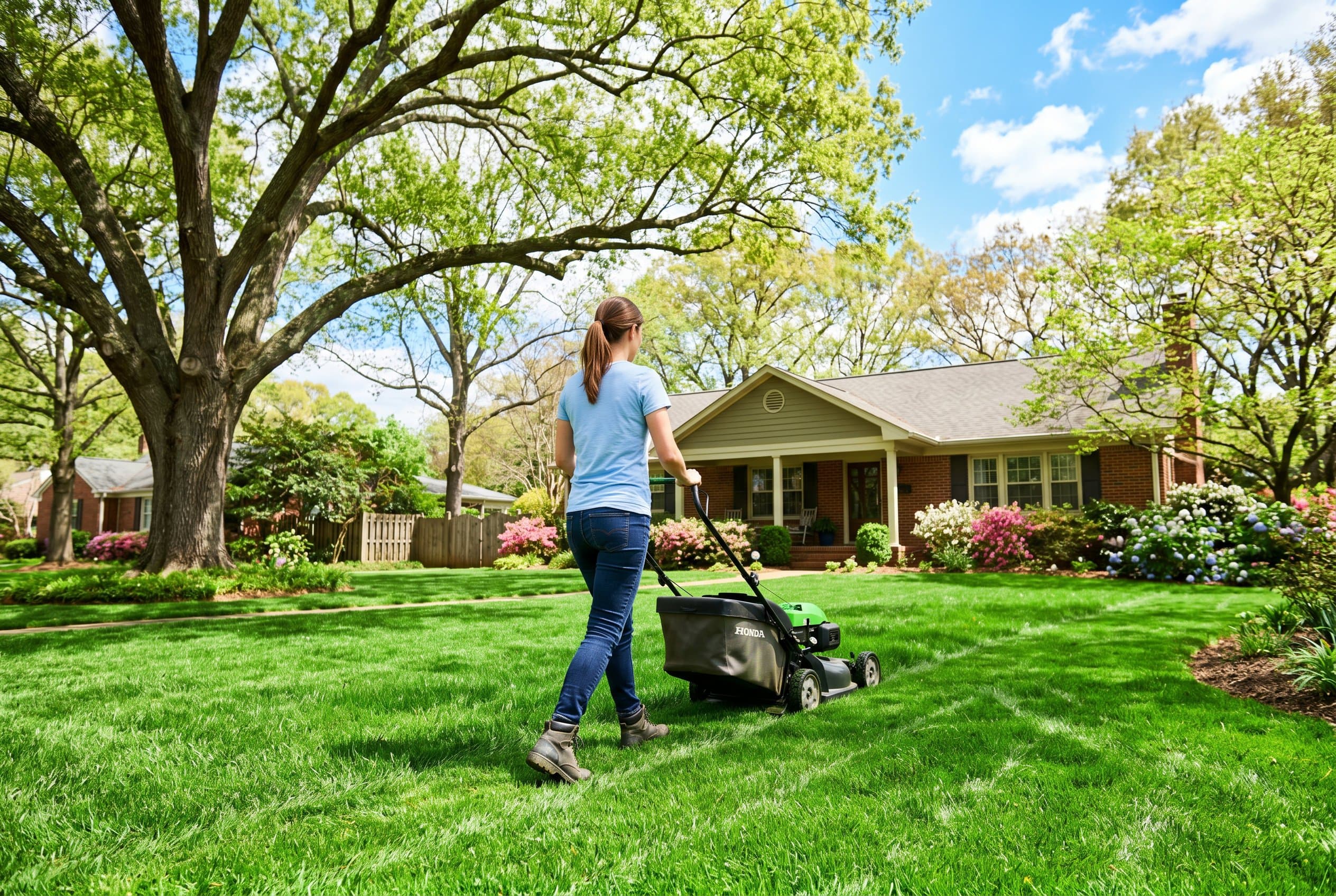
Raise your mower height to 3-4 inches during drought periods - significantly higher than the typical 2-2.5 inches recommended for normal conditions[1]. Taller grass blades create shade for the root zone, reducing soil temperature and moisture evaporation.
Reduce mowing frequency as grass growth slows during drought stress. St. Augustinegrass and Zoysiagrass may continue growing slowly with adequate water, requiring weekly cuts. However, Bermudagrass often stops growing entirely during severe drought, eliminating the need for mowing until conditions improve[4].
Keep mower blades sharp to prevent tearing grass blades, which creates larger wound surfaces that lose additional moisture. Never remove more than one-third of the grass blade length in a single mowing, especially during stress periods.
Leave grass clippings on the lawn to provide natural mulch that retains soil moisture and gradually decomposes to feed beneficial soil microorganisms.
Which Texas Grass Types Handle Drought Best?
Bermudagrass demonstrates exceptional drought tolerance once established, capable of surviving extended dry periods by entering protective dormancy[1]. This warm-season grass develops deep root systems reaching 6+ feet in Texas soils, accessing moisture unavailable to shallow-rooted varieties.
Buffalograss represents the ultimate drought-tolerant choice for Texas lawns, requiring 75% less water than St. Augustinegrass once established[5]. Native to the Great Plains, Buffalograss thrives in western Texas conditions but grows more slowly than other options.
Zoysiagrass offers moderate drought tolerance with superior heat resistance, making it suitable for transition zones in northern Texas. While requiring more water than Bermudagrass, Zoysiagrass maintains better appearance during mild drought stress.
St. Augustinegrass struggles most with drought conditions, requiring consistent moisture to prevent permanent damage. Consider replacing St. Augustine areas with more drought-tolerant alternatives if water restrictions become frequent in your area[3].
Tall Fescue, used in northern Texas zones 6b-7a, offers good drought tolerance but may struggle with the combination of heat and drought typical in central and southern regions.
How Do I Help My Texas Lawn Recover After Drought?
Begin recovery efforts when drought conditions end and soil moisture returns to normal levels. Avoid rushing the process - drought-stressed grass needs time to rebuild energy reserves before resuming normal growth patterns[6].
Resume regular watering schedules gradually, starting with deep weekly applications and monitoring grass response. Bermudagrass typically greens up within 2-3 weeks of adequate moisture return, while St. Augustinegrass and Zoysiagrass may require 4-6 weeks for full recovery.
Wait 30 days after drought stress ends before applying fertilizer. Stressed grass cannot effectively utilize nutrients, and premature fertilization may cause additional stress. When ready, apply a balanced fertilizer with equal parts nitrogen, phosphorus, and potassium to support root and shoot recovery[1].
Overseed thin areas with appropriate grass types for your Texas zone once temperatures moderate in fall (October-November). This timing allows new grass to establish before winter dormancy and provides full growing seasons for development.
Address any pest issues that may have developed during stress periods, as weakened grass becomes more susceptible to chinch bugs, white grubs, and disease pressure from brown patch or take-all root rot.
Conclusion
Successful Texas drought lawn care focuses on water conservation through deep, infrequent watering, proper mowing height adjustment, and grass variety selection suited to your specific climate zone. Remember that some browning and dormancy in Bermudagrass is natural and protective - don't fight the grass's survival instincts. Focus water resources on maintaining St. Augustinegrass and newly established areas while allowing drought-tolerant varieties to utilize their natural resilience. With proper techniques, your Texas lawn will emerge from drought periods healthier and more resilient for future challenges.