
Quick Answer
Knowing when to aerate your lawn in Tennessee depends primarily on your grass type. Cool-season lawns like Tall Fescue should be aerated in September through October, while warm-season grasses like Bermudagrass and Zoysiagrass should be aerated in June through July. Always aerate during or just before your grass's peak growing season so it can recover quickly and fill in the cores[1].
Key Takeaways:
- Tall Fescue lawns in Tennessee should be aerated in fall (September–October), ideally paired with overseeding
- Bermudagrass and Zoysiagrass perform best when aerated in early summer (June–July)
- Tennessee's high humidity and clay-heavy soils make annual aeration especially important
- Core aeration is recommended over spike aeration for compacted Tennessee soils
- Avoid aerating warm-season grasses in fall — it can invite winter injury and disease
Why Tennessee Lawns Need Aeration More Than You Might Think
Tennessee sits squarely in the transition zone — a challenging middle ground where both cool-season and warm-season grasses struggle at different points in the year[1]. Add in the state's average 52 inches of annual rainfall, high summer humidity, and the heavy clay soils common across Middle and West Tennessee, and you have a recipe for serious soil compaction[2].
Compacted soil restricts oxygen, water, and nutrients from reaching grass roots, making your lawn more vulnerable to Brown patch fungus, summer drought stress, and weed pressure from crabgrass and nutsedge. Aeration — the process of pulling small plugs of soil from your lawn — breaks up that compaction, improves drainage, and gives grass roots room to breathe[6]. For most Tennessee homeowners, it's one of the highest-return lawn care tasks of the year.
When to Aerate Your Lawn in Tennessee Based on Grass Type
The single most important aeration rule in Tennessee: match your timing to your grass type, not the calendar month[1].
Tall Fescue and Cool-Season Lawns: September–October
Tall Fescue is the dominant cool-season grass across Middle and East Tennessee, and it thrives in fall when soil temps drop below 70°F[3]. Aerating in September or early October accomplishes two things at once: it relieves compaction built up from summer heat and foot traffic, and it creates ideal seedbed conditions for overseeding — a practice UT Extension strongly recommends for Tall Fescue lawns every one to two years[1].
Best fall aeration window: Mid-September through mid-October
- Soil is still warm enough for seed germination after overseeding
- Grass has 6–8 weeks to recover before winter dormancy
- Pre-emergent herbicides from March have broken down, so new seed can establish
Kentucky Bluegrass, found in small pockets of East Tennessee's cooler mountain zones (USDA Zone 6a), follows the same fall aeration schedule[4].
Missed the fall window? If you miss the September–October window for Tall Fescue, wait until the following September rather than aerating in spring. Spring aeration can disrupt pre-emergent herbicide timing and leaves cool-season grass less time to recover before summer heat stress sets in[1].
Bermudagrass and Zoysiagrass: June–July
Warm-season grasses hit their peak growth rate in Tennessee's hot summers, which is exactly when they need to be aerated. Aerating Bermudagrass or Zoysiagrass in June or July gives the grass maximum recovery time before it begins slowing down in late August[1].
Best summer aeration window: Early June through mid-July
- Soil temperatures are consistently above 65°F, supporting rapid root recovery
- Avoid aerating after August — late-season aeration can expose warm-season grass to early frost damage
- In West Tennessee where Centipedegrass is more common, the same June–July window applies
Important: Never aerate Bermudagrass or Zoysiagrass in fall. Opening up the soil right before dormancy increases the risk of winter injury and Spring dead spot, a destructive fungal disease common in Tennessee warm-season lawns[2].
Missed the summer window? If you miss the June–July window for Bermuda or Zoysia, skip aeration for that season entirely. Aerating in August or later risks exposing root zones to early cold snaps. Plan to aerate the following June when the grass is fully active again[2].
How Do I Know If My Tennessee Lawn Actually Needs Aeration?
Not every lawn needs aeration every single year, but most Tennessee lawns benefit from it annually given the clay soils and heavy rainfall. Here's how to check[6]:
- The screwdriver test: Push a screwdriver 6 inches into moist soil. If it takes significant effort, your soil is compacted.
- Thatch check: Pull a small plug of turf. If the thatch layer (the spongy brown material between grass and soil) is thicker than ½ inch, aeration will help break it down.
- Water pooling: If rain or irrigation water puddles on your lawn instead of soaking in, compaction is likely limiting drainage.
- Thin or bare spots: Compacted soil is a leading cause of thin Tall Fescue stands, especially in high-traffic areas.
Lawns with heavy clay content — widespread in Nashville, Knoxville, and Memphis metro areas — and those used frequently for play or pets should be aerated every year[3].
What's the Best Way to Aerate a Tennessee Lawn?
Core Aeration vs. Spike Aeration
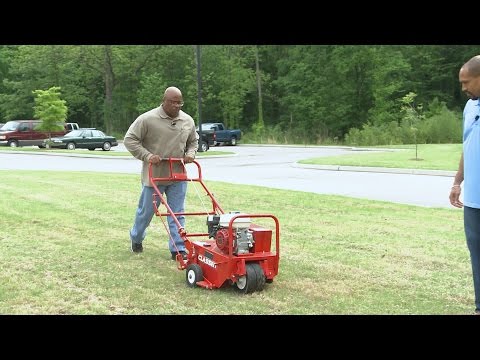
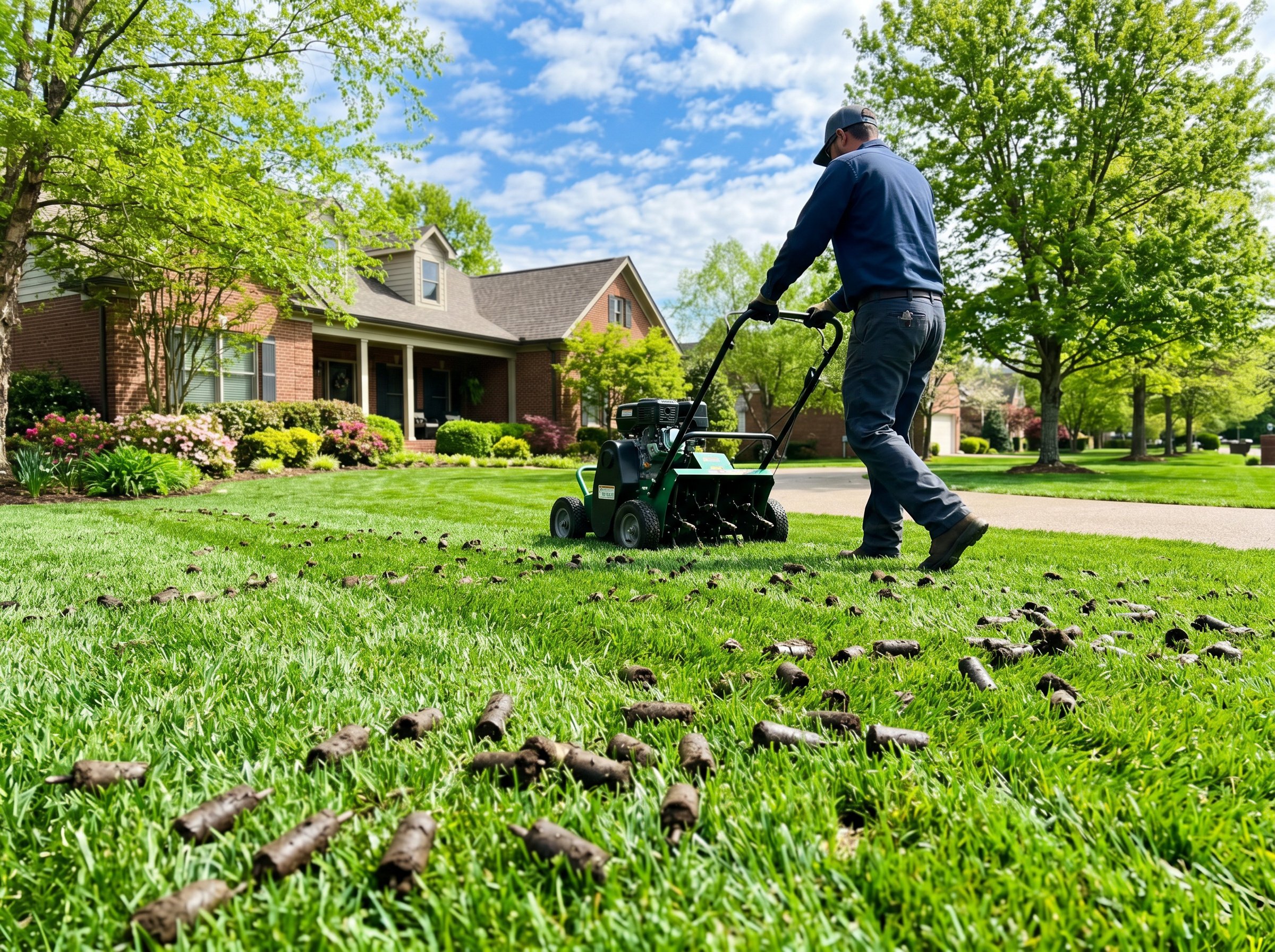
For Tennessee's compacted clay soils, core aeration (also called plug aeration) is the clear winner[6][5]. A core aerator pulls out actual plugs of soil roughly 2–4 inches deep, creating channels for air, water, and fertilizer to penetrate. Spike aerators simply poke holes, which can actually increase compaction around each hole over time. For lawns with severe clay compaction, core aeration has been shown to measurably improve infiltration rates and root depth within a single growing season[5].
Rent a core aerator from a local equipment rental shop, or hire a lawn care professional. For most Tennessee residential lots, the job takes 1–2 hours.
Tips for Getting the Most Out of Aeration in Tennessee
- Aerate when soil is moist — a day after rainfall or irrigation is ideal. Dry, hard soil prevents plugs from pulling cleanly.
- Make two passes in different directions for heavily compacted areas[6]
- Leave the plugs on the lawn — they'll break down within 1–2 weeks and return nutrients to the soil
- Fertilize immediately after aerating — nutrients reach roots faster through open channels. For Tall Fescue, apply a fall fertilizer after aerating[1].
- Overseed Tall Fescue right after fall aeration — the holes created by aeration give seed direct soil contact, dramatically improving germination rates[3].
- Watch for white grubs — aerating can expose grub activity near the soil surface. If you find more than 8–10 grubs per square foot, treat before the soil closes back up[1].
Tennessee Lawn Aeration Timing: Your Complete Checklist
Getting aeration right in Tennessee comes down to knowing your grass type and respecting the transition zone's unique timing demands. Here's your action plan:
- Identify your grass type — Tall Fescue or cool-season blend? Go in fall. Bermuda or Zoysia? Go in early summer[1].
- Test your soil before aerating — UT Extension offers affordable soil testing that can reveal pH and nutrient deficiencies worth correcting at the same time[1].
- Schedule aeration within your overseeding window if you have Tall Fescue — September through mid-October is the sweet spot for both[3].
- Rent or hire based on your lawn size — core aerators are widely available at equipment rental centers across Tennessee[5].
- Follow up with appropriate fertilizer and, if needed, overseed to thicken thin areas before winter[4].
Done at the right time for your specific grass, aeration is one of the simplest ways to get a thicker, healthier lawn across Tennessee's demanding climate.
Frequently Asked Questions
Can I aerate my lawn in spring in Tennessee?
For Tall Fescue and other cool-season grasses, spring aeration is generally not recommended in Tennessee. Aerating in spring can interfere with pre-emergent herbicide barriers applied to prevent crabgrass, and it gives cool-season grass less recovery time before summer heat stress arrives. Fall remains the ideal window[1]. For warm-season grasses like Bermuda and Zoysia, spring aeration (May) is acceptable if the soil is consistently above 65°F, but early summer (June–July) is still preferred[2].
How deep should aeration plugs be in Tennessee?
Core aeration plugs should be 2–4 inches deep for effective compaction relief. Plugs shorter than 2 inches don't penetrate deep enough to break up the dense clay layers common in Middle and West Tennessee. Aerating when soil is moist (but not waterlogged) helps achieve maximum plug depth[6].
Should I aerate before or after overseeding Tall Fescue?
Aerate first, then overseed immediately after. The holes left by core aeration provide direct soil contact for seed, which dramatically improves germination rates compared to broadcasting seed onto an un-aerated surface. Aim to complete both tasks in the same day or within 24–48 hours[3].
How often should I aerate my Tennessee lawn?
Most Tennessee lawns with clay-heavy soil benefit from annual aeration. Lawns with sandy or loamy soil in better condition can be aerated every other year. High-traffic lawns — those used frequently for play, pets, or entertaining — should be aerated every year regardless of soil type[1].
What if my lawn has both Tall Fescue and Bermudagrass patches?
This is a common scenario in Tennessee's transition zone. Prioritize fall aeration (September–October) if Tall Fescue is the dominant grass type, as overseeding timing is critical. If Bermuda is dominant, use the June–July window. Avoid trying to satisfy both grasses with a single mid-season aeration, as neither timing is optimal for both grass types simultaneously[2].
Sources
- University of Tennessee Extension — Lawn care, soil management, grass variety guidance, overseeding recommendations, and grub action thresholds for Tennessee homeowners
2. Clemson Cooperative Extension — Turfgrass management in the transition zone, including Spring dead spot management, warm-season grass dormancy timing, and late-season aeration risks
3. University of Georgia Extension — Tall Fescue aeration and overseeding timing, seedbed preparation, and cool-season lawn care best practices for southeastern transition zone climates
4. Virginia Cooperative Extension — Cool-season turfgrass management in USDA Zones 6a–7b, including Kentucky Bluegrass and Tall Fescue aeration schedules and fertilization guidance
5. USDA Natural Resources Conservation Service — Soil health principles, compaction management techniques, core aeration efficacy for residential landscapes, and infiltration rate improvement data
6. Purdue University Extension — Core vs. spike aeration comparison, soil compaction diagnosis methods, thatch management, and plug depth recommendations for clay-dominant soils