
Quick Answer
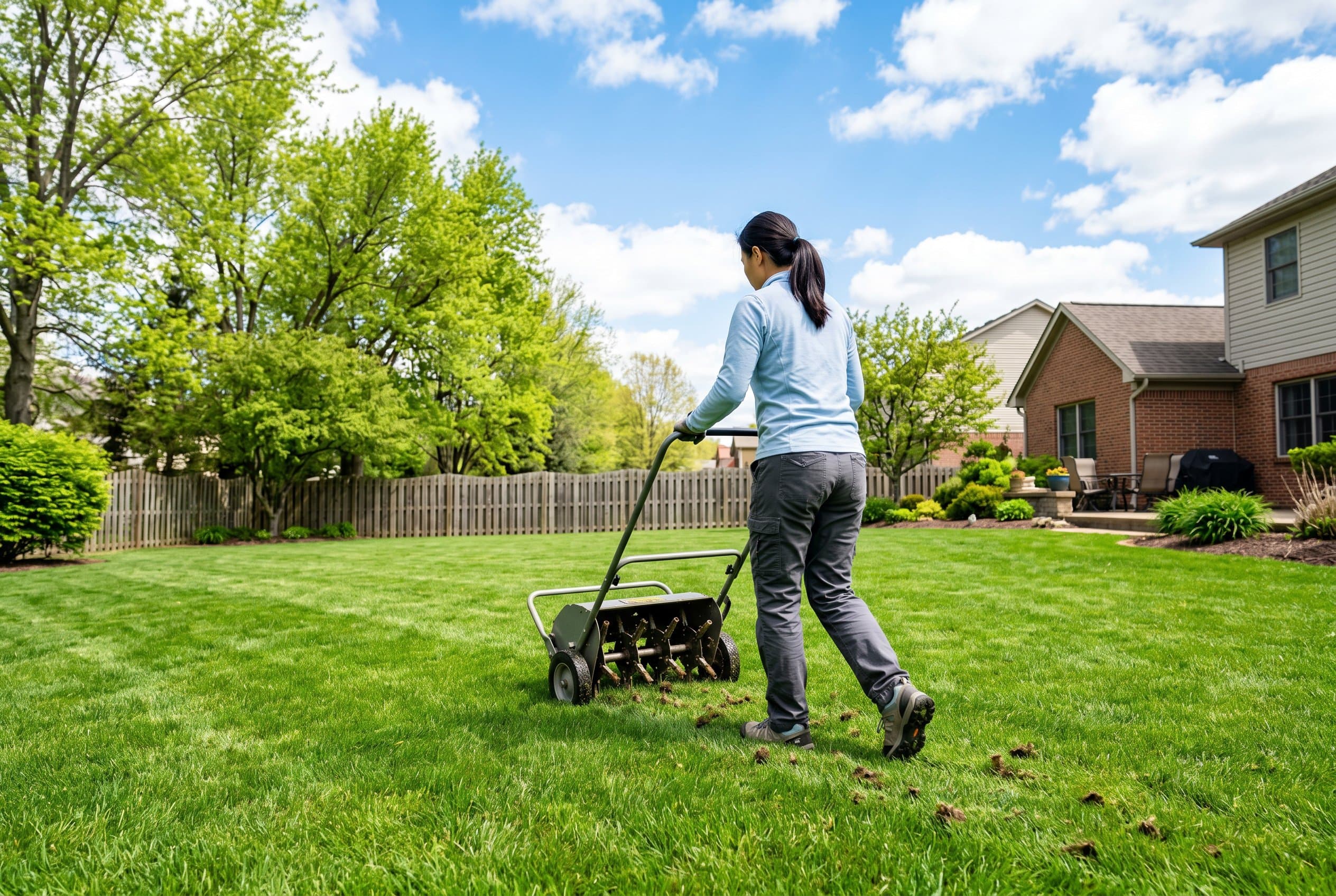
Wondering when to aerate your lawn in Ohio? The best time is September through October, during the peak growing season for cool-season grasses. Fall aeration aligns perfectly with Ohio's climate, giving Kentucky Bluegrass, Tall Fescue, and Perennial Ryegrass the recovery time they need before winter dormancy sets in around December[1].
Key Takeaways:
- Aerate Ohio lawns in September–October for best results with cool-season grasses
- Fall aeration pairs perfectly with overseeding — September is Ohio's prime overseeding window
- Avoid aerating during summer heat stress (July–August) when Ohio temps hit the mid-80s
- Core aeration is preferred over spike aeration for Ohio's often compacted clay soils
- Ohio homeowners near Lake Erie should watch for early frost and aim for early-to-mid September
Introduction
Ohio lawns face a tough combination of challenges: heavy clay soils across much of the state, moderate-to-high humidity that fuels diseases like Brown patch and Dollar spot, and temperature swings from 84°F summer highs to 20°F winter lows[3]. That kind of stress compacts soil, suffocates grass roots, and leaves cool-season lawns gasping for air. Aeration is one of the most effective tools Ohio homeowners have — but only when done at the right time of year.
When to Aerate Your Lawn in Ohio: Fall vs. Spring
For Ohio's cool-season lawns, fall is king. The September–October window gives your grass everything it needs: soil temperatures are still warm enough for root recovery (above 50°F), air temperatures are dropping to reduce stress, and there's typically enough rainfall from Ohio's annual 39-inch average to keep the ground workable[3].
Aerating in fall also lets you tackle two critical tasks at once. Once you've aerated, drop grass seed immediately — September is Ohio's prime overseeding window for Kentucky Bluegrass and Tall Fescue blends. The open channels left by core aeration give seeds direct soil contact and dramatically improve germination rates by up to 30–50% compared to surface seeding alone[1][5].
What About Spring Aeration in Ohio?
Spring aeration (April–May) is sometimes necessary for severely compacted lawns, but it comes with trade-offs. Aerating in spring opens the soil right when crabgrass seeds are looking for a place to germinate — a real problem in Ohio lawns where crabgrass pressure is high[4]. If you apply a pre-emergent herbicide in April, aeration will break that chemical barrier. OSU Extension recommends using both the forsythia bloom as a phenological cue and a soil temperature threshold of 50–55°F at 2-inch depth as indicators for pre-emergent timing[1]. For most Ohio homeowners, fall is the safer, more productive choice.
Ohio Fall Aeration Timing by Region
Use this table to identify the best aeration window for your part of Ohio:
| Region | USDA Zone | Best Aeration Window | Notes |
|---|---|---|---|
| Northern Ohio (Cleveland, Toledo) | 5b–6a | Early–mid September | Account for earlier lake-effect frosts; allow 4–6 weeks recovery |
| Central Ohio (Columbus) | 6a | Mid-September–early October | Clay soils common; core aeration strongly recommended |
| Southern Ohio (Cincinnati, Dayton) | 6a–6b | Mid-September–mid-October | Longer fall window; more flexibility with timing |
| Eastern Ohio (Appalachian foothills) | 5b–6a | Early–mid September | Cooler temps; monitor soil moisture on hillside terrain |
How Do You Know If Your Ohio Lawn Needs Fall Lawn Aeration?
Before you rent a core aerator, confirm your lawn actually needs it. Here are the signs Ohio homeowners should look for:
- The screwdriver test: Push a standard screwdriver 6 inches into moist soil. If it requires significant force, your soil is compacted[6].
- Thatch over ½ inch thick: Ohio's humid summers accelerate thatch buildup in Kentucky Bluegrass and Perennial Ryegrass lawns. Thatch exceeding ½ inch blocks water and nutrient penetration and is a well-documented trigger for aeration[1][5].
- Water pooling after rain: Ohio averages 39 inches of rainfall annually. If water sits on your lawn after moderate rain, compaction is likely the culprit[3].
- Thin, struggling turf: Compaction reduces oxygen and nutrient flow to roots, making lawns look worn even with regular fertilizing.
- Heavy foot traffic or clay-heavy soil: Much of central and western Ohio sits on dense clay that compacts easily under normal use[2].
If your lawn checks two or more of these boxes, aeration will likely deliver visible results within a few weeks.
Best Aeration Methods for Ohio Clay Soil Lawns
Not all aeration methods are equal — especially for Ohio's soil types.
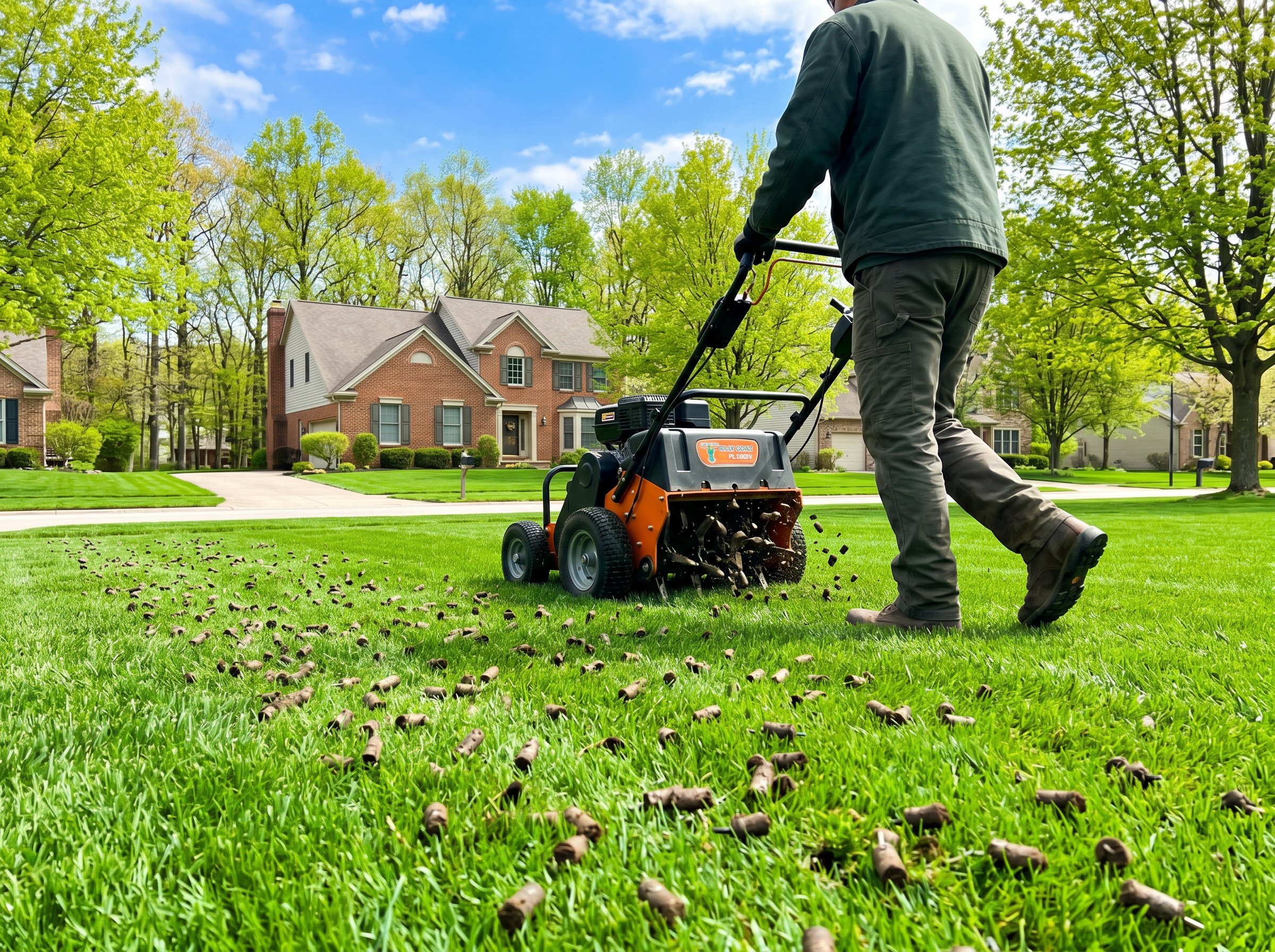
Core (plug) aeration is the gold standard for Ohio homeowners[1]. A core aerator pulls out plugs of soil roughly 2–3 inches deep, creating real channels for air, water, and fertilizer to penetrate. This is especially effective on the clay-heavy soils common across Columbus, Dayton, and Toledo.
Spike aeration simply pokes holes without removing soil. While it's cheaper and easier, research suggests spike aeration can actually increase compaction around the holes over time, as displaced soil is pushed laterally rather than removed[6]. For Ohio's clay soils in particular, core aeration is the recommended approach.
Tips for Fall Lawn Aeration in Ohio Near Lake Erie
If you're gardening in zones 5b–6a near Cleveland or Toledo, keep lake-effect weather patterns in mind. Fall frosts can arrive earlier in northern Ohio, so target early-to-mid September to ensure your lawn has 4–6 weeks of recovery time before the ground hardens[3]. NOAA Great Lakes regional climate data confirms that northern Ohio frost dates average 2–3 weeks earlier than central and southern parts of the state. In central and southern Ohio (zones 6a–6b), you have more flexibility and can push into mid-October.
Core Aeration Ohio: Equipment and Depth Tips
When renting or hiring a core aerator, aim for plugs at least 2–3 inches deep and spaced 2–4 inches apart. For severely compacted clay lawns, making two passes in perpendicular directions maximizes soil disruption[5]. Leave the soil plugs on the surface — they'll break down naturally within 2–4 weeks and return organic matter to the lawn.
Aeration and Ohio's Common Lawn Pests
Timing aeration also intersects with Ohio's pest calendar. White grubs (the larvae of Japanese beetles and masked chafers) are a widespread problem in Ohio lawns, and their feeding activity peaks in late July through early September as they move toward the soil surface[4]. Aerating a grub-damaged lawn in September helps it recover faster by improving root-zone conditions. However, if grub damage is severe, address the infestation first before aerating.
Conclusion: Your Ohio Lawn Aeration Action Plan
For most Ohio homeowners, here's the straightforward plan:
- Target September–October for core aeration — fall is the clear winner for cool-season lawns in USDA zones 5b–6b.
- Aerate before overseeding if your lawn is thin — the combo of aeration plus fresh seed is one of the highest-impact things you can do each fall[5].
- Skip spring aeration unless compaction is severe, and never aerate right after applying pre-emergent herbicide for crabgrass.
- Rent or hire a core aerator — not a spike model — especially if your yard has clay soil[2].
- Northern Ohio homeowners should wrap up aeration by mid-September to account for earlier frost windows.
When in doubt, consult your local Ohio State University Extension office for region-specific guidance tailored to your county's soil type and microclimate[1].