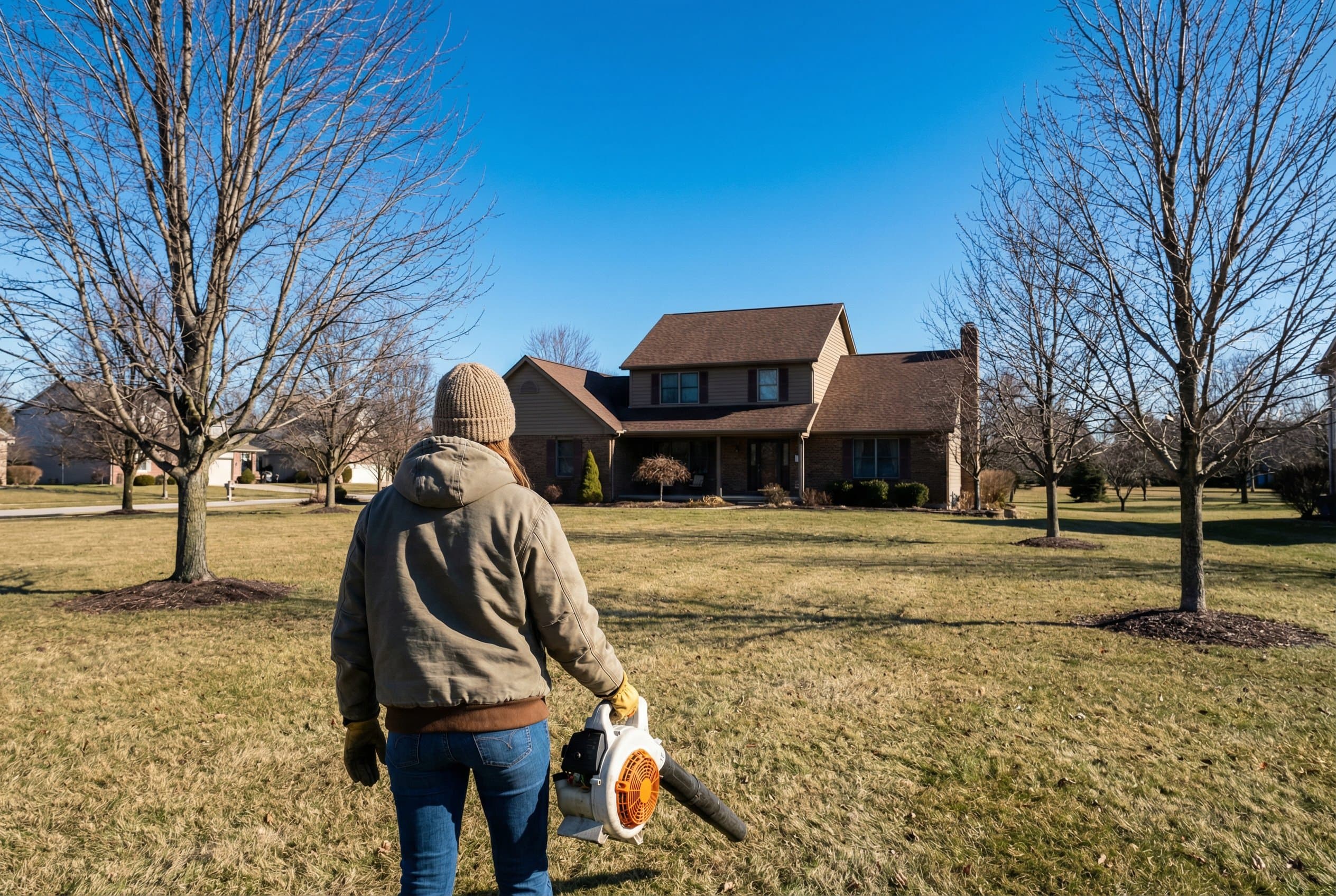
Quick Answer: Fall is the most critical season for Ohio lawn care, with September being prime time for aerating and overseeding Kentucky Bluegrass, Tall Fescue, and Perennial Ryegrass in zones 5b-6b. Ohio's cool-season grasses recover best during fall's moderate temperatures and consistent moisture before winter dormancy begins in December.
Key Takeaways
- September is optimal for core aeration and overseeding in Ohio's USDA zones 5b-6b
- Fall fertilization should continue through November for cool-season grasses
- Pre-winter treatments for white grubs and brown patch disease are essential
- Final mowing occurs in November at 2-3 inches to prevent snow mold
- Cool, humid fall conditions favor rapid grass establishment before dormancy
Ohio's continental climate creates unique opportunities for lawn care success during fall months. With average temperatures dropping from summer highs of 84°F and moderate humidity levels, September through November provides ideal conditions for strengthening Kentucky Bluegrass, Tall Fescue, and Perennial Ryegrass before the harsh winter months when temperatures can plummet to 20°F[1].
When Should I Aerate and Overseed My Ohio Lawn?
September represents the sweet spot for core aeration and overseeding in Ohio's climate zones[2]. Cool-season grasses like Kentucky Bluegrass and Tall Fescue experience peak growth during fall's moderate temperatures, making this the most effective time for lawn renovation.
Core aeration should be performed when soil moisture levels are adequate but not waterlogged. Ohio's average annual rainfall of 39 inches typically provides sufficient moisture during September, though supplemental watering may be needed during dry spells[3].
For overseeding, choose grass varieties suited to your specific location within Ohio. Kentucky Bluegrass performs well in full sun areas, while Fine Fescue tolerates shade better. Tall Fescue and Perennial Ryegrass blends offer excellent durability for high-traffic areas[1].
Apply seed immediately after aeration at rates of 2-4 pounds per 1,000 square feet for overseeding, or 4-6 pounds for bare spots. Keep seeded areas consistently moist for 14-21 days while new grass establishes.
How Should I Fertilize My Ohio Lawn in Fall?
Fall fertilization extends through November in Ohio, taking advantage of cool-season grasses' natural growth patterns[4]. Apply a balanced fertilizer in early September, followed by a winterizer fertilizer in late October or early November.
The September application should contain nitrogen, phosphorus, and potassium to support root development and recovery from summer stress. Choose a slow-release nitrogen fertilizer to provide steady nutrition without promoting excessive top growth that could be damaged by early frost.
Winterizer fertilizers, applied 6-8 weeks before the ground freezes, should be lower in nitrogen but higher in potassium to improve cold tolerance. This timing typically falls in late October for most Ohio locations, though areas near Lake Erie may have slightly longer growing seasons due to lake-effect moderation[5].
Avoid fertilizing after November, as cool-season grasses begin entering dormancy and cannot effectively utilize nutrients. Late fertilization can also increase susceptibility to snow mold diseases during Ohio's snowy winter months.
What Pest and Disease Treatments Are Needed in Fall?
Fall presents the final opportunity to address common Ohio lawn pests before winter dormancy. White grubs, which are particularly problematic in Ohio, should be treated in early September when young larvae are actively feeding near the soil surface[6].
Apply grub control products containing beneficial nematodes or appropriate insecticides during early fall when soil temperatures remain above 60°F. Late applications become less effective as grubs move deeper into the soil profile.
Brown patch and dollar spot diseases often surge during Ohio's humid fall conditions[1]. Improve air circulation by continuing regular mowing through November, maintaining grass height at 2.5-3 inches. Reduce watering frequency but increase duration to promote deep root growth while minimizing leaf wetness.
Preventive fungicide applications may be warranted in areas with recurring disease problems, particularly where summer stress has weakened turf. Focus treatments on susceptible areas with poor drainage or limited air movement.
Pre-emergent herbicide applications for controlling cool-season weeds like henbit and chickweed can be applied in late fall, though spring applications remain more critical for primary weed control in Ohio lawns[2].
When Should I Stop Mowing My Ohio Lawn?
Continue mowing through November in Ohio, adjusting cutting height to 2-3 inches for the final mow of the season[3]. This height provides adequate insulation for grass crowns while preventing snow mold development during Ohio's winter snow cover.
Never cut more than one-third of the grass blade length in a single mowing, even during fall cleanup. If leaves accumulate heavily, either bag clippings or mulch leaves finely to prevent smothering the grass beneath.
Maintain sharp mower blades throughout fall to ensure clean cuts that heal quickly before winter dormancy. Dull blades create ragged cuts that increase susceptibility to disease and cold injury.
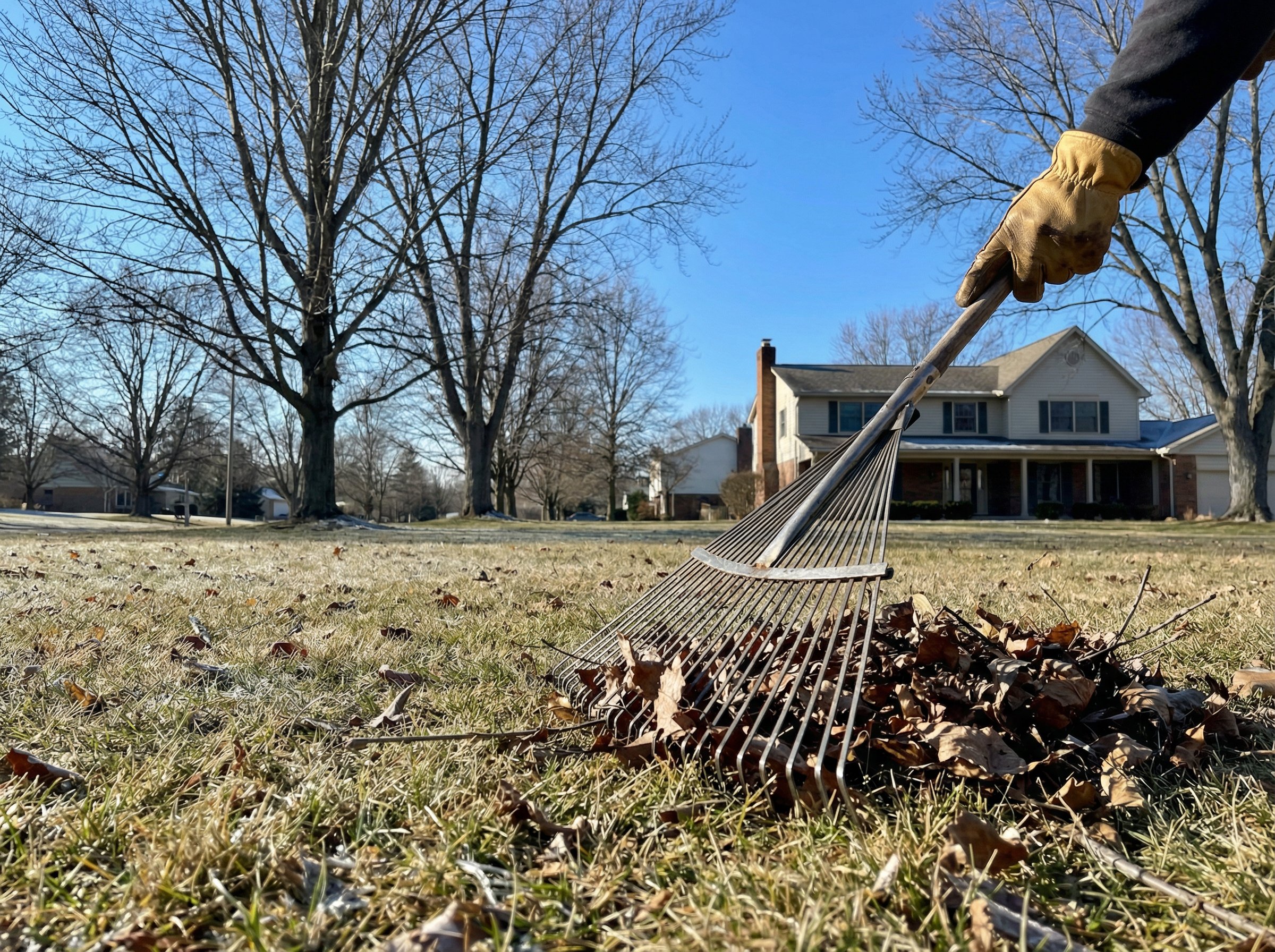
Remove or mulch fallen leaves promptly to prevent light blockage and air circulation problems. Heavy leaf cover can create ideal conditions for snow mold development during Ohio's winter months when snow cover persists for extended periods.
Preparing for Ohio's Winter Dormancy
By December, Ohio's cool-season grasses enter dormancy as soil temperatures drop consistently below 50°F[4]. Proper fall preparation ensures healthy emergence next spring when growth resumes in April.
Complete all major lawn care activities by late November, including final fertilization, pest treatments, and equipment maintenance. Store lawn care equipment properly and plan for next year's pre-emergent crabgrass treatments, which should be applied in April when forsythia blooms appear across Ohio.
Well-prepared lawns emerge from winter dormancy stronger and more resilient, ready to take advantage of Ohio's favorable spring growing conditions for cool-season grasses.