
Quick Answer
The best time to aerate a lawn in Illinois is late August through October, with September being the sweet spot for most homeowners. This timing aligns with the active growth cycle of cool-season grasses like Kentucky Bluegrass and Tall Fescue, allowing your lawn to recover quickly before winter dormancy sets in.
Key Takeaways
- Aerate cool-season lawns (Kentucky Bluegrass, Tall Fescue, Perennial Ryegrass) in September–October
- Fall aeration pairs perfectly with overseeding, which should happen late August through mid-September in Illinois
- Avoid aerating during summer heat stress — Illinois's humid 85°F summers can damage a freshly aerated lawn
- Core aeration is strongly preferred over spike aeration for Illinois's heavy clay soils
- If you have Zoysiagrass in southern Illinois, shift timing to late spring (May–June) instead
Introduction
Knowing when to aerate a lawn in Illinois is one of the most important decisions you can make for your turf. Illinois lawns face a unique combination of challenges: compacted clay-heavy soils, wide temperature swings from 18°F winters to humid 85°F summers, and roughly 37 inches of annual rainfall that can seal the soil surface over time[1]. Add in common threats like white grubs tunneling through roots and diseases like brown patch thriving in summer humidity, and it's easy to see why soil health matters[3]. Aeration is one of the most effective — and most mistimed — lawn care practices homeowners can do. Getting the timing right for Illinois's USDA Hardiness Zones 5a–7a makes the difference between a lawn that bounces back strong and one that struggles heading into winter.
When to Aerate a Lawn in Illinois: Ideal Timing by Season
For the vast majority of Illinois homeowners growing cool-season grasses, September through early October is the ideal aeration window[1]. Here's why that timing works:
- Soil temperatures are still warm (above 50°F), encouraging rapid root development through the newly opened channels
- Air temperatures are cooling down, reducing stress on grass plants after aeration
- There's typically enough rainfall in fall to support recovery without constant irrigation
- The timing lines up directly with overseeding season (late August–mid-September), letting you tackle both tasks together for maximum impact[2]
The University of Illinois Extension recommends focusing cool-season lawn renovations — including aeration — in the fall rather than spring, because grass has the entire fall season to recover before going dormant in December[1].
Can you aerate in spring? Yes, but it's a secondary option. A late April or early May aeration can help if compaction is severe, but be cautious: spring aeration can open the soil surface just as crabgrass seeds are germinating, potentially disrupting any pre-emergent barrier you applied when soil hit 55°F[3]. If you aerate in spring, skip overseeding — new grass seedlings and pre-emergent herbicides don't mix.
What Does an Illinois Aeration Schedule Actually Look Like?
Here's a practical month-by-month framework for fall lawn renovation in Illinois.
Late August (Weeks 1–2)
- Begin overseeding if needed — this is your priority window before soil temps drop
- Mow slightly shorter than normal to prepare the surface
- Test soil if you haven't done so in the past 2–3 years
Early to Mid-September (Best Aeration Window)
- Core aerate the entire lawn[4]
- Topdress with compost if soil tests show organic matter is low
- Apply starter fertilizer to support new root development[5]
- Water consistently — 1 inch per week if rainfall falls short
Late September through October
- Apply a winterizer fertilizer (high potassium) to strengthen roots heading into dormancy[2]
- Monitor for white grub activity — aeration can reveal grub damage near the surface
- Final mowing typically continues through November in Illinois
What About Southern Illinois (Zones 6b–7a)?
Homeowners in the Metro East or southern tip of Illinois growing Zoysiagrass should not follow the fall schedule. Zoysiagrass is a warm-season grass that should be aerated in late spring (May–June) when it's actively growing[2]. Aerating Zoysia in fall risks winter damage to exposed crowns.
Why Illinois Lawns Need Aeration More Than Most
Illinois soils — particularly in the Chicago suburbs, Peoria corridor, and central flatlands — tend to be dense, clay-heavy, and prone to compaction[1]. Several Illinois-specific factors make aeration especially important.
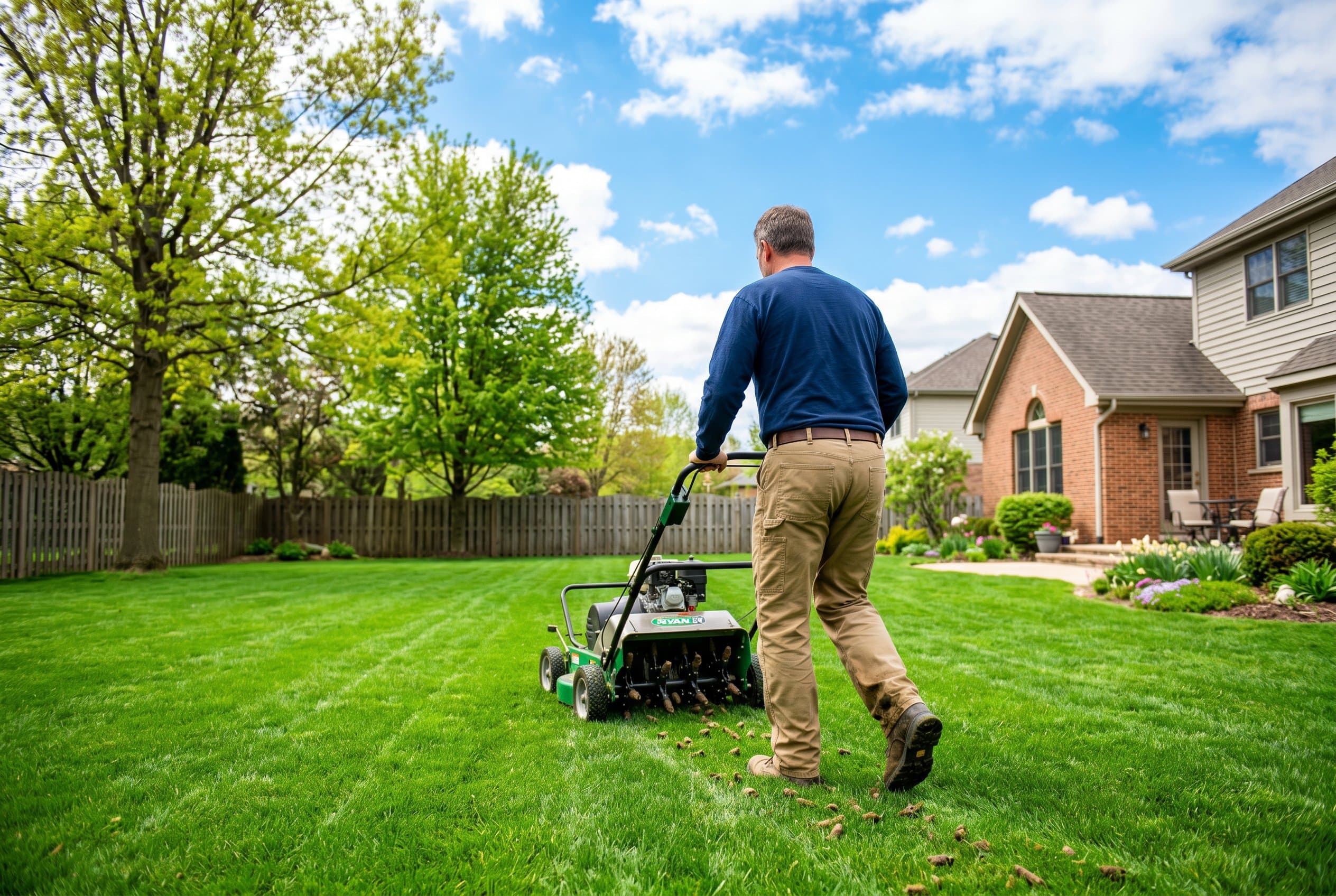
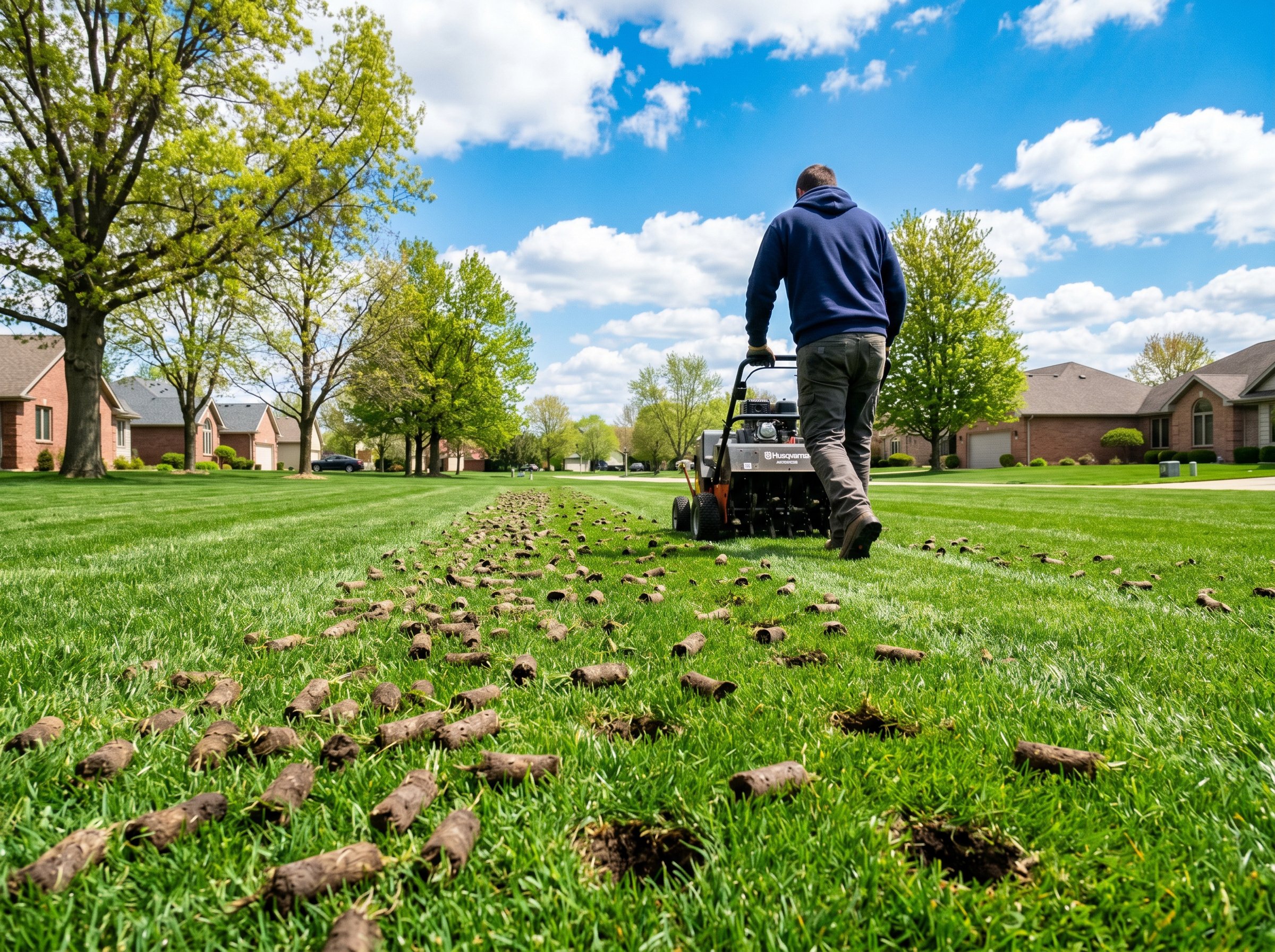
Heavy clay soils restrict oxygen movement and water infiltration. Core aeration physically removes plugs of soil, creating channels for air, water, and fertilizer to reach the root zone[4].
Prairie winds and flat terrain mean many Illinois lawns see heavy foot traffic concentrated in certain areas, accelerating compaction over time.
Thatch buildup from Kentucky Bluegrass — Illinois's most popular lawn grass — accumulates faster than many other species. A thatch layer above ½ inch blocks water penetration and creates a harbor for lawn diseases like dollar spot and necrotic ring spot[6].
White grubs and billbugs are common Illinois pests that damage root systems. Aeration improves the overall root environment, helping grass recover from pest pressure more effectively. If grub populations are high (more than 10 per square foot), treat with an appropriate grub control product before or shortly after aerating[3].
Always use a core aerator, not a spike aerator for Illinois lawns. Spike aerators push soil aside and can actually worsen compaction in clay soils. Core aerators remove plugs entirely, creating genuine relief channels[4]. Rental core aerators are widely available at hardware and equipment rental stores across Illinois.
How to Tell If Your Illinois Lawn Needs Aeration
Not every lawn needs annual aeration. Here's how to tell if yours does:
- The screwdriver test: Push a standard screwdriver into moist soil. If it resists past 2 inches, your soil is compacted and aeration will help[1]
- Water pooling or runoff after rain, even though you're not overwatering
- Thin, struggling turf in high-traffic areas despite adequate fertilization
- Thatch depth over ½ inch — easily checked by cutting a small plug and measuring the spongy brown layer above the soil
- Lawn hasn't been aerated in 2+ years and it's growing on clay-based Illinois soil
Most Illinois lawns on clay soil benefit from annual aeration. Lawns on sandier soils (some areas of western and northwestern Illinois) may only need it every 2–3 years[5].
Conclusion: Your Next Steps for Illinois Lawn Aeration
If you're an Illinois homeowner with a cool-season lawn, mark mid-September on your calendar as your target aeration date. Pair it with overseeding for Kentucky Bluegrass or Tall Fescue, follow up with starter fertilizer, and finish the season with a November winterizer application. This fall sequence, tailored to Illinois's USDA Zones 5a–7a climate, gives your lawn everything it needs to emerge from dormancy stronger next April. When in doubt, check in with your local University of Illinois Extension office for county-specific guidance — they're an excellent free resource for Illinois homeowners[1].
