Quick Answer
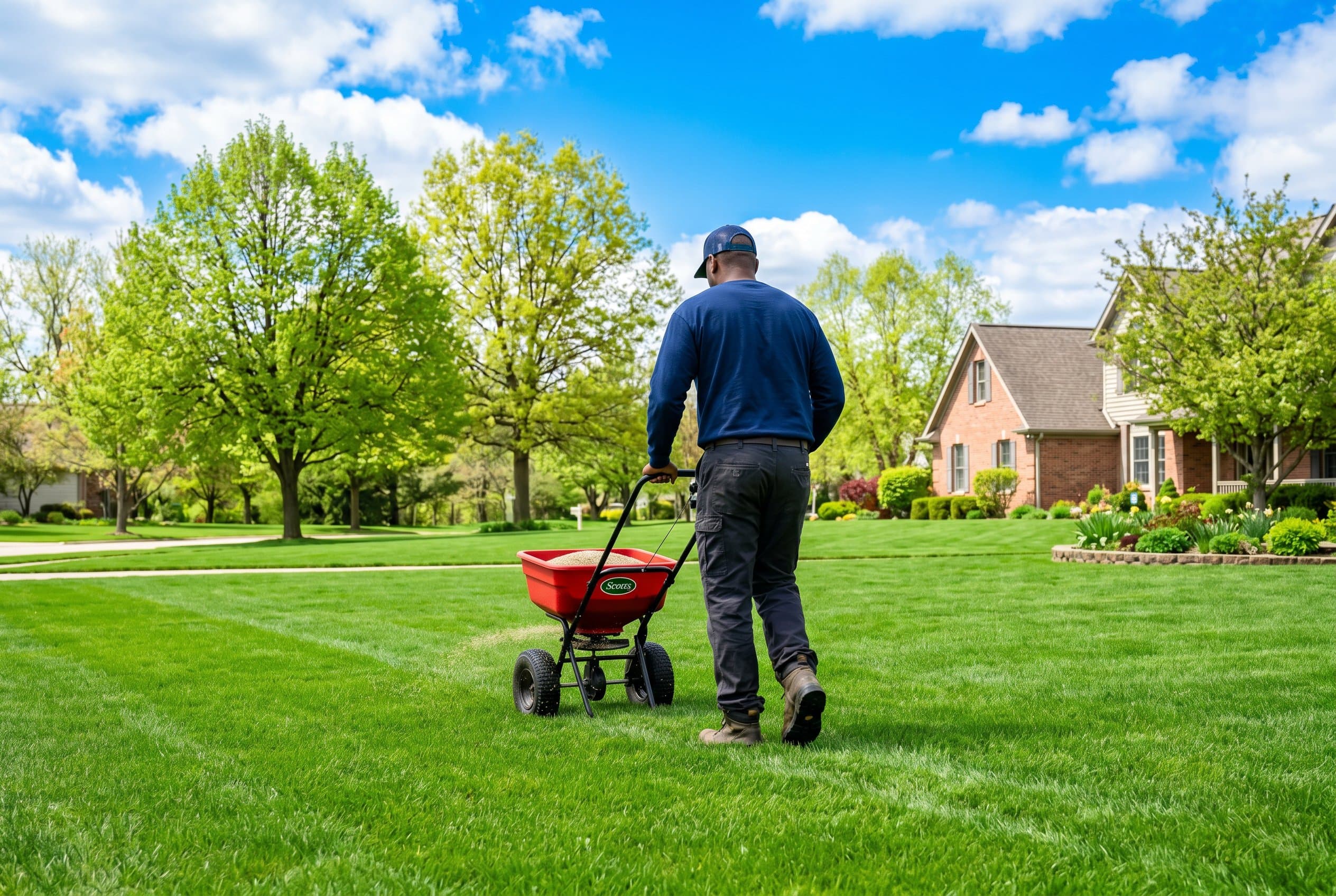
The best time to plant grass seed in Illinois is late summer to early fall — specifically between late August and mid-September. Soil temperatures are still warm enough to support germination, cooler air reduces heat stress on seedlings, and fall moisture gives new grass the best chance to establish before winter dormancy sets in.
Key Takeaways:
- Late August through mid-September is the ideal planting window for Illinois cool-season grasses
- Soil temperature should be between 50–65°F for optimal germination — use a soil thermometer to confirm
- Kentucky Bluegrass, Tall Fescue, and Perennial Ryegrass are the top grass seed choices for most of Illinois
- Spring seeding is a backup option but faces higher risks from summer heat, drought, and crabgrass pressure
- Southern Illinois homeowners (Zone 7a) may have a slightly longer planting window than those in northern zones (5a–6a)
When to Plant Grass Seed in Illinois: The Best Window
Knowing when to plant grass seed in Illinois is the single most important decision you'll make for your lawn. The state's continental climate brings real challenges: brutally hot and humid summers that average highs of 85°F, cold winters that dip to 18°F, and relentless prairie winds that dry out soil faster than you'd expect[1]. Add in roughly 37 inches of annual rainfall distributed unevenly across the year, and timing your seeding becomes critical.
For Illinois homeowners, late August through mid-September is the gold-standard seeding window, and it's backed by the University of Illinois Extension[1]. Here's why this window works so well:
- Soil temperatures at a 2-inch depth are still warm (50–65°F), which is the ideal germination range for cool-season grasses[2]
- Air temperatures are cooling down, which reduces seedling stress and slows evaporation
- Fall rains typically arrive, reducing the irrigation burden on homeowners
- New grass has 6–10 weeks to establish roots before the ground freezes in late November or December
- Weed pressure drops significantly — crabgrass, Illinois's most aggressive annual weed, dies off as temperatures fall
Timing by Illinois Climate Zone
Illinois spans USDA Hardiness Zones 5a through 7a, so timing can shift slightly depending on where you live[3]:
- Northern Illinois (Zone 5a–5b, including Rockford and the Chicago suburbs): Aim for late August to early September. The growing season ends sooner, so don't push past mid-September.
- Central Illinois (Zone 6a–6b, including Peoria and Springfield): Late August through mid-September is your full window with good flexibility.
- Southern Illinois (Zone 6b–7a, including Carbondale and Cairo): You can extend slightly into late September, but earlier is still better for deep root development.
What Grass Seed Should Illinois Homeowners Plant?
Illinois sits firmly in the cool-season grass belt, meaning warm-season grasses like Bermudagrass struggle to survive northern winters here[1]. For most of the state, these are your best options:
Kentucky Bluegrass
The classic Illinois lawn grass. Kentucky Bluegrass produces a dense, dark green turf and spreads via rhizomes to self-repair bare spots[4]. It needs full sun and performs best in central and northern Illinois. Germination is slow (14–28 days), so plant it on the earlier end of the fall window.
Tall Fescue
The most adaptable grass for Illinois. Tall Fescue tolerates heat, moderate drought, and partial shade better than Kentucky Bluegrass[1]. It germinates in 7–12 days and is an excellent choice for homeowners in all zones. Improved turf-type varieties offer finer texture and better disease resistance against issues like brown patch, which thrives in Illinois's humid summers[5].
Perennial Ryegrass
Fast-germinating (5–10 days) and wear-tolerant, Perennial Ryegrass is often mixed with Kentucky Bluegrass to provide quick cover while the Bluegrass establishes[4]. It works well in sun to light shade across the state.
Fine Fescue
Ideal for shady areas, low-maintenance lawns, or areas with poor soil. Fine Fescue varieties including creeping red and chewings fescue are well-suited to northern and central Illinois[2].
A Note on Southern Illinois
Homeowners in Zone 7a portions of southern Illinois may have success with Zoysiagrass, a warm-season grass that tolerates the longer, hotter summers in that region. It requires a different planting approach — late spring (May–June) when soil temperatures exceed 70°F — and goes dormant and turns brown each winter[1].
Can You Plant Grass Seed in Spring in Illinois?
Spring seeding — generally April through May — is possible in Illinois but comes with real trade-offs[2]. It works best as a secondary option when fall seeding wasn't possible.
Challenges with spring seeding in Illinois:
- Soil temps in early spring (below 50°F) slow germination and can cause seed rot
- New seedlings face Illinois's hot, humid summers before they've developed deep root systems
- Brown patch disease, fueled by summer humidity, can devastate young turf[5]
- You cannot apply pre-emergent herbicides (which target crabgrass) without harming germinating seed — and skipping pre-emergent in April means crabgrass will compete aggressively with your new lawn
- White grubs and sod webworms, two of Illinois's most common lawn pests, are most damaging in summer when spring-seeded lawns are still vulnerable
If you must seed in spring, wait until soil temperatures consistently reach 50°F (typically mid-April in central Illinois), choose fast-germinating Perennial Ryegrass or Tall Fescue, and be prepared to water consistently through the summer[4].
Summer seeding (June–July) is not recommended in Illinois. Heat stress, inconsistent moisture, and disease pressure make establishment nearly impossible for cool-season grasses[6].
Illinois Grass Seed Planting: Soil Prep and Starter Fertilizer Tips
Timing alone won't guarantee a great lawn — proper soil preparation is equally important. Before seeding, mow existing grass short and aerate compacted soil to improve seed-to-soil contact[1]. September is also prime aeration time in Illinois, making fall seeding a natural fit for a combined renovation approach.
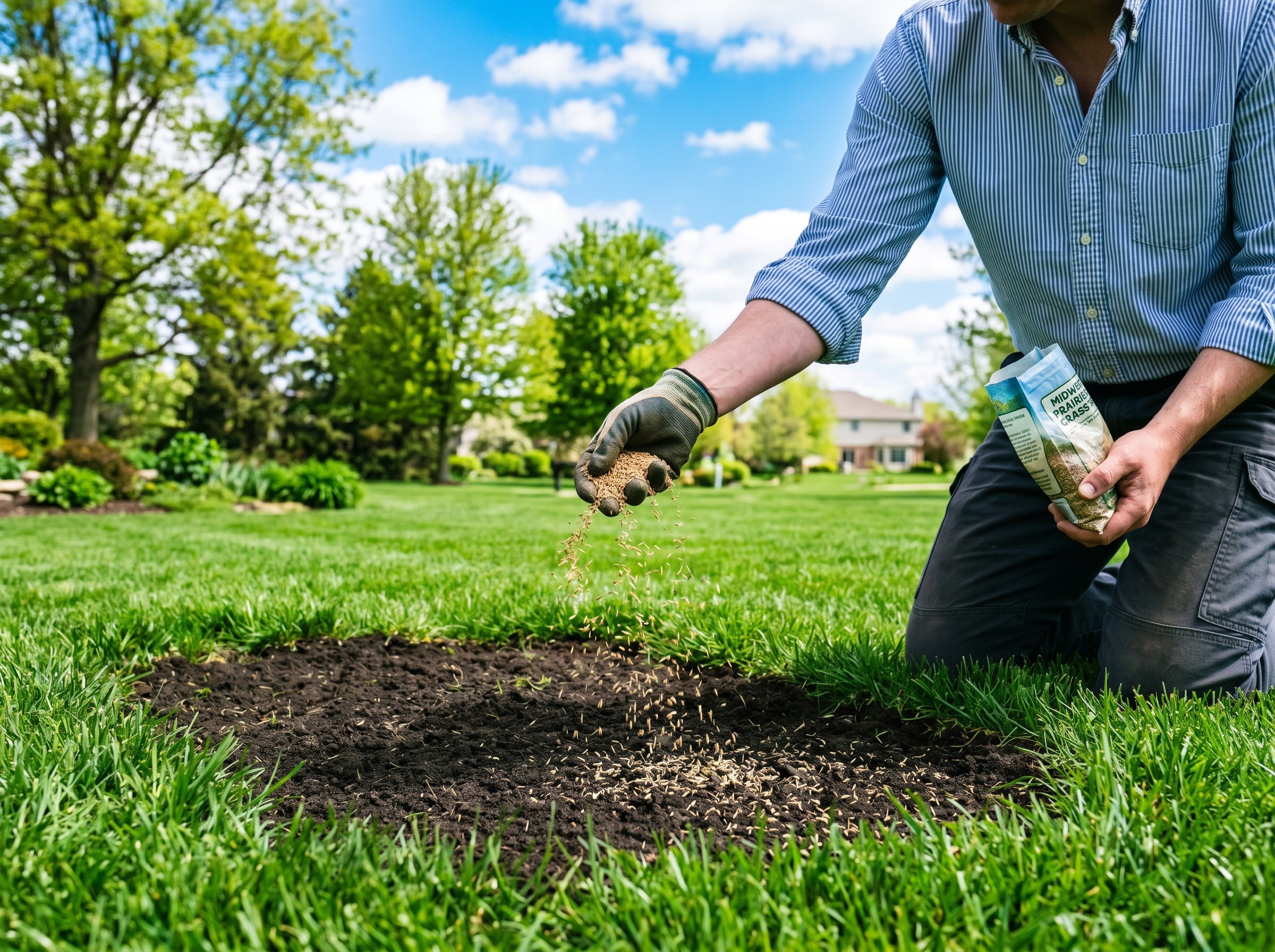
Apply a starter fertilizer at seeding time to supply phosphorus, which supports early root development in young seedlings[5]. Water lightly two to three times daily until germination, then transition to deeper, less frequent watering as seedlings establish. Avoid heavy foot traffic on new grass for at least four to six weeks after germination.
When to Plant Grass Seed in Illinois: Conclusion and Action Plan
For most Illinois homeowners, the path to a thick, healthy lawn starts in late August. Here's what to do:
- Mark your calendar for late August — check that soil temps are 50–65°F using an inexpensive soil thermometer before seeding[2]
- Choose the right seed — Tall Fescue for adaptability, Kentucky Bluegrass for a classic lawn, or a blend for the best of both worlds[4]
- Prepare the soil — mow existing grass short, aerate compacted soil, and rake the seedbed lightly
- Seed, starter fertilize, and keep moist — water lightly 2–3 times daily until germination, then deeply and less frequently as seedlings establish[5]
- Skip the pre-emergent this fall — crabgrass pre-emergents applied in spring will prevent germination, so hold off until the following April once your lawn is established
When in doubt, consult the University of Illinois Extension for localized recommendations specific to your county and climate zone[1].