
Quick Answer
The best time to aerate lawns in Florida is during the active growing season from May through August, when warm-season grasses like St. Augustinegrass and Bahiagrass can quickly recover from the aeration process[1]. This timing aligns with Florida's warm, humid weather and frequent summer rainfall that promotes rapid root development and soil healing.
Key Takeaways
- Aerate Florida lawns between May and August during peak growing season
- St. Augustinegrass, Bahiagrass, and Zoysiagrass respond best to summer aeration
- Avoid aerating during Florida's brief winter dormancy period (December-February in north FL)
- Clay soils common in central Florida benefit most from regular aeration
- Combine aeration with overseeding in October for winter ryegrass color
Introduction
Florida's unique subtropical to tropical climate creates specific challenges for lawn aeration timing. With USDA hardiness zones ranging from 8a in the north to 11a in the south, Florida homeowners must work with warm-season grasses that have different recovery patterns than cool-season varieties[2]. The state's high humidity, heavy summer rainfall averaging 54 inches annually, and clay soils in many regions make proper aeration timing crucial for maintaining healthy turf.
What Is the Best Month to Aerate Lawns in Florida?
The optimal aeration window in Florida runs from May through August, with June and July being ideal months for most regions[1]. This timing ensures your warm-season grasses are in their peak growing phase and can quickly heal the temporary stress caused by aeration.
For St. Augustinegrass, Florida's most popular lawn variety, mid-summer aeration takes advantage of the grass's aggressive growth habit during hot, humid months[3]. Bahiagrass and Zoysiagrass also respond well to summer aeration, utilizing Florida's frequent afternoon thunderstorms to promote root growth into newly created air pockets.
North Florida homeowners in zones 8a-9a should aim for May through July, while central and south Florida residents in zones 9b-11a can extend aeration through August. The key is ensuring at least 6-8 weeks of active growth remain before any potential dormancy period.
How Do I Know If My Florida Lawn Needs Aeration?
Florida's clay soils and heavy foot traffic create compaction issues that benefit from regular aeration. Several signs indicate your lawn needs attention:
Soil Compaction Tests: Insert a screwdriver or soil probe into your lawn after watering. If it requires significant force to penetrate 4-6 inches, your soil is likely compacted[4]. This is especially common in central Florida's clay-heavy soils.
Water Runoff Issues: If water pools on your lawn during Florida's intense summer thunderstorms instead of soaking in, compacted soil is preventing proper drainage. This can lead to fungal diseases like large patch, which thrives in Florida's humid conditions[1].
Thatch Buildup: St. Augustinegrass is particularly prone to thatch accumulation in Florida's warm climate. If the thatch layer exceeds ½ inch, aeration combined with dethatching helps improve air and water movement[3].
Pest and Disease Pressure: Compacted soils stress grass, making it more susceptible to chinch bugs, sod webworms, and diseases common in Florida lawns[5].
Should I Aerate Before or After Fertilizing in Florida?
The timing of aeration relative to fertilization depends on your specific goals and Florida's unique growing season. Most Florida lawn care experts recommend aerating first, then following with fertilizer within 1-2 weeks[1].
Pre-Fertilizer Aeration Benefits: Aerating before fertilizing allows nutrients to reach deeper into the root zone through the newly created channels. This is particularly beneficial for phosphorus movement in Florida's sandy soils, which tend to bind nutrients in the surface layer[6].
Coordinating with Florida's Fertilizer Schedule: Since Florida's fertilizer window runs March through October, you can easily coordinate mid-summer aeration with your regular feeding schedule[2]. Many homeowners aerate in June, then apply summer fertilizer in July.
Overseeding Considerations: If you plan to overseed with winter ryegrass in October for temporary winter color, aerate in late summer (August), then overseed and fertilize together in October when temperatures moderate[1].
What Aeration Method Works Best for Florida Grasses?
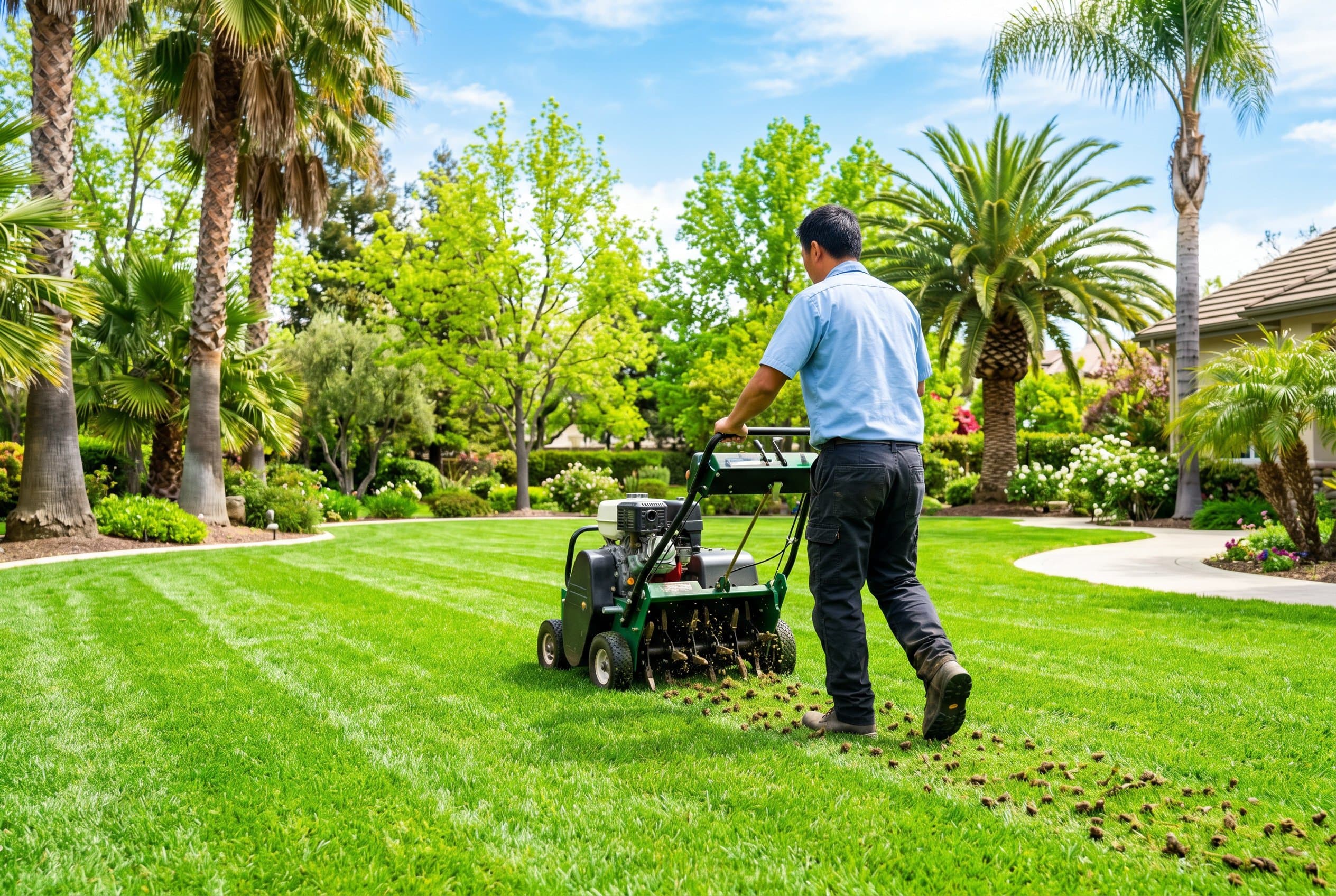
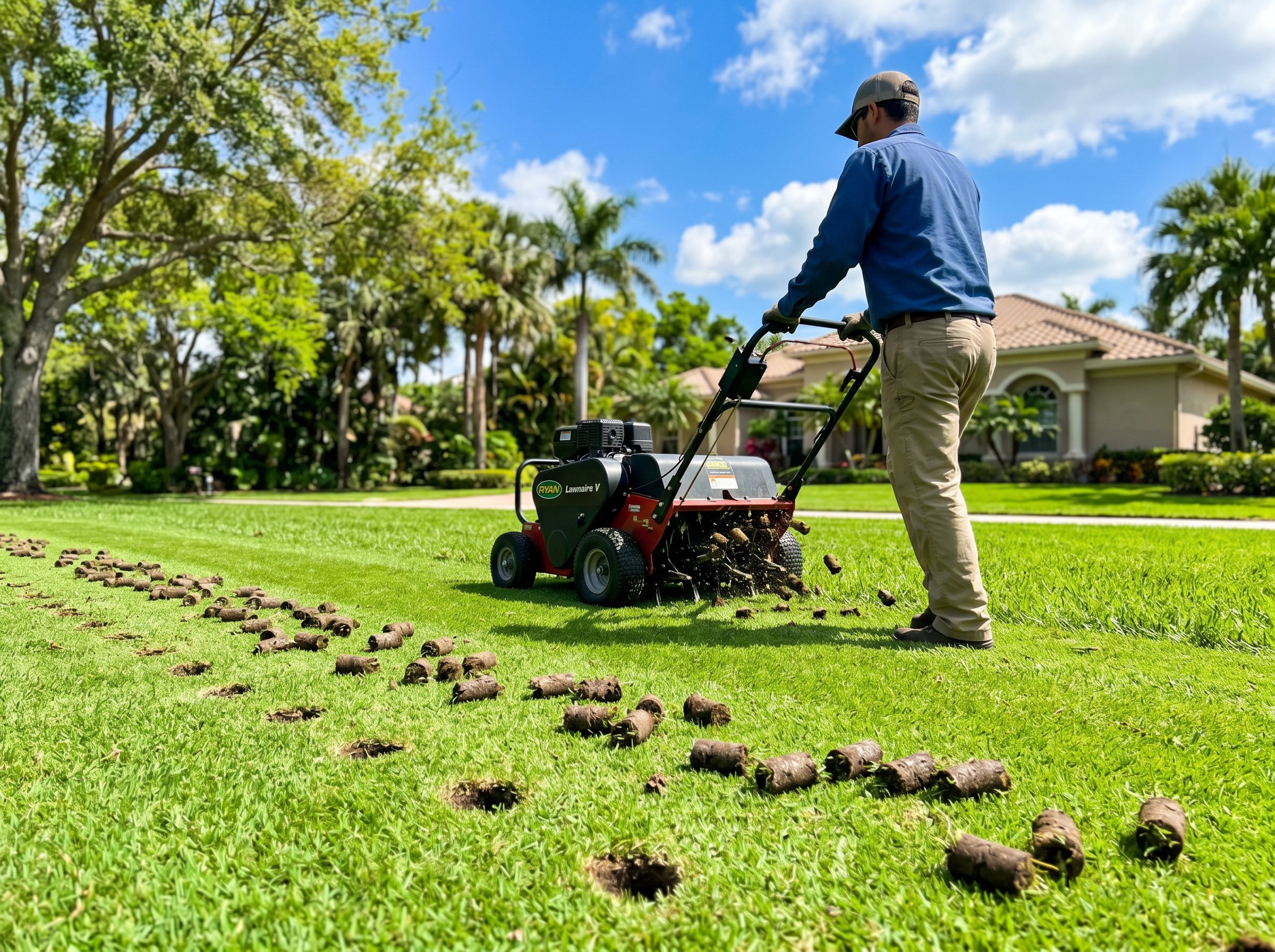
Core aeration is the most effective method for Florida's warm-season grasses and soil conditions. This process removes small plugs of soil, creating lasting channels for air, water, and nutrient movement[4].
Equipment Options: Rent a core aerator from local equipment rental stores during Florida's peak aeration season. Walk-behind units work well for smaller yards, while ride-on aerators handle larger properties efficiently.
Soil Preparation: Aerate when soil moisture is optimal - not too wet or dry. In Florida's climate, this often means aerating 24-48 hours after watering or a moderate rainfall, avoiding periods of drought stress or oversaturation[3].
Post-Aeration Care: Leave soil plugs on the surface to decompose naturally. Florida's warm temperatures and humidity will break them down within 2-3 weeks. Water regularly but avoid overwatering, which can promote fungal diseases in the state's humid climate[5].
Conclusion
Successful lawn aeration in Florida requires timing that works with the state's warm-season grasses and unique climate patterns. By aerating between May and August, you'll give your St. Augustinegrass, Bahiagrass, or Zoysiagrass the best chance to recover quickly and benefit from improved soil conditions. Remember to coordinate aeration with your fertilization schedule and consider your specific zone within Florida's diverse climate range. For the healthiest results, follow up aeration with proper watering and avoid heavy foot traffic for 2-3 weeks while your grass recovers.
