Quick Answer
Florida lawns face unique challenges due to high humidity, heavy rainfall, and year-round growing conditions. The most common lawn problems in Florida include chinch bug infestations on St. Augustine grass, fungal diseases like large patch and gray leaf spot, and persistent weeds such as dollarweed and crabgrass that thrive in the subtropical climate.
Key Takeaways
- Chinch bugs are the #1 pest problem for St. Augustine grass lawns across Florida's climate zones
- Fungal diseases flourish in Florida's high humidity, especially during summer months
- Pre-emergent herbicides applied in February-March prevent most annual weeds
- Proper watering timing (early morning) reduces disease pressure significantly
- Different solutions are needed for North Florida (zones 8a-9a) versus Central and South Florida (zones 9b-11a)
Introduction
Florida's unique climate creates both opportunities and challenges for homeowners maintaining beautiful lawns. The state's high humidity, abundant rainfall, and warm temperatures that support year-round grass growth also create ideal conditions for pests, diseases, and weeds[1]. Understanding these common lawn problems in Florida and their state-specific solutions is essential for maintaining healthy St. Augustine grass, Bahia grass, and other warm-season varieties that dominate the state's landscapes.
What Are the Most Destructive Pests in Florida Lawns?
Chinch bugs top the list as Florida's most devastating lawn pest, particularly for St. Augustine grass[1]. These tiny insects thrive in hot, dry conditions and can destroy large lawn areas within weeks. Adult chinch bugs are about 1/6 inch long with white wings marked by black triangles.
Sod webworms present another major threat, especially during Florida's warm months from March through October[2]. The larvae feed on grass blades at night, creating brown patches that homeowners often mistake for drought stress. Look for small moths flying in zigzag patterns over your lawn at dusk - a telltale sign of webworm activity.
Mole crickets cause significant damage to Florida lawns by tunneling through soil and severing grass roots[1]. These pests are most active from April through June and again in late summer. Their tunneling creates raised ridges and loose soil that feels spongy underfoot.
Nematodes, microscopic roundworms in soil, particularly affect St. Augustine grass in sandy Florida soils[3]. Symptoms include yellowing, thinning turf that doesn't respond to fertilization or irrigation. Professional soil testing is required for accurate nematode diagnosis.
Which Diseases Most Commonly Affect Florida Grass Types?
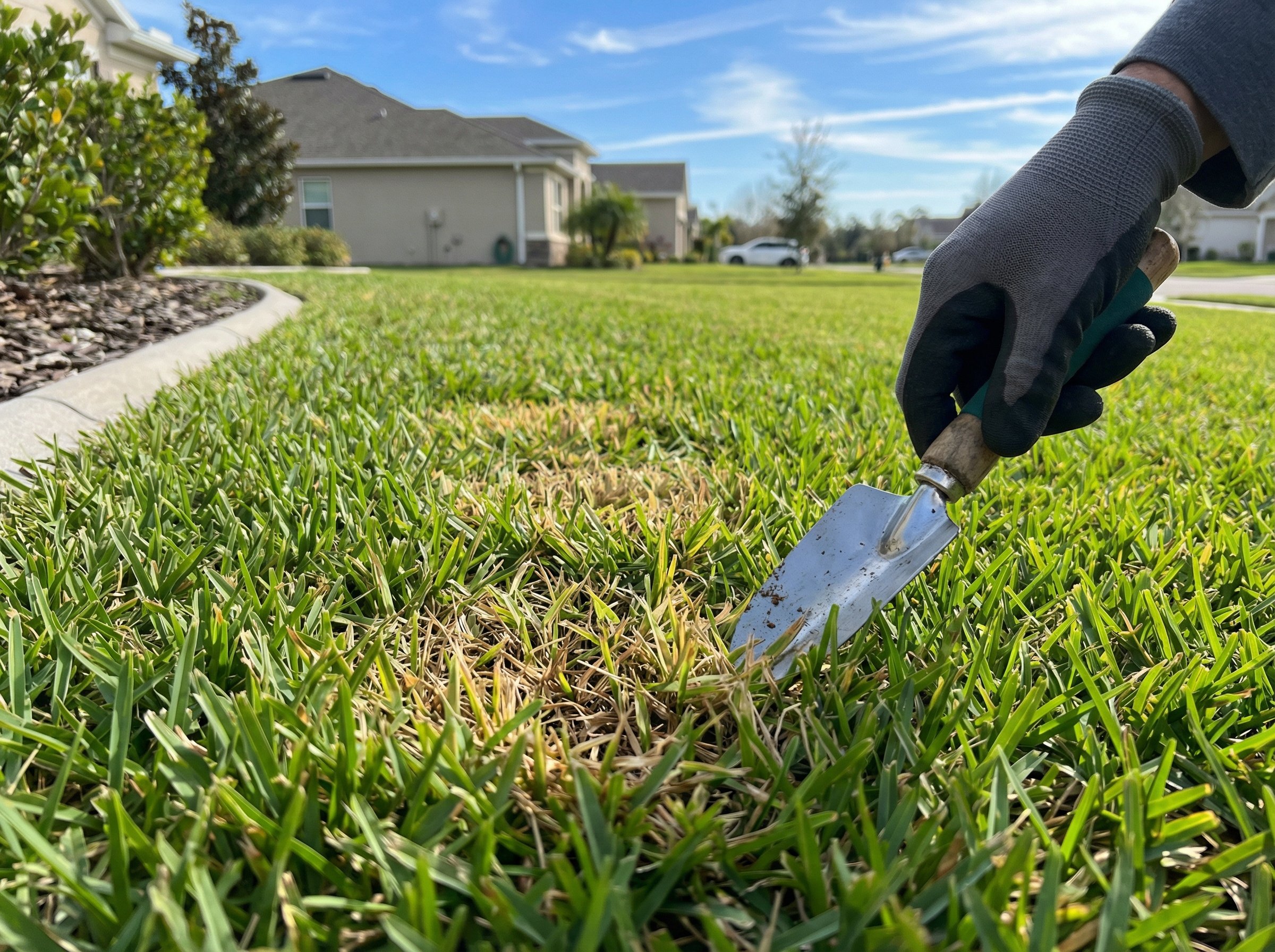
Large patch disease (formerly brown patch) is the most widespread fungal problem affecting St. Augustine grass, Zoysia grass, and Centipede grass in Florida[1]. This disease thrives when nighttime temperatures remain above 68°F with high humidity - conditions common throughout much of Florida's year. Circular brown patches ranging from a few inches to several feet in diameter are characteristic symptoms.
Gray leaf spot poses a serious threat to St. Augustine grass during Florida's rainy season from June through September[4]. The disease appears as small, oval spots with gray centers and dark borders on grass blades. Newly sodded or sprigged lawns are particularly vulnerable.
Dollar spot affects Bermuda grass and Zoysia grass, creating small, circular tan or straw-colored patches about the size of silver dollars[2]. This disease is most problematic during periods of high humidity combined with cool nighttime temperatures, typically in spring and fall.
Pythium blight can devastate Florida lawns during hot, humid summer conditions with temperatures above 85°F[4]. The disease spreads rapidly through standing water, making proper drainage and morning watering schedules critical for prevention.
What Weeds Cause the Biggest Problems for Florida Homeowners?
Dollarweed (pennywort) thrives in Florida's wet conditions and quickly establishes in overwatered or poorly drained St. Augustine grass lawns[1]. These distinctive round, coin-shaped leaves indicate excessive moisture and often poor soil drainage.
Crabgrass germinates when soil temperatures reach 65-70°F, which occurs as early as February in South Florida and March in North Florida[2]. This annual grassy weed competes aggressively with desirable warm-season grasses throughout the growing season.
Torpedograss presents one of Florida's most challenging perennial weed problems[1]. This invasive species spreads through underground rhizomes and is particularly problematic in coastal areas and low-lying regions with periodic flooding.
Sedges, including yellow and purple nutsedge, flourish in Florida's wet soils and are often mistaken for grasses[5]. These weeds have triangular stems and require specialized herbicides for effective control.
Chamberbitter, an increasingly common broadleaf weed, germinates throughout Florida's long growing season and produces thousands of seeds per plant[3]. Hand removal becomes impractical once populations establish.
How Can Florida Homeowners Prevent These Common Problems?
Implement proper cultural practices as your first line of defense. Water deeply but infrequently in early morning hours to reduce disease pressure and avoid creating conditions that favor fungal growth[1][4]. For most Florida grass types, this means 3/4 to 1 inch of water per week, including rainfall.
Apply pre-emergent herbicides in February for South Florida and March for North Florida to prevent annual weeds like crabgrass[2]. Timing is critical - soil temperature monitoring helps determine optimal application windows.
Maintain proper mowing heights for your grass type: St. Augustine grass at 3-4 inches, Bahia grass at 3-4 inches, and Bermuda grass at 1-2 inches[1]. Sharp mower blades prevent tissue damage that invites disease problems.
Fertilize according to UF/IFAS recommendations using slow-release nitrogen sources during the active growing season from March through October[1]. Avoid excessive nitrogen that promotes soft growth susceptible to disease and pest damage.
Conclusion
Successful Florida lawn care requires understanding the state's unique pest, disease, and weed pressures. Focus on preventive cultural practices like proper watering, fertilization, and mowing before resorting to chemical treatments. Monitor your lawn regularly for early problem detection, and don't hesitate to contact your local UF/IFAS Extension office for professional identification and treatment recommendations specific to your county's conditions.