Quick Answer: Fall lawn care in Florida focuses on gradual fertilizer reduction, pest management for chinch bugs and sod webworms, and preparing warm-season grasses like St. Augustine and Bermuda for their brief dormancy period from December through February in northern zones.
Key Takeaways
- Reduce nitrogen fertilization by October to help grass prepare for cooler months
- Monitor for fall pests including chinch bugs, sod webworms, and mole crickets
- Adjust mowing height slightly higher as growth slows in November-December
- Apply pre-emergent herbicide in late October for winter weed control
- Consider overseeding with ryegrass in October for winter color in northern Florida
Florida's subtropical to tropical climate creates unique fall lawn care challenges compared to cooler states. With USDA hardiness zones ranging from 8a in the north to 11a in the south, Florida homeowners must adapt their fall strategies to warm-season grasses that experience minimal dormancy and year-round pest pressure[1].
When Should I Fertilize My Florida Lawn in Fall?
Fall fertilization timing in Florida differs significantly from northern states due to extended growing seasons. Begin reducing nitrogen applications in October, with your final fertilization occurring by mid-October in northern Florida (zones 8a-9a) and late October in central and southern regions (zones 9b-11a)[2].
For St. Augustinegrass, Florida's most popular turfgrass, apply a final feeding with reduced nitrogen content (such as a 15-0-15 or similar low-nitrogen blend) to help the grass store energy without promoting excessive late-season growth[1]. Bahiagrass and centipedegrass in northern Florida require even less fall nutrition, often needing no fertilizer after September.
Zoysiagrass and Bermudagrass can handle slightly later feeding schedules, particularly in zones 10a-11a where these grasses maintain active growth well into November. However, avoid high-nitrogen fertilizers after October to prevent winter disease susceptibility[3].
What Pests Should I Watch for During Florida's Fall Season?
Fall pest management remains critical in Florida's warm climate, as many insects stay active longer than in northern states. Chinch bugs pose the greatest threat during fall months, particularly to St. Augustinegrass, as they continue feeding until temperatures consistently drop below 70°F[4].
Sod webworms peak in activity during September and October, creating brown patches that can be mistaken for drought stress. Look for small moths flying in zigzag patterns over your lawn at dusk – a telltale sign of webworm presence[1]. Treatment with appropriate insecticides should target the larval stage for maximum effectiveness.
Mole crickets become particularly problematic in fall as they tunnel deeper, causing visible damage to grass roots. October through November represents the optimal treatment window when these pests are still actively feeding near the surface[5]. Fire ants also remain active throughout Florida's mild fall season, requiring ongoing baiting programs.
Nematode damage may become more apparent in fall as stressed grass enters slower growth periods. While treatment options are limited, maintaining proper cultural practices helps minimize nematode impact during vulnerable seasons[1].
How Should I Adjust My Mowing Schedule for Fall in Florida?
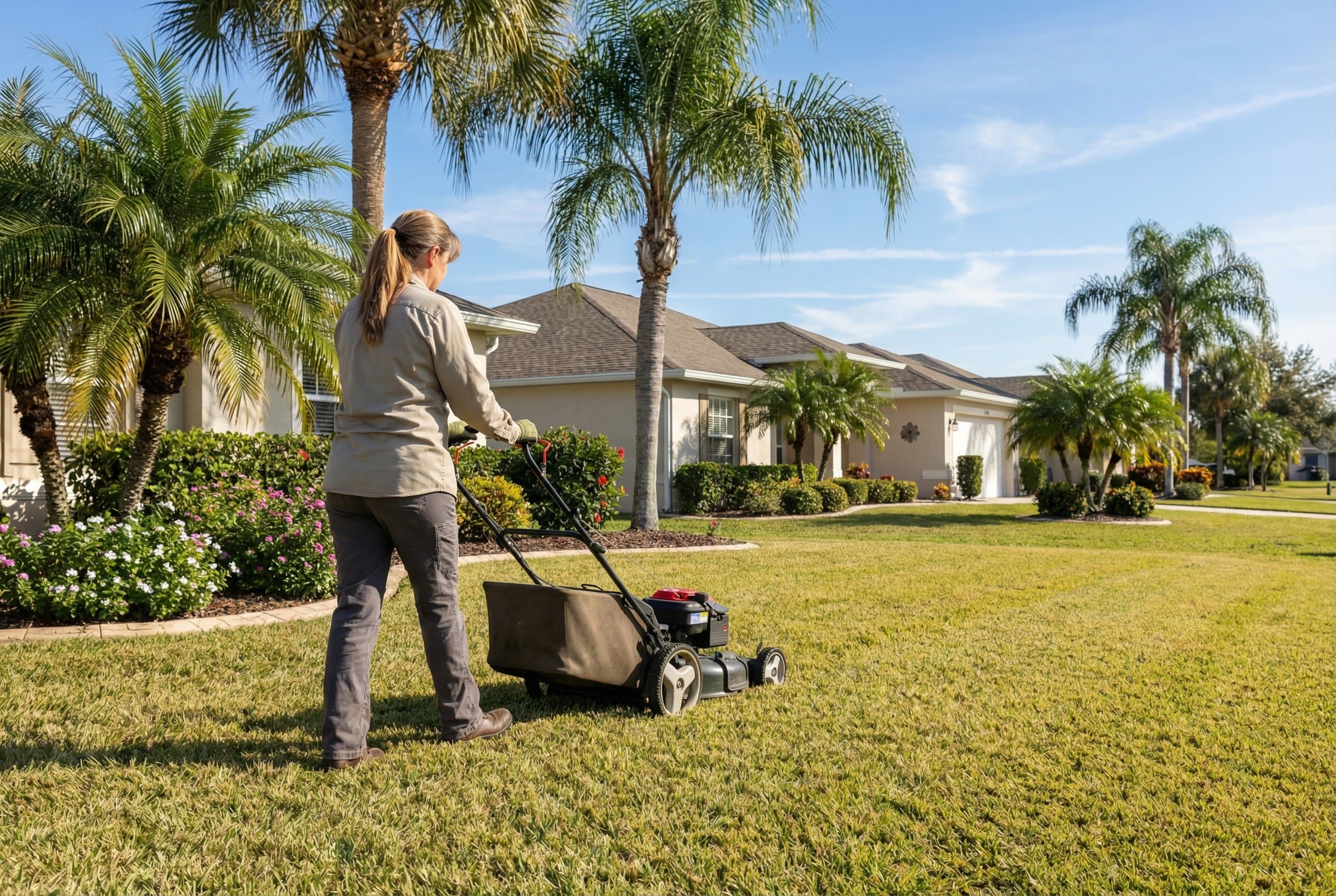
Florida's extended growing season means continued mowing through November and sometimes into December, depending on your location. In northern Florida (zones 8a-8b), expect your last mow between mid-November and early December. Central and southern Florida homeowners may mow year-round, with only occasional breaks during coldest periods[2].
Gradually raise your mowing height as growth slows. St. Augustinegrass should be maintained at 3.5-4 inches during fall months, while Bermudagrass can be kept at 1.5-2 inches. This higher cutting height helps grass blades capture maximum sunlight during shorter fall days and provides better cold protection[6].
Reduce mowing frequency from weekly summer schedules to every 10-14 days as temperatures moderate. However, continue removing no more than one-third of the grass blade length per cutting to avoid stressing the turf during this transitional period.
What Weeds Should I Target During Fall in Florida?
Fall presents an excellent opportunity for pre-emergent herbicide applications targeting winter annual weeds. Apply pre-emergent treatments in late October to early November to prevent crabgrass, chickweed, and other cool-season weeds from establishing[1].
Dollarweed and sedges often surge during fall's fluctuating moisture conditions. Post-emergent herbicide applications work most effectively when these perennial weeds are actively growing but before winter slows their metabolism. Target treatments during warm October days for maximum uptake[4].
Torpedograss requires aggressive fall management, as this invasive species continues spreading until hard freezes occur. In southern Florida, where freezes are rare, maintain vigilant spot-treatment programs throughout the fall season.
Chamberbitter completes its life cycle during fall months, making this the critical time for control before seed production. Hand-pulling or targeted herbicide applications in September and October prevent next year's infestations[1].
Conclusion
Successful fall lawn care in Florida requires adapting traditional practices to the state's unique warm-season grass types and extended growing seasons. Focus on reducing fertilization by October, maintaining active pest monitoring through November, and adjusting cultural practices for your specific hardiness zone. Remember that southern Florida lawns may require year-round attention, while northern regions experience brief dormancy periods requiring different preparation strategies.