Quick Answer
Florida's warm-season grasses like St. Augustinegrass and Bahiagrass can survive drought periods with proper watering (1 inch per week), raising mower height by 25%, and reducing foot traffic. Focus on deep, infrequent watering early morning and allow your lawn to go dormant during severe drought rather than forcing growth.
Key Takeaways
- Water deeply but less frequently - aim for 1 inch per week including rainfall
- Raise mower height to 3-4 inches for St. Augustine and 2-3 inches for Bahia during drought
- Skip fertilization during dry periods to reduce water stress on grass
- Watch for chinch bug infestations which worsen during drought conditions
- Allow grass to enter dormancy during severe drought - it will recover when rains return
Introduction
While Florida typically receives 54 inches of annual rainfall, drought periods can stress even the most resilient warm-season grasses[1]. Effective Florida drought lawn care requires specialized knowledge to protect St. Augustinegrass, Bahiagrass, Zoysiagrass, and Bermudagrass during extended dry periods.
From the subtropical zones of North Florida (8a-9a) to the tropical conditions of South Florida (10a-11a), understanding proper care techniques during dry spells is essential for maintaining lawn health year-round[2]. The key is working with your grass's natural drought tolerance rather than against it.
How Should I Water My Florida Lawn During Drought?
Proper watering techniques become critical when rainfall drops below Florida's normal patterns. St. Augustinegrass, the most popular lawn grass in Florida, requires approximately 1 inch of water per week, including natural rainfall[1].
Effective Florida drought lawn care focuses on maximizing water efficiency while maintaining grass health. Deep, infrequent watering encourages root development and improves drought tolerance over time.
Timing and Frequency
Water early morning (4-8 AM) to minimize evaporation in Florida's high humidity conditions[3]. Apply water 2-3 times per week rather than daily light watering, which encourages shallow root development.
Each watering session should penetrate 6-8 inches deep to reach the root zone. Use a rain gauge or empty tuna can to measure water application[2].
Grass-Specific Requirements
- St. Augustinegrass: Most water-demanding, showing drought stress first through wilting and folded leaves
- Bahiagrass: Extremely drought-tolerant, can survive with minimal supplemental watering[4]
- Zoysiagrass: Moderate drought tolerance, goes dormant during severe water stress
- Bermudagrass: Good drought tolerance, recovers quickly when water returns
Water Restrictions Compliance
Many Florida municipalities implement watering restrictions during drought[5]. Check local ordinances, as most allow twice-weekly watering on designated days based on your address. The South Florida Water Management District provides current restriction information for residents.
What Mowing Practices Help During Florida Droughts?
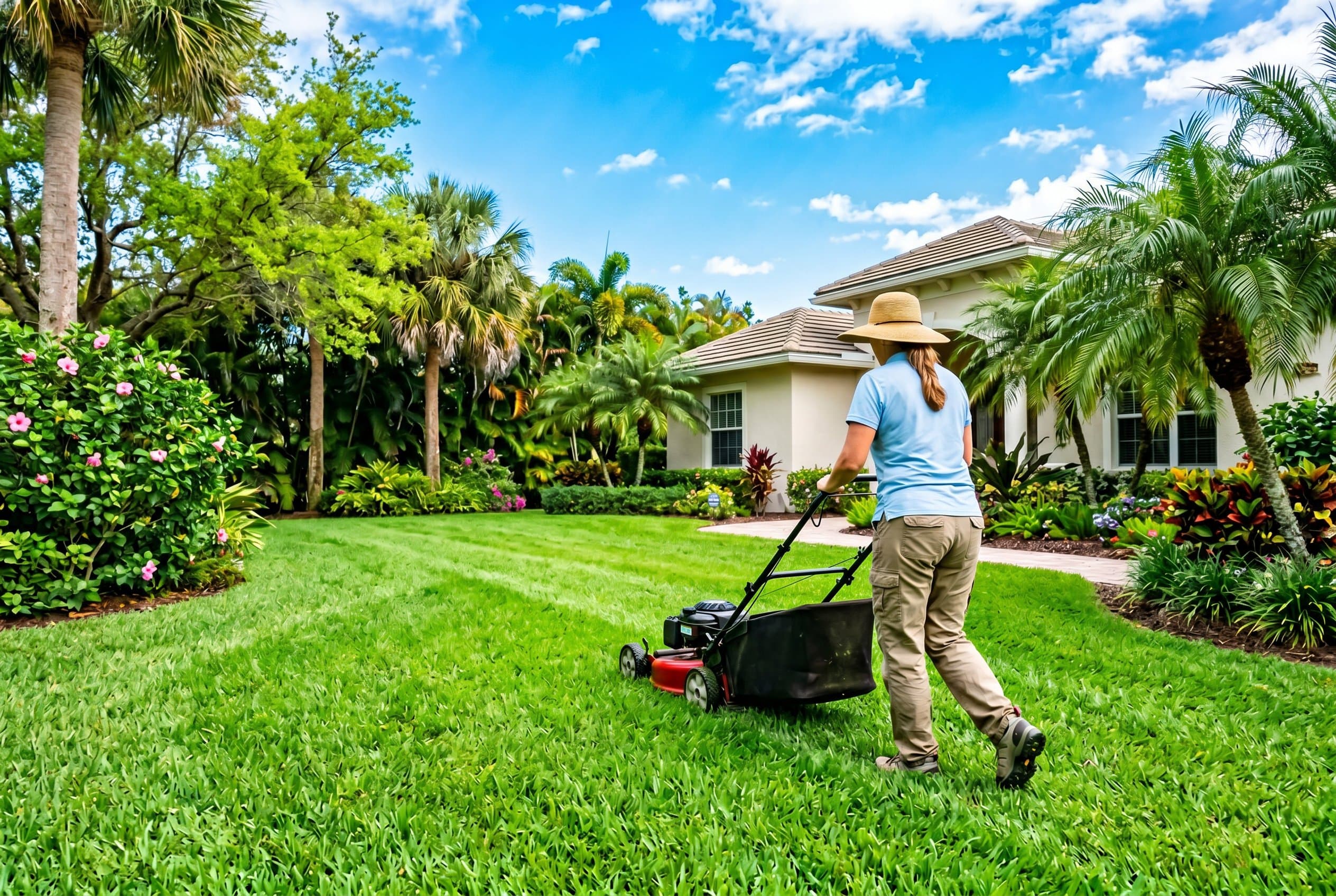
Adjusting mowing height significantly impacts your lawn's drought survival. Taller grass develops deeper root systems and provides more shade to the soil surface, reducing water evaporation[1].
This adjustment is a cornerstone of effective Florida drought lawn care strategies. Higher cutting heights also improve the grass's ability to photosynthesize during stress periods.
Height Adjustments by Grass Type
St. Augustinegrass: Increase from normal 3 inches to 3.5-4 inches during drought[2]. Never remove more than one-third of the blade length in a single mowing.
Bahiagrass: Raise cutting height from 2.5 inches to 3 inches. This grass naturally handles drought well but benefits from extra height.
Zoysiagrass: Maintain at 2-3 inches rather than the typical 1.5-2 inches during dry periods.
Mowing Frequency and Blade Maintenance
Reduce mowing frequency during drought as grass growth slows[6]. Ensure mower blades stay sharp - dull blades create ragged cuts that increase water loss through torn leaf tissue.
Consider mulching clippings to return moisture and organic matter to the soil. This practice can reduce watering needs by up to 25%[4].
How Do I Manage Pests and Diseases During Drought?
Drought-stressed lawns become more susceptible to Florida's common pests and diseases. Chinch bugs particularly target water-stressed St. Augustinegrass, creating irregular brown patches that homeowners often mistake for drought damage[1].
Early identification and treatment prevent minor issues from becoming major lawn damage. Monitor your lawn weekly during drought periods for signs of pest activity.
Pest Identification and Control
Chinch Bugs: Look for yellowing grass that progresses to brown patches, especially in sunny areas[2]. Adult chinch bugs have black bodies with white wings.
Apply targeted insecticides during early morning or evening hours. Beneficial nematodes offer an organic control option for severe infestations[3].
Sod Webworms: These moth larvae create small brown spots and are more active during drought. Look for small moths flying in zigzag patterns over the lawn at dusk.
Disease Prevention
Large patch disease can develop when drought is followed by excessive moisture[1]. Avoid overhead watering in the evening and ensure proper drainage around affected areas.
Gray leaf spot may also appear on St. Augustinegrass during stress periods, particularly in North Florida's higher humidity zones. Improve air circulation by pruning nearby shrubs and trees[6].
Should I Fertilize My Florida Lawn During Drought?
Skip routine fertilization during active drought periods. Fertilizer, especially nitrogen-rich formulations, encourages leaf growth that requires additional water the stressed grass cannot access[4].
This applies to all Florida grass types during water-restricted periods and is a key principle of Florida drought lawn care. Forcing growth during stress weakens the grass's natural defense mechanisms.
Post-Drought Recovery
Once regular rainfall returns or watering restrictions lift, resume fertilization with a balanced slow-release fertilizer[2]. Florida's fertilization window runs March through October, so timing depends on when drought conditions improve.
Wait at least two weeks after drought stress ends before applying fertilizer. This allows the grass to recover its natural moisture levels.
Organic Alternatives
Consider applying a thin layer of compost or organic matter to improve soil water retention without forcing new growth[5]. This approach works particularly well for Bahiagrass and Zoysiagrass, which respond well to organic soil amendments.
Compost also improves soil structure, helping retain water during future dry periods.
Conclusion
Successful Florida drought lawn care focuses on helping your grass survive stress rather than maintaining perfect appearance. Adjust watering to deep, infrequent applications, raise mowing heights, monitor for pest activity, and avoid fertilization during dry periods[1].
Remember that Florida's warm-season grasses are naturally adapted to periodic drought - allowing temporary dormancy protects long-term lawn health[6]. When normal rainfall patterns return, your properly maintained lawn will recover quickly and resume vigorous growth.
Start implementing these drought care practices before severe conditions develop, and always check local water restrictions to ensure compliance while protecting your investment in your Florida lawn.