Quick Answer
The best plants to grow alongside lavender are other drought-tolerant, sun-loving species that share its preference for well-drained, slightly alkaline soil. Roses, echinacea, rosemary, and salvia are all proven companions that thrive in the same conditions lavender demands [1]. The key rule is simple: if a plant loves soggy soil and shade, keep it far away from your lavender.
Key Takeaways
- Match the Mediterranean mindset: Lavender thrives in dry, well-drained soil with a pH of 6.5 to 7.5, so every companion should share those preferences.
- Roses and lavender are a classic pairing: Lavender's scent naturally deters aphids and whiteflies that plague rose bushes.
- Herbs make ideal neighbors: Rosemary, salvia, and thyme all evolved in similar Mediterranean climates and require the same low-water, high-sun conditions.
- Avoid moisture-loving plants entirely: Mint, hostas, and ferns need the wet soil conditions that cause lavender root rot and death.
- Pollinator benefits multiply with companions: Pairing lavender with other flowering companions creates a diverse pollinator buffet that attracts bumblebees, honey bees, butterflies, and hoverflies throughout the growing season.
What Are the Best Plants to Grow With Lavender?
The secret to choosing great lavender companions is understanding where lavender comes from. This is a Mediterranean native that evolved on rocky hillsides with blazing sun, sharp drainage, and lean soil. Any plant you set next to it should feel right at home in those same conditions. Here are the top performers.
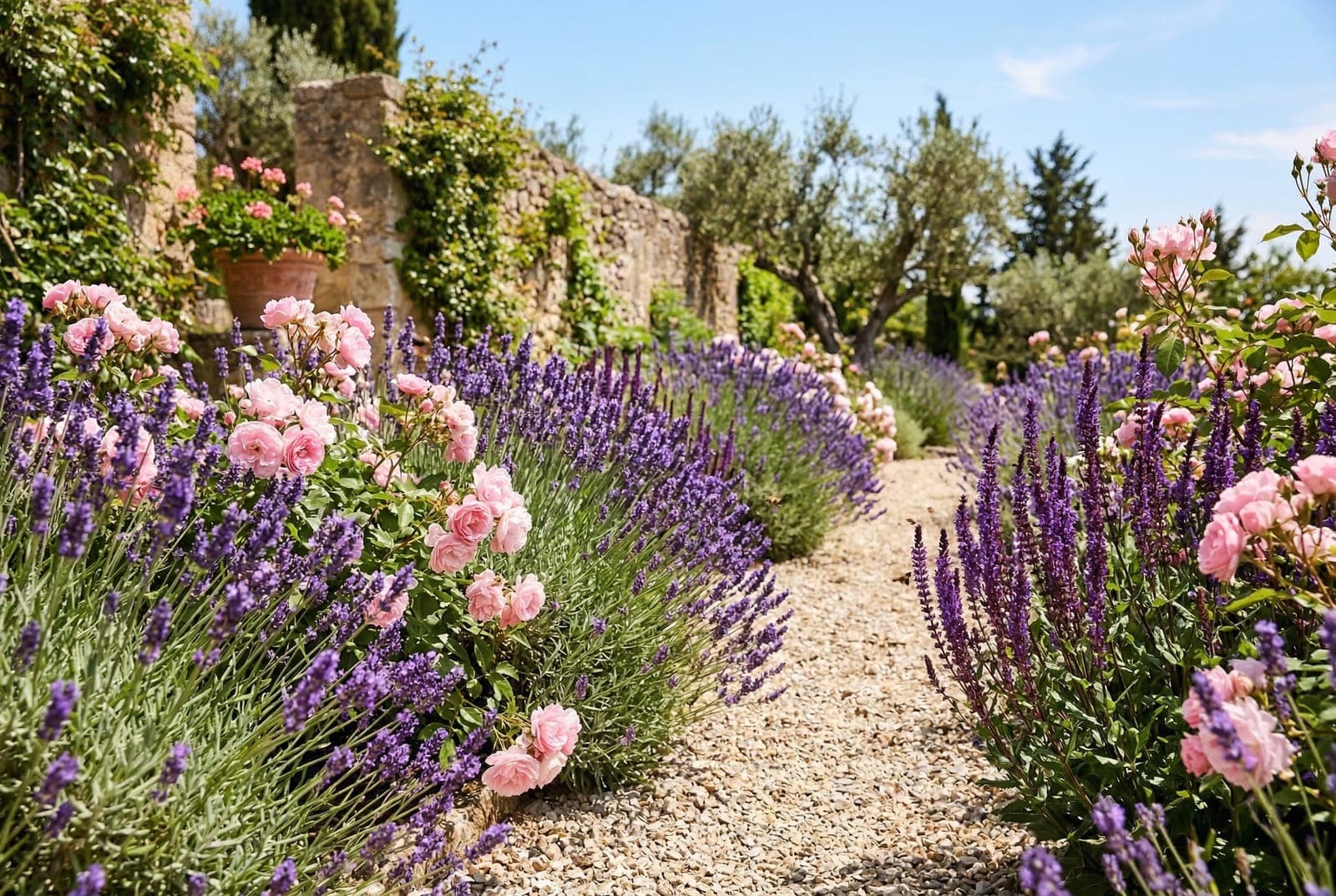
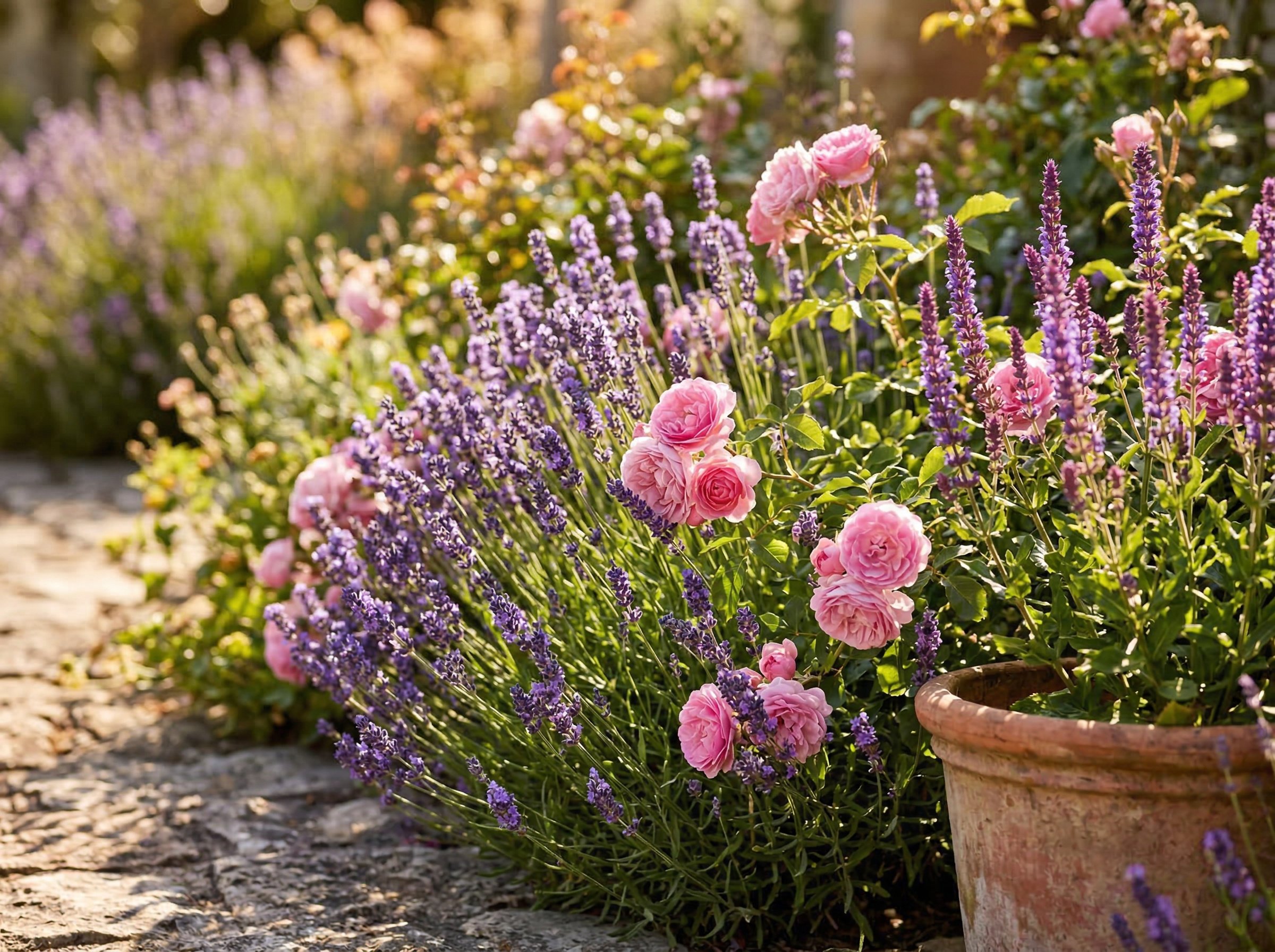
Roses are perhaps the most beloved lavender partner, and for good reason. Beyond the stunning visual contrast of purple blooms against pink, red, or white roses, there is a practical benefit that experienced gardeners have relied on for centuries. Lavender's potent essential oils produce a fragrance that repels aphids, whiteflies, and other soft-bodied insects that commonly devastate rose bushes. Plant lavender 18 to 24 inches from the base of your rose bushes to allow adequate airflow while still creating that protective aromatic barrier. Both plants want full sun and soil that drains quickly, so they are natural bed partners. Just make sure your roses are in a spot that gets at least six hours of direct sunlight, which is exactly what lavender demands as well [3].
Echinacea (coneflower) is another outstanding companion. Like lavender, echinacea is drought-tolerant once established and flourishes in full sun with lean to moderately fertile soil. Utah State University Extension specifically recommends pairing lavender with echinacea as a low-water-use companion [1]. The combination is also visually striking: the tall, daisy-like blooms of echinacea rise above the rounded mounds of lavender, creating a layered look with varied texture. Space echinacea plants about 18 inches from your lavender to give both species room to reach their mature spread. This pairing also extends the bloom season in your garden, since echinacea typically flowers from midsummer into early fall, picking up right where lavender's main June flush begins to slow.
Rosemary shares lavender's Mediterranean DNA almost exactly. Both are woody-stemmed, aromatic shrubs that demand fast-draining soil, full sun, and minimal supplemental water once their roots are established. Rosemary's upright growth habit creates an appealing architectural contrast against lavender's softer, mounding form. Plant them 24 to 36 inches apart, since both plants need good air circulation to prevent the fungal problems that develop in humid, crowded conditions. One practical advantage of this pairing is that you can treat the entire bed identically. No need to worry about different watering schedules or fertilizer needs. What keeps one happy keeps the other happy.
Salvia rounds out the top tier of lavender companions. Ornamental salvias, particularly varieties like 'May Night' or 'Caradonna,' produce spiky purple or blue flower stalks that complement lavender's blooms beautifully. They are heat-tolerant, drought-resistant, and perfectly content in the well-drained alkaline soil that lavender prefers. Salvia also has the advantage of being a long-blooming perennial, often flowering from late spring through the first frost if you deadhead spent blooms regularly. Space salvia 12 to 18 inches from lavender plants. Other worthy companions in this same vein include yarrow, gaillardia (blanket flower), daylilies, rudbeckia, and ornamental grasses. The common thread is always the same: sun-loving, drought-tolerant, and content in lean soil.
What Should You Avoid Planting Near Lavender?
Just as important as knowing what to plant with lavender is knowing what to keep far away from it. The most common mistake home gardeners make is treating lavender like any other perennial and tucking it into a mixed bed with moisture-loving plants. This is a recipe for a dead lavender plant.
Mint is the worst possible neighbor for lavender. Mint demands consistently moist soil and spreads aggressively through underground runners called stolons. If you water enough to keep mint happy, you are creating exactly the waterlogged conditions that destroy lavender roots. Lavender needs well-drained soil especially through winter, and saturated conditions cause root rot that kills the plant quickly [4]. Beyond the moisture conflict, mint is an aggressive colonizer that will invade lavender's root zone, competing for space and nutrients. If you want both in your garden, keep mint confined to a container at least 10 feet away from your lavender bed.
Hostas and ferns present the same fundamental problem. These are shade-loving, moisture-dependent plants that thrive in the rich, humus-heavy, consistently damp soil that is essentially poison for lavender. Hostas prefer partial to full shade, while lavender needs a minimum of six hours of direct sunlight [3]. You simply cannot satisfy both plants in the same location. A hosta bed with rich, amended soil and regular irrigation is the opposite environment from the sandy, lean, dry conditions where lavender thrives. Ferns are in the same category. They evolved on forest floors with filtered light and perpetually moist soil. Pairing them with a Mediterranean hillside native is asking both plants to compromise in ways that leave neither one healthy.
The general rule is straightforward: if a plant's care instructions say "keep soil consistently moist" or "prefers partial shade," it does not belong anywhere near your lavender. Other plants to avoid include impatiens, astilbe, ligularia, and most varieties of hydrangea. Stick to the dry-and-sunny crew, and your lavender bed will thrive for the 10 to 15 years a well-cared-for lavender plant can live.
How Does Lavender Attract Pollinators to Your Garden?
One of the most compelling reasons to plant lavender and choose its companions carefully is the extraordinary pollinator activity it generates. Lavender is one of the most effective pollinator-attracting plants available to home gardeners, and pairing it with the right companions amplifies that benefit across your entire landscape.
Research from Oregon State University has documented that lavender is especially popular among bumblebees, whose long tongues allow them to efficiently extract nectar from lavender's tubular flower structures [2]. Bumblebees spend an average of just 1.1 to 1.4 seconds per lavender flower, compared to 3.5 seconds for honey bees. That efficiency means bumblebees visit significantly more flowers per foraging trip, making them exceptionally effective pollinators. Honey bees, butterflies, hoverflies, and other beneficial insects also visit lavender frequently, creating a buzzing ecosystem around your garden beds.
The real magic happens when you combine lavender with other flowering companions that bloom at different times. Lavender typically peaks in June and July, while echinacea carries the bloom season into August and September. Salvia can flower from May through October with regular deadheading. Roses offer blooms from late spring through fall depending on the variety. By creating this staggered bloom calendar, you provide pollinators with a continuous food source throughout the entire growing season, rather than a single burst of flowers followed by months of nothing. This approach turns your lavender bed into a reliable pollinator habitat rather than just a pretty planting.
To maximize pollinator visits, plant lavender in groups of at least three to five plants. Pollinators are drawn to larger drifts of a single flower type because the concentrated scent and visual mass are easier to detect from a distance. Avoid using pesticides anywhere near your lavender companion bed, as even targeted applications can harm the bees and butterflies you are working to attract. With the right companion choices and a little planning, your lavender garden becomes one of the most ecologically productive areas of your entire yard.