
Quick Answer
The best flowers to plant with roses are lavender, catmint (nepeta), ornamental alliums, and salvia. These companions earn their spot not just because they look beautiful alongside roses, but because they actively deter common pests like aphids and Japanese beetles while attracting pollinators and beneficial predatory insects[1]. At the same time, you should keep fennel, gladiolus, and other aggressive growers far away from your rose beds to avoid nutrient competition and chemical interference.
Key Takeaways
- Lavender and catmint are top-tier partners: Their aromatic foliage deters aphids, rabbits, and Japanese beetles while their purple-blue flowers create a classic color contrast with roses.
- Ornamental alliums are natural pest shields: Their sulfur-rich volatile compounds are scientifically shown to repel aphids from nearby host plants like roses.
- Salvia bridges the bloom gap: Hardy salvias flower from late spring through fall, keeping your rose bed colorful even between rose flush cycles.
- Fennel and gladiolus are enemies of roses: Fennel releases root chemicals that stunt rose growth, and gladiolus competes aggressively for the same nutrients and moisture.
- Proper spacing is everything: Keep companions 12 to 18 inches from rose bases to avoid root competition while still providing pest-deterrent benefits and improved air circulation.
What Are the Best Flowers and Herbs to Plant With Roses?
Choosing the right companions for your roses is one of the smartest moves you can make in the garden. The right neighbors do more than just fill empty space. They pull double duty by looking gorgeous and actively protecting your roses from pests and disease. Here are the four standout companions that experienced rose growers swear by.
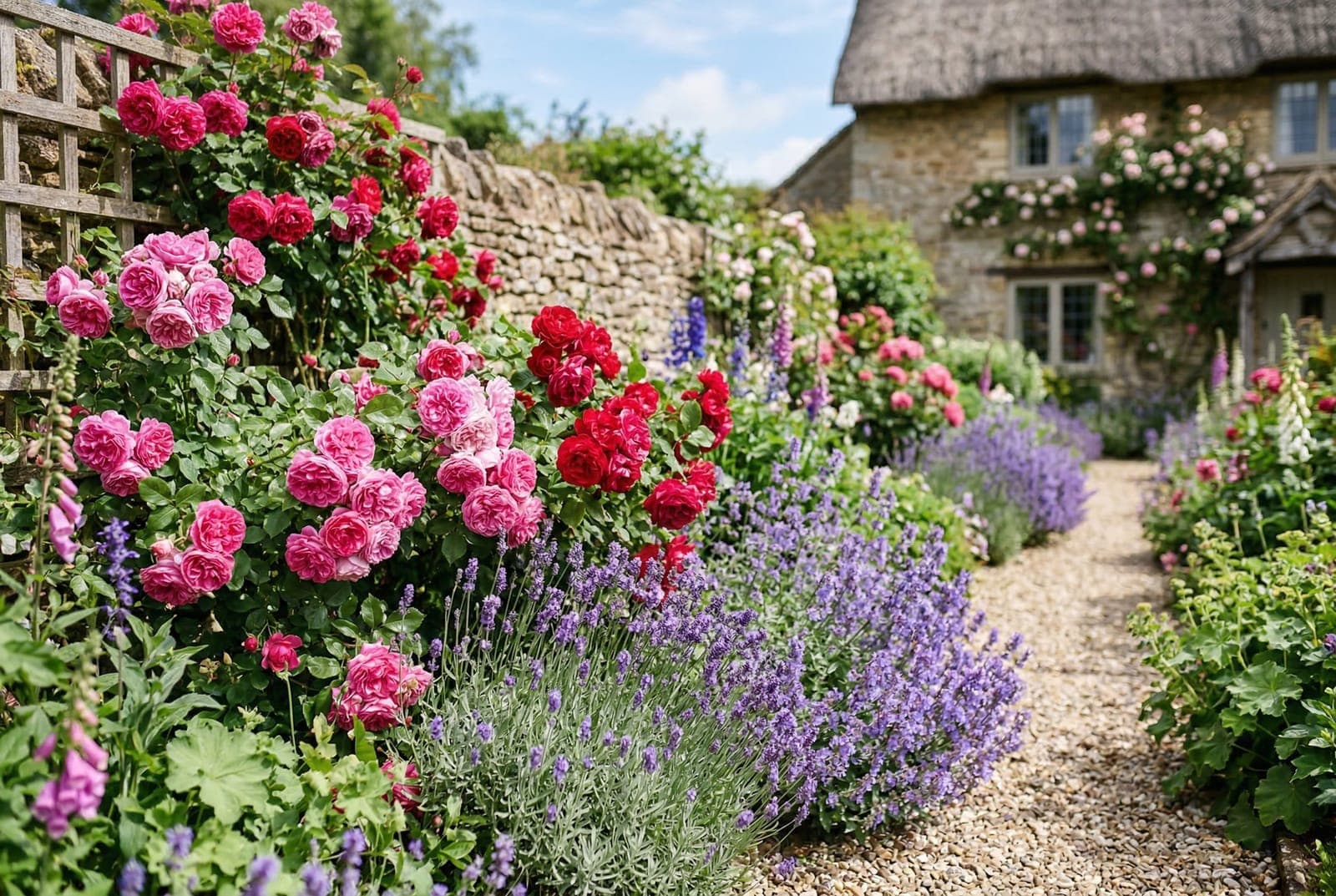
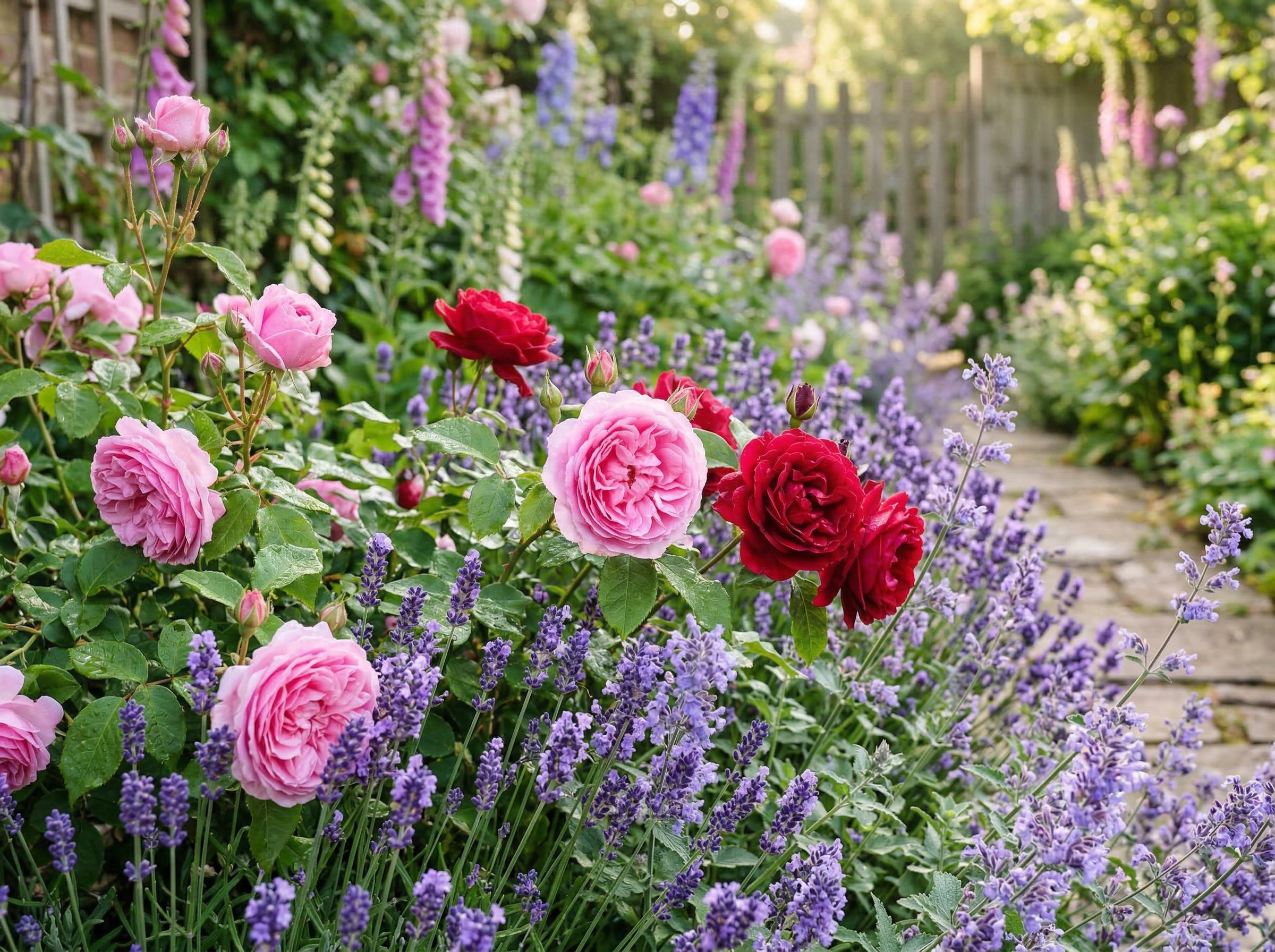
Lavender (Lavandula angustifolia) is probably the most iconic rose companion, and for good reason. English lavender thrives in the same full-sun, well-drained conditions that roses love. Its silvery-green foliage creates a beautiful textural contrast against the deep green of rose leaves, and those purple flower spikes complement virtually every rose color from soft pink to deep crimson. Plant lavender 18 to 24 inches from the base of your rose bushes so the plants have room to spread without crowding. Lavender typically blooms from late May through July, which overlaps nicely with the first big rose flush of the season. Beyond looks, lavender's strong aromatic oils are known to deter aphids, whiteflies, and rabbits from the garden[1].
Catmint (Nepeta x faassenii) is lavender's easygoing cousin and an equally excellent rose partner. Where lavender can be a bit fussy about drainage and humidity, catmint is remarkably forgiving. The variety 'Walker's Low' grows about 18 to 24 inches tall and produces waves of blue-violet flowers from late spring all the way into fall if you shear it back after the first bloom. That long flowering period means your rose bed never looks bare, even during the awkward pause between rose flushes. Catmint also attracts ladybugs and lacewings, which are voracious predators of aphids. Plant it 12 to 15 inches from your roses and let it billow naturally along the front of the bed. The soft, mounding habit of catmint hides the often bare and leggy lower stems of rose bushes beautifully[1].
Ornamental Alliums (Allium species) bring dramatic structure to a rose garden with their spherical flower heads floating on tall, slender stems. Varieties like 'Purple Sensation' and 'Globemaster' bloom in late spring, right as many roses are hitting their stride. Beyond their striking visual appeal, alliums are arguably the most scientifically validated companion plant for pest control. Research published in the journal Insects confirms that allium species produce volatile sulfur compounds that actively repel aphids. Studies specifically document that the green peach aphid, which also attacks roses, is repelled by the odor of allium plants even when their preferred host plant is nearby[2]. Plant allium bulbs in the fall, spacing them 6 to 8 inches apart and about 12 inches from your rose bases. Their narrow, upright growth habit means they never compete with roses for sunlight or air circulation.
Salvia (Salvia nemorosa) rounds out the top four with its upright flower spikes in shades of deep blue, violet, and purple. Hardy perennial salvias like 'May Night' and 'Caradonna' bloom from late May through September with deadheading, filling the color gaps between rose bloom cycles. Salvia shares the same love for full sun and moderate water that roses need, making them low-maintenance bed partners. Their aromatic foliage contains compounds that deter certain beetles and moth larvae. Space salvia plants 15 to 18 inches from rose bases and about 12 inches apart from each other. The vertical flower spikes of salvia create a compelling contrast with the rounded, cupped blooms of roses, a pairing that garden designers have relied on for decades.
What Should You Avoid Planting Near Roses?
Not every plant plays nicely with roses. Some companions will actually weaken your bushes or invite the very problems you are trying to prevent.
Fennel (Foeniculum vulgare) is one of the worst plants you can put near roses. Fennel releases allelopathic compounds through its root system, chemicals that inhibit the growth of neighboring plants. These substances can stunt rose growth, reduce bloom production, and weaken overall plant vigor. Penn State Extension research on allelopathy confirms that certain plants produce and release toxic chemical compounds into the soil that suppress nearby growth[4]. If you love fennel for cooking, grow it in a separate bed or container at least 4 to 5 feet from your nearest rose bush.
Gladiolus is another poor choice for rose beds. While gladiolus corms and rose roots occupy similar soil depths, they compete aggressively for the same water and nutrients. Gladiolus also attracts thrips, which can spread to roses and cause significant damage to buds and blooms. The tall, sword-like foliage of gladiolus can crowd roses and reduce the air circulation that roses need to resist fungal diseases. Keep gladiolus in a cutting garden or a separate bed where it will not interfere with your roses.
Other plants to keep away from your roses include bunchgrasses that spread aggressively through runners, mint that will invade every inch of available soil, and large-canopy trees like black walnut, which produces juglone, a well-documented allelopathic compound toxic to many ornamental plants[4]. As a general rule, avoid anything that grows aggressively, demands heavy feeding, or produces chemicals that could leach into the root zone of your roses.
How Do Companion Plants Fight Rose Disease and Pests?
Understanding the science behind companion planting helps you design a rose bed that practically takes care of itself. The benefits fall into three main categories: pest deterrence, beneficial insect attraction, and disease prevention through improved growing conditions.
The pest-deterrent effect of companion planting is the most well-studied benefit. Allium species in particular have robust scientific backing. Their volatile sulfur compounds, which make up roughly 94 percent of their emissions, disrupt the ability of aphids to locate their host plants[2]. Aphids navigate primarily by scent, and the strong sulfur odor of nearby alliums essentially jams their radar. Lavender operates on a similar principle. Its essential oils, including linalool and linalyl acetate, are known insect deterrents that can reduce aphid populations and discourage Japanese beetles from landing on nearby roses. While the New York Botanical Garden notes that rigorous scientific research directly linking herb companions to rose pest reduction is still limited, the documented insect-repellent properties of these plants' volatile compounds provide a strong scientific rationale for the practice[1].
Companion plants also protect roses by attracting beneficial predatory insects. Catmint and salvia flowers draw ladybugs, lacewings, hoverflies, and parasitic wasps into your garden. A single ladybug can eat up to 50 aphids per day, and lacewing larvae are even more voracious. By creating a habitat that supports these natural predators year-round, you build a self-sustaining pest control system that reduces or eliminates the need for chemical sprays.
Perhaps the most overlooked benefit of good companion planting is improved air circulation and microclimate management, which directly affects black spot, the most common fungal disease in roses. Black spot (Diplocarpon rosae) thrives in warm, humid conditions where moisture sits on leaf surfaces for extended periods. When you choose upright, well-spaced companions like salvia and alliums instead of dense, spreading ground covers, you maintain airflow around the lower portions of your rose bushes where black spot typically starts. The University of Missouri Extension emphasizes selecting rose planting sites with good air circulation as a primary defense against fungal disease[3]. Thoughtful companion planting extends that principle by ensuring the plants surrounding your roses promote airflow rather than restrict it.