
Quick Answer
If you're wondering when to aerate your lawn in Pennsylvania, the best window is late August through October, with September being the prime month for most homeowners. This timing aligns with the active growing season of Pennsylvania's cool-season grasses, allowing them to recover quickly and fill in aeration holes before winter dormancy sets in[1].
Key Takeaways:
- Aerate cool-season lawns (Kentucky Bluegrass, Tall Fescue, Perennial Ryegrass) in late August through October
- September is the single best month to aerate in Pennsylvania
- Core aeration is strongly preferred over spike aeration for compacted Pennsylvania soils
- Pair aeration with overseeding for best results — grass seed germinates readily in loosened soil
- Avoid spring aeration, which opens the door for crabgrass and other weeds to take hold
Pennsylvania homeowners deal with a unique set of lawn care challenges: heavy clay soils across much of the state, moderate-to-high humidity that fuels diseases like brown patch and dollar spot, and 42 inches of annual rainfall that can compact the ground over time[5]. Aeration is one of the most impactful things you can do to combat these conditions — but only if you do it at the right time. Get the timing wrong, and you risk stressing your lawn during peak heat, triggering weed problems, or missing the critical fall recovery window entirely.
When to Aerate Your Lawn in Pennsylvania: Fall Is the Answer
For the vast majority of Pennsylvania lawns — which are planted with cool-season grasses like Kentucky Bluegrass, Tall Fescue, Perennial Ryegrass, and Fine Fescue — fall is the only recommended aeration window[1]. Penn State Extension consistently points to late August through October as the ideal period, with September standing out as the sweet spot.
Here's why fall timing works so well in Pennsylvania:
- Soil temperatures are still warm enough (above 50°F) to support active root growth
- Air temperatures are cooling down, reducing stress on the turf
- Cool-season grasses are in their second major growth flush of the year
- Rainfall patterns in Pennsylvania make fall soil moisture more predictable than summer
- Germinating weed seeds (especially crabgrass) are no longer a major concern by September[2]
What About Spring Aeration in Pennsylvania?
Spring aeration is tempting — your lawn looks rough after winter, and you want to do something. But it's generally not recommended for Pennsylvania cool-season grass care. Aerating in April or May disturbs the soil just as crabgrass and broadleaf weed seeds are germinating, giving them an easier path to establish[2]. It also stresses cool-season grasses right before summer heat arrives, leaving thin turf vulnerable to summer patch and other diseases common in Pennsylvania's humid summers.
If your soil is severely compacted and you feel you must aerate in spring, wait until late April and skip overseeding — the two don't pair well in the spring window.
How to Core Aerate a Pennsylvania Lawn in Fall: Step-by-Step
This is where timing meets execution. Follow these steps for a successful fall lawn aeration in Pennsylvania:
Step 1: Test Your Soil First Penn State Extension offers affordable soil testing through their lab[1]. A soil test tells you pH and nutrient levels, so you can fertilize intelligently right after aeration.
Step 2: Mow Slightly Lower Drop your mowing height by about half an inch the week before aerating. This helps the aerator cores penetrate more evenly. Don't scalp — just a slight trim.
Step 3: Water the Lawn Aerate when soil is moist but not soggy. Water deeply one to two days before if Pennsylvania hasn't provided natural rainfall[3]. Dry, hard soil prevents the tines from pulling full cores.
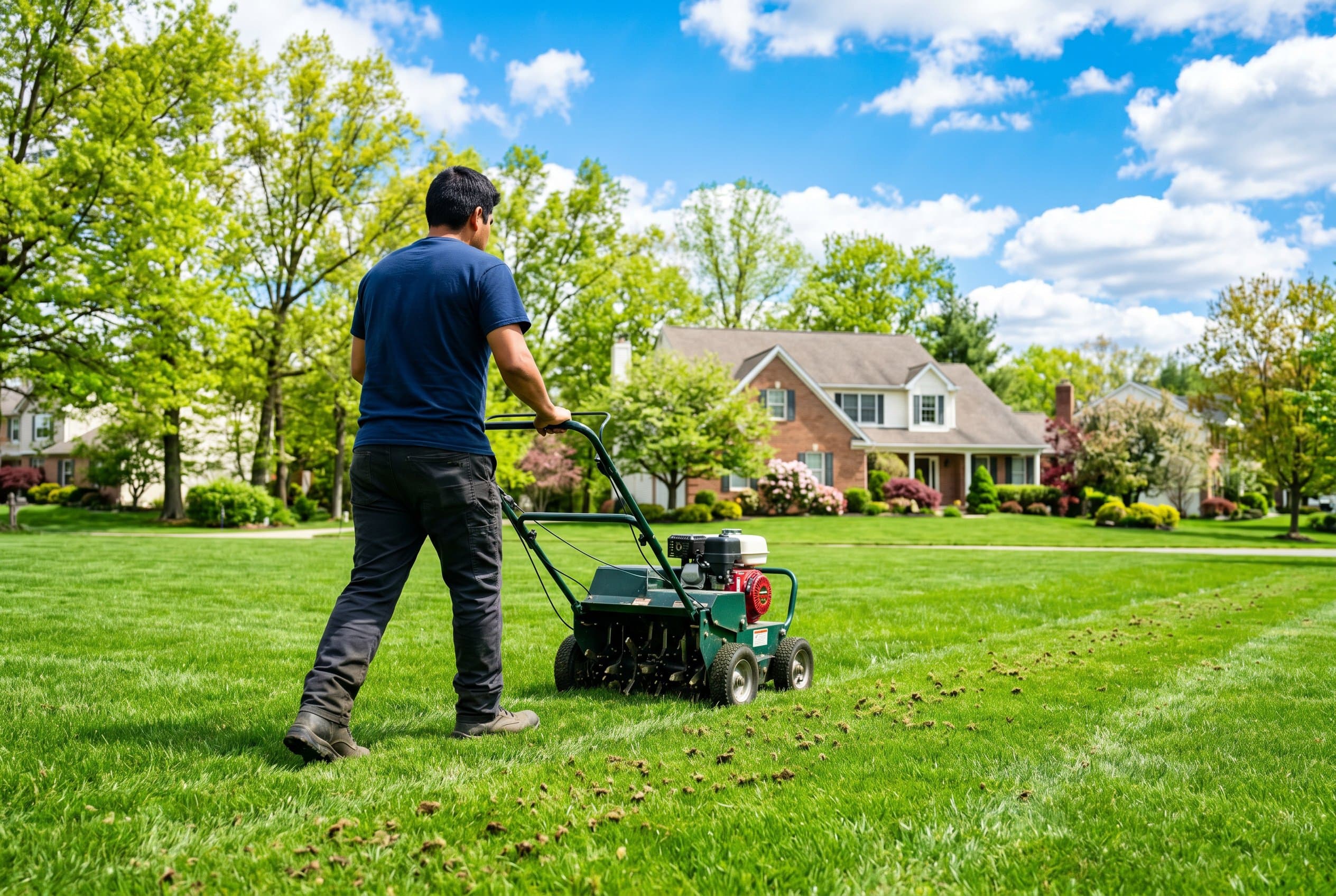
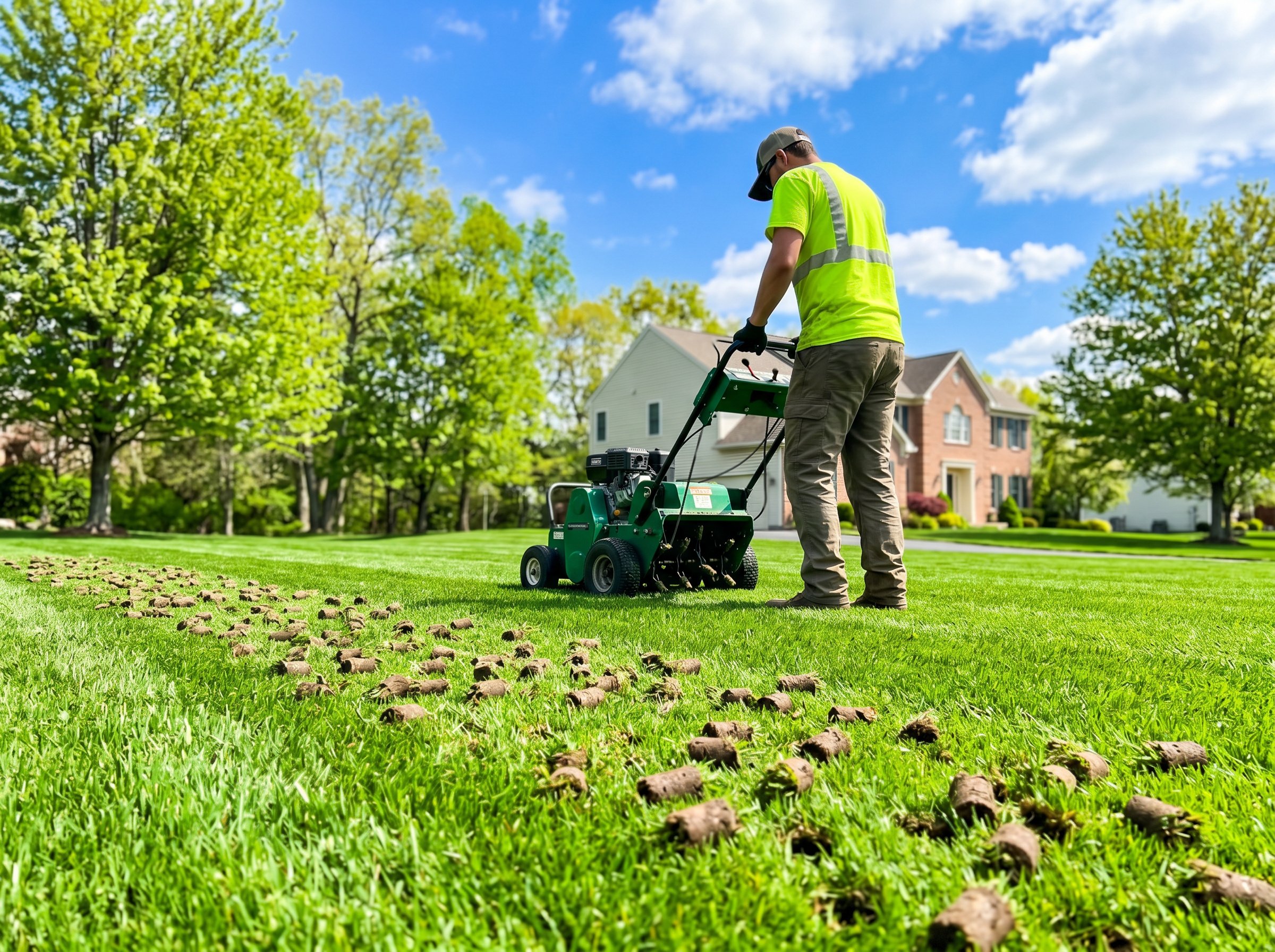
Step 4: Use a Core Aerator (Not a Spike) Core (plug) aerators physically remove 2–3 inch soil plugs, creating genuine relief for compacted ground[4]. Spike aerators just punch holes, which can actually increase compaction around the spike. Rent a walk-behind core aerator from a local equipment rental shop — they're widely available in Pennsylvania every fall.
Step 5: Make Two Passes For heavily compacted areas — common in Pennsylvania homes with clay-heavy soils or heavy foot traffic — make two passes in perpendicular directions[3]. This doubles the number of holes and maximizes results.
Step 6: Leave the Cores on the Lawn Don't rake up the soil plugs. They break down naturally within two to four weeks, depending on rainfall and temperatures, returning organic matter to the surface[3].
Step 7: Overseed and Fertilize Immediately after aerating, overseed with a quality cool-season blend suited to your conditions — Kentucky Bluegrass/Ryegrass blends for sun, Creeping Red Fescue for shaded areas[1][6]. Follow with a starter fertilizer to support germination.
Does Your Pennsylvania Lawn Actually Need Core Aeration?
Not every lawn needs annual aeration. Here's how to tell if yours does:
- The screwdriver test: Push a standard screwdriver into moist soil. If it won't penetrate 2 inches easily, your soil is compacted and needs aeration[4].
- Thatch buildup: If you have more than ½ inch of thatch (the spongy brown layer between grass and soil), aeration helps break it down[4].
- Water runoff: If irrigation or rain puddles on the surface instead of soaking in, compaction is likely the cause.
- Thin, struggling turf: Lawns that refuse to thicken up despite proper fertilization and watering often have compaction issues.
Pennsylvania's clay-heavy soils — especially in the Piedmont and lower elevations — are particularly prone to compaction[5]. If your neighborhood has lots of construction activity or heavy traffic, plan on aerating every one to two years.
How Fall Lawn Aeration Helps Pennsylvania's Common Lawn Problems
Aeration doesn't just fight compaction — it creates indirect benefits that matter specifically in Pennsylvania:
- White grubs and billbugs are harder to treat in compacted soil where insecticide can't penetrate properly. Aeration improves treatment effectiveness[2].
- Brown patch and summer patch thrive in dense, poorly drained turf. Aeration improves drainage and airflow, reducing disease pressure.
- Overseeding after aeration helps crowd out dandelions, broadleaf plantain, and ground ivy naturally by filling bare spots with desired grass[6].
Frequently Asked Questions
Can I aerate my lawn in spring in Pennsylvania?
It's generally not recommended. Spring aeration in Pennsylvania coincides with peak crabgrass and broadleaf weed germination, and disturbing the soil gives those weeds a competitive advantage[2]. It also stresses cool-season grasses just before summer heat arrives. Stick to the fall window — late August through October — for best results.
How often should I aerate my Pennsylvania lawn?
Most Pennsylvania lawns benefit from aeration every one to two years. Lawns with heavy clay soil, high foot traffic, or visible compaction signs (water runoff, thin turf) should be aerated annually. Lawns with sandy loam soils and low traffic may only need aeration every two to three years[4].
What type of aerator is best for clay soil in Pennsylvania?
A core (plug) aerator is strongly preferred over a spike aerator for Pennsylvania's clay-heavy soils. Core aerators physically remove plugs of soil, relieving compaction and improving water infiltration. Spike aerators merely push soil aside, which can actually worsen compaction in clay conditions[4].
Should I overseed after aerating my Pennsylvania lawn?
Yes — and fall is the perfect time to do both together. Aerating first loosens the soil and creates ideal seed-to-soil contact for germination[6]. Use a cool-season blend appropriate for your conditions: Kentucky Bluegrass or Perennial Ryegrass mixes for sunny areas, and Creeping Red Fescue or Fine Fescue blends for shadier spots[1].
Conclusion: Your Fall Aeration Calendar for Pennsylvania
If you take one thing from this article: mark September on your calendar and rent a core aerator. For Pennsylvania homeowners with cool-season lawns, fall aeration is one of the highest-return investments you can make in your turf's long-term health.
Here's your dated action checklist to keep you on track:
- By August 15: Submit a soil test to Penn State Extension so results arrive before you aerate[1]
- September 1–10: Purchase or arrange rental of a walk-behind core aerator; buy overseed blend and starter fertilizer
- September 10–30: Aerate when soil is moist, making two perpendicular passes over compacted areas; overseed immediately after[3]
- September 10–30: Apply starter fertilizer the same day as overseeding to support new seed germination[6]
- October 1 through first frost: Water lightly and frequently (two to three times daily for short intervals) to establish new grass before dormancy
Taking these steps in the right sequence — during Pennsylvania's fall lawn aeration window — sets your lawn up to come back thicker, greener, and more resilient the following spring.
