

Quick Answer
The best time to plant grass seed in San Antonio is mid-April through June, once soil temperatures have consistently reached 65–70°F and the risk of frost has passed. San Antonio's average last frost falls on February 28, making mid-April the safest entry point for warm-season seeding[1]. Bermudagrass and Zoysiagrass are the most seed-viable options for local lawns, while St. Augustinegrass — the city's most popular turf — must be established through sod or plugs rather than seed[2]. Planting during this window gives grass the long, hot growing season it needs to develop deep roots before San Antonio's first fall frost, which arrives around November 30 on average[1].
Key Takeaways
- Plant warm-season grass seed in San Antonio between mid-April and June, after soil temps hit 65–70°F
- Bermudagrass is the most reliable seed option for San Antonio's hot, semi-arid climate
- St. Augustinegrass — the city's most popular turf — should be established via sod or plugs, not seed
- San Antonio's USDA Zone 8b and frost window (Feb 28–Nov 30) gives lawns a long but heat-stressed growing season
- Texas A&M AgriLife Extension in Bexar County is your best local resource for soil testing and grass variety guidance
Introduction: Why Timing Grass Seeding Is Tricky in San Antonio
Knowing when to plant grass seed in San Antonio requires understanding the city's unique climate — and it's more nuanced than simply watching the calendar. San Antonio sits in USDA Hardiness Zone 8b, a classification that allows warm-season grasses to thrive, but only when planted at the right time[3]. The city's climate swings from humid conditions in the east to more arid, dry heat pushing west toward the Hill Country, and neighborhoods like Stone Oak and Boerne experience slightly different moisture levels than areas like Schertz or Alamo Heights closer to the urban core.
San Antonio's summers are relentless — temperatures routinely climb above 100°F — and its soils are often alkaline, rocky, or clay-heavy, particularly in areas underlaid by the Edwards Plateau limestone. Grass seed planted too early risks a late frost, while seed planted too late gets scorched before it can establish. Layer in local threats like chinch bugs, fire ants, and armyworms that prey on stressed or newly seeded turf, and it becomes clear that timing isn't just a suggestion — it's the foundation of a successful lawn[4].
Getting the calendar right is the single most impactful decision you'll make for your lawn.
When to Plant Grass Seed in San Antonio: The Optimal Window
The golden window for seeding warm-season grasses in San Antonio is mid-April through June. Here's why that range works.
Soil Temperature Is Your Real Calendar
Air temperature is a rough guide, but soil temperature is what actually triggers germination. Warm-season grasses need soil temps of at least 65°F — and ideally 70°F — measured at 2–4 inches deep[2]. In San Antonio, soils typically reach this threshold by mid-April, though in cooler microclimates like Boerne or New Braunfels — which sit at higher elevations in the Texas Hill Country — you may want to wait until late April or early May.
You can check soil temperature using an inexpensive soil thermometer, or reference soil temperature monitoring tools available through Texas A&M AgriLife's Bexar County office[1].
Why the Frost Dates Matter
San Antonio's average last frost falls on February 28 and the first fall frost arrives around November 30[1]. That gives warm-season grasses roughly nine months of frost-free growing time. However, grass seed planted in March — even after the last frost — risks germinating into a late cold snap, which can kill tender seedlings. Waiting until mid-April gives you a reliable buffer.
On the back end, any seeding after mid-August becomes risky. Seedlings need at least 60–90 days to establish before cold weather slows growth, and a lawn seeded in September in San Antonio may not harden off sufficiently before November[5].
What Grass Seed Should I Plant in San Antonio?
This is where San Antonio homeowners often get tripped up: not all popular local grasses can be grown from seed.
Bermudagrass — Best Seed Option for San Antonio
Bermudagrass is the workhorse of San Antonio lawns and the most practical seeding choice[2]. It thrives in full sun, tolerates drought once established, and bounces back from San Antonio's brutal summer heat. Use hulled Bermuda seed for faster germination — typically 7–14 days in warm soil. Bermuda is especially well-suited to the sunny, open yards common in Stone Oak and Schertz subdivisions[6].
- Seeding rate: 1–2 lbs of hulled seed per 1,000 sq ft
- Germination: 7–14 days at 70°F soil temps
- Best for: Full-sun yards, high-traffic areas, drought-prone lots
Zoysiagrass — Slower but Durable
Zoysiagrass can be seeded, though it establishes much more slowly than Bermuda — expect a full season before you have a dense stand[2]. It offers excellent wear tolerance and handles San Antonio's heat well, making it a solid long-term investment for homeowners in Alamo Heights or New Braunfels who want a refined, carpet-like lawn.
- Seeding rate: 1–2 lbs per 1,000 sq ft
- Germination: 14–21 days
- Best for: Homeowners willing to wait for a premium, dense turf
St. Augustinegrass — Skip the Seed
St. Augustinegrass is San Antonio's most widely planted turfgrass — and for good reason. It handles partial shade and the city's humidity far better than Bermuda[4]. However, viable St. Augustine seed is not commercially available. If St. Augustine is your goal, plan to install sod or plugs between April and August instead.
How to Prepare Your San Antonio Yard for Grass Seed
Even perfect timing won't save a poorly prepared seedbed. San Antonio's alkaline, caliche-heavy soils require extra attention before you spread a single seed[1].
Get a Soil Test First
Texas A&M AgriLife Extension's Bexar County office offers soil testing services that will tell you your soil's pH, nutrient levels, and organic matter content[1]. Most San Antonio soils run alkaline (pH 7.5–8.5), which can lock out nutrients even when fertilizer is applied. A soil test removes the guesswork and tells you exactly what amendments to add.
Seedbed Preparation Steps
- Mow or remove existing vegetation and loosen the top 2–4 inches of soil with a rake or tiller
- Apply any lime or sulfur amendments recommended by your soil test
- Add a thin layer of compost (¼–½ inch) to improve germination in San Antonio's compacted soils
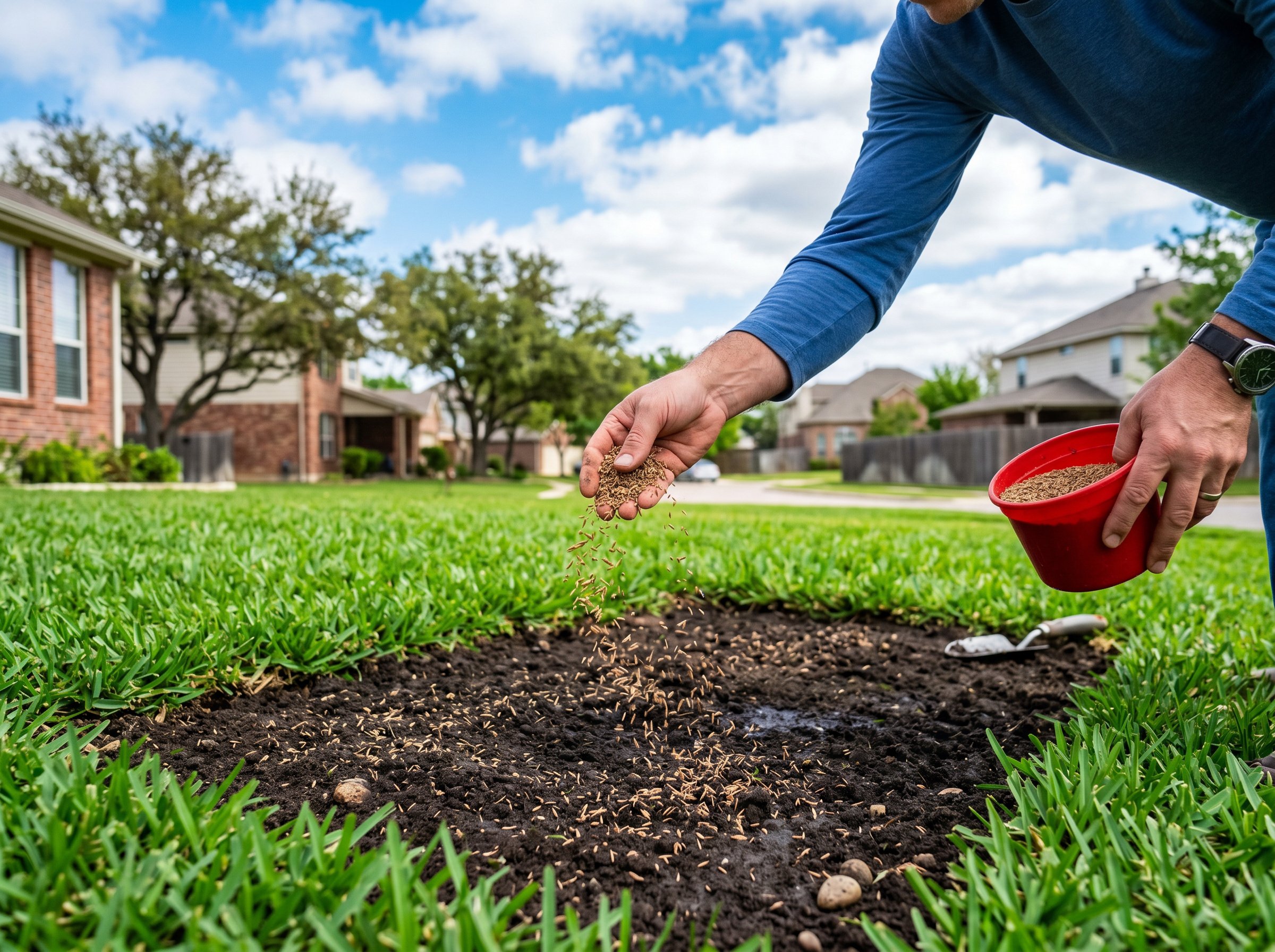
- Seed with a broadcast spreader, then lightly rake seed into the top ¼ inch of soil
- Water lightly 2–3 times daily until germination, then transition to deeper, less frequent irrigation[5]
Watch for Pest Pressure on New Turf
Newly seeded lawns are vulnerable to pests. In San Antonio, chinch bugs are a top threat to young Bermuda and St. Augustine turf during the summer months, while armyworms can devastate a newly germinated stand overnight[4]. Inspect your lawn regularly during the establishment period and consult the Bexar County Extension office if you spot early signs of pest damage.
When to Plant Grass Seed in San Antonio: Seasonal Summary
To make the timing crystal clear, here's how each season stacks up for seeding in San Antonio:
- January–February: Too cold; frost risk remains; do not seed
- March: Frost risk subsiding but soil temps still too low; avoid seeding
- Mid-April–June: Optimal window; soil temps at 65–70°F, long growing season ahead[1]
- July: Acceptable if you can maintain consistent irrigation through peak heat
- Mid-August–September: Risky; seedlings may not establish before first fall frost[5]
- October–December: Too late for warm-season seeding; plan for next spring
Sticking to mid-April through June gives your turf the maximum runway for root development before the heat peaks and before fall's first frost arrives[3].
Conclusion: Your San Antonio Lawn Seeding Action Plan
Planting grass seed in San Antonio comes down to respecting the local calendar and choosing the right grass for the job. Wait until after February 28 (average last frost), confirm soil temps have hit 65–70°F, and target mid-April through June for seeding Bermudagrass or Zoysiagrass[1][2]. If you want St. Augustinegrass — the neighborhood standard from Alamo Heights to Stone Oak — go with sod or plugs instead.
Before you seed, run a soil test through Texas A&M AgriLife's Bexar County Extension office to address San Antonio's alkaline soil conditions[1]. Stay alert to chinch bugs and armyworms as your turf establishes, keep irrigation consistent through germination, and you'll have a strong, healthy lawn well before San Antonio's first fall frost arrives at the end of November[4].
For personalized guidance on grass varieties, soil amendments, and local pest management, the Texas A&M AgriLife — Bexar County Extension office remains your most reliable resource for San Antonio lawn care[1].