

Quick Answer
In Raleigh, the best time to plant cool-season grass seed — like Tall Fescue — is from mid-September through mid-October, giving seedlings time to establish before the average first frost around November 4[1]. Warm-season grasses like Bermudagrass and Zoysiagrass should be seeded or sprigged in late spring to early summer, after soil temperatures consistently exceed 65°F and the last frost risk has passed (typically after April 8)[2]. Getting the timing right in Raleigh's transition-zone climate is the single biggest factor in whether your lawn thrives or struggles.
Key Takeaways
- Plant Tall Fescue seed in Raleigh between mid-September and mid-October for the best germination and root development before winter
- Bermudagrass and Zoysiagrass should be established after Raleigh's last average frost date of April 8, once soils warm above 65°F
- Raleigh sits in USDA Hardiness Zone 7b, a transition zone where both cool- and warm-season grasses can grow — but timing is critical for each
- NC State Extension — Wake County is your best local resource for soil testing, variety selection, and seeding rate recommendations
- Avoid seeding during Raleigh's hot, humid summers (July–August) when heat stress, drought, and pest pressure from armyworms peak
Why Grass Seed Timing Is Uniquely Tricky in Raleigh
Raleigh sits squarely in the transition zone — a challenging climate band where summers are too hot for cool-season grasses to thrive and winters are occasionally too cold for warm-season grasses to survive reliably[3]. Add in Raleigh's humid subtropical conditions, clay-heavy Piedmont soils, and an average of 46 inches of annual rainfall, and you have a lawn environment that punishes poor timing harshly.
Homeowners in neighborhoods like North Hills, Cary, Apex, and Wake Forest often deal with the same dilemma: a Tall Fescue lawn that thins out every August, or a Bermudagrass lawn that browns out after an unexpected cold snap. The solution isn't a different grass — it's better timing and local knowledge.
Raleigh's clay soils also drain slowly and compact easily, which affects seed-to-soil contact and germination rates[4]. Before you spread a single seed, understanding your grass type and Raleigh's frost window is essential.
When Should I Plant Grass Seed in Raleigh?
The answer depends on which type of grass you're growing. Raleigh homeowners typically manage one of two categories:
Cool-Season Grasses (Tall Fescue)
Tall Fescue is Raleigh's most popular lawn grass, and for good reason — it stays green through winter, tolerates shade better than warm-season options, and holds up reasonably well in the Piedmont's clay soils[1].
The ideal seeding window for Tall Fescue in Raleigh is September 15 through October 15. Here's the logic:
- Soil temperatures at this point are cooling from summer highs but still warm enough (between 50°F and 65°F) to trigger reliable germination
- Seedlings get 6–8 weeks of mild fall weather to develop roots before the average first frost on November 4
- Cooler air temperatures reduce heat stress and fungal disease pressure
- Fall rainfall in Raleigh helps reduce the irrigation burden on new seedlings
If you miss the fall window, early spring overseeding (late February through March) is a secondary option, but seedlings will face summer heat before they're fully mature. Spring-seeded Tall Fescue often struggles through its first July in Raleigh[2].
Warm-Season Grasses (Bermudagrass & Zoysiagrass)
Bermudagrass and Zoysiagrass go dormant and brown in Raleigh's winters, but they thrive in the heat that punishes Tall Fescue every August. These grasses should be seeded or sprigged between late April and mid-June — after Raleigh's last average frost date of April 8 and once soil temperatures are consistently at or above 65°F[3].
Planting warm-season grasses too early exposes young seedlings to late frost events, which can be lethal. Planting too late (July or August) leaves insufficient time for establishment before dormancy begins in October.
What Does a Raleigh Grass Seeding Calendar Look Like?
Here's how to think about your lawn calendar based on Raleigh's actual frost dates and seasonal patterns:
Spring (March – May)
- March–April: Overseed thin Tall Fescue patches if needed; apply pre-emergent for crabgrass control before seeding warm-season areas
- After April 8 (last frost): Begin soil prep for Bermudagrass or Zoysiagrass seeding
- Late April–May: Prime window opens for warm-season grass seeding once soil temps hit 65°F
Summer (June – August)
- June: Last reasonable window for warm-season seeding; established Bermudagrass grows aggressively in Raleigh's heat
- July–August: Avoid all seeding; heat stress is extreme, and fall armyworms begin damaging lawns across Wake County[5]. Focus on irrigation and pest monitoring instead
Fall (September – November)
- September 15 – October 15: Prime window for Tall Fescue seeding and overseeding — the most important date range for most Raleigh homeowners
- October: Core aerate before overseeding to break up compacted clay soil and improve seed-to-soil contact
- After November 4 (first frost): Seeding season is effectively over; new seedlings won't have time to establish
Winter (December – February)
- Dormant seeding of Tall Fescue is possible in December–January but is generally not recommended — seed may wash away or fail to germinate until unpredictable spring conditions arrive[4]
How Do I Prepare My Raleigh Lawn for Seeding?
Even perfect timing won't save a poorly prepared seedbed. In Raleigh, preparation means working with — not against — the local soil conditions.
Get a Soil Test First
Raleigh's Piedmont soils tend to be acidic and clay-heavy. The NC State Extension — Wake County offers affordable soil testing that tells you exactly what amendments your lawn needs before you seed[1]. Most Raleigh lawns need lime to raise pH toward the 6.0–6.5 range that Tall Fescue prefers. Apply lime at least 2–3 months before seeding for best results.
Core Aerate Before Seeding
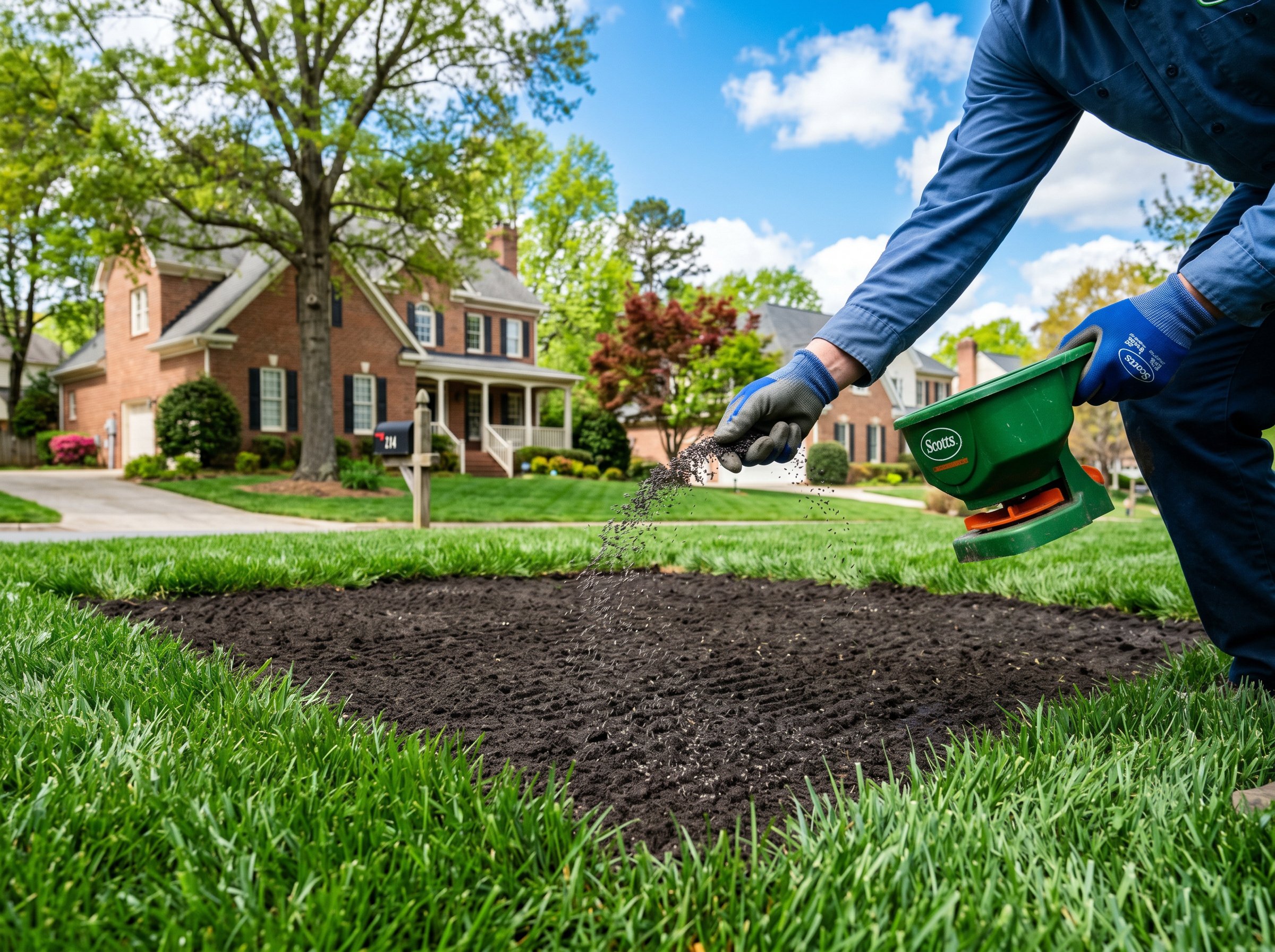
Compacted clay soil is one of the biggest enemies of grass seed germination in Raleigh. Core aeration — ideally done in early-to-mid September before your fall seeding — pulls plugs of soil out of the ground, creating channels for seed, water, and oxygen to reach the root zone[6]. Many homeowners in Apex and Cary rent aerators from local equipment suppliers for a weekend DIY project.
Seed at the Right Rate
For Tall Fescue overseeding in Raleigh, NC State recommends approximately 4–6 lbs of seed per 1,000 square feet for overseeding and up to 8–10 lbs for bare-area renovation. Using too little seed leads to thin, patchy results; too much causes overcrowding and disease pressure[2].
Watch for White Grubs
Timing your seeding also means checking for white grubs, a common soil pest in Wake County that feeds on grass roots and can devastate a newly seeded lawn[5]. If you've had grub damage in past seasons, treat your lawn before seeding and monitor closely through October.
What's the Bottom Line for Raleigh Homeowners?
If you take one thing away from this guide, let it be this: in Raleigh, fall is for Tall Fescue and late spring is for warm-season grasses. Working against those windows — even by just a few weeks — dramatically reduces your odds of a successful lawn.
Here's your action plan:
- Identify your grass type — Tall Fescue, Bermudagrass, or Zoysiagrass
- Order a soil test through NC State Extension — Wake County before the season begins
- Schedule core aeration for early September (for Tall Fescue) or late April (for warm-season grasses)
- Mark your calendar — September 15 to October 15 is the non-negotiable Tall Fescue window in Raleigh
- Monitor for pests — especially fall armyworms in August–September and white grubs through fall
Raleigh's transition-zone climate is genuinely challenging, but thousands of homeowners in North Hills, Wake Forest, Durham, and across Wake County grow beautiful lawns every year by respecting the local calendar. Nail your timing, prep your soil, and you'll be well ahead of most of your neighbors.