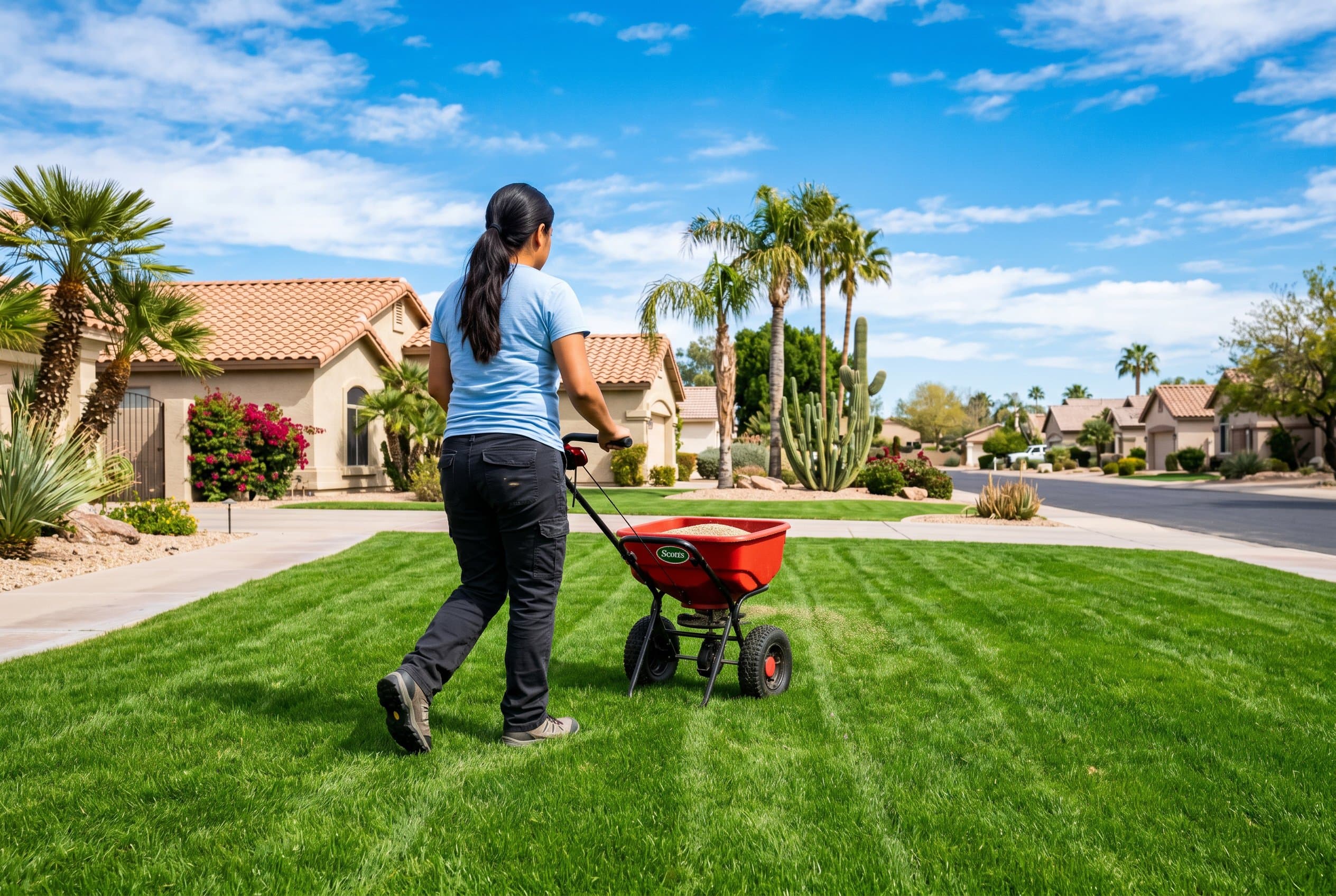

Quick Answer
If you're wondering when to plant grass seed in Phoenix, the answer depends on your grass type. For warm-season grasses like Bermudagrass, the best window is late April through early June, when soil temperatures consistently reach 65°F or higher[3]. For winter ryegrass overseed, target mid-October through early November, well before Phoenix's average first frost around December 13[4]. Planting outside these windows in Phoenix's extreme desert climate will dramatically reduce germination success.
Key Takeaways:
- Plant Bermudagrass seed after soil temps hit 65°F — usually late April to early June in the Phoenix metro area
- Overseed with perennial or annual ryegrass between mid-October and early November to stay ahead of Phoenix's December 13 average first frost
- Phoenix's brutal summer heat (regularly exceeding 110°F) means warm-season grasses need to be established before peak heat arrives in July
- Avoid planting any grass seed during Phoenix's monsoon season (July–September) when timing and soil conditions are unpredictable
- Consult the University of Arizona Cooperative Extension for local variety recommendations suited to Zone 9b conditions
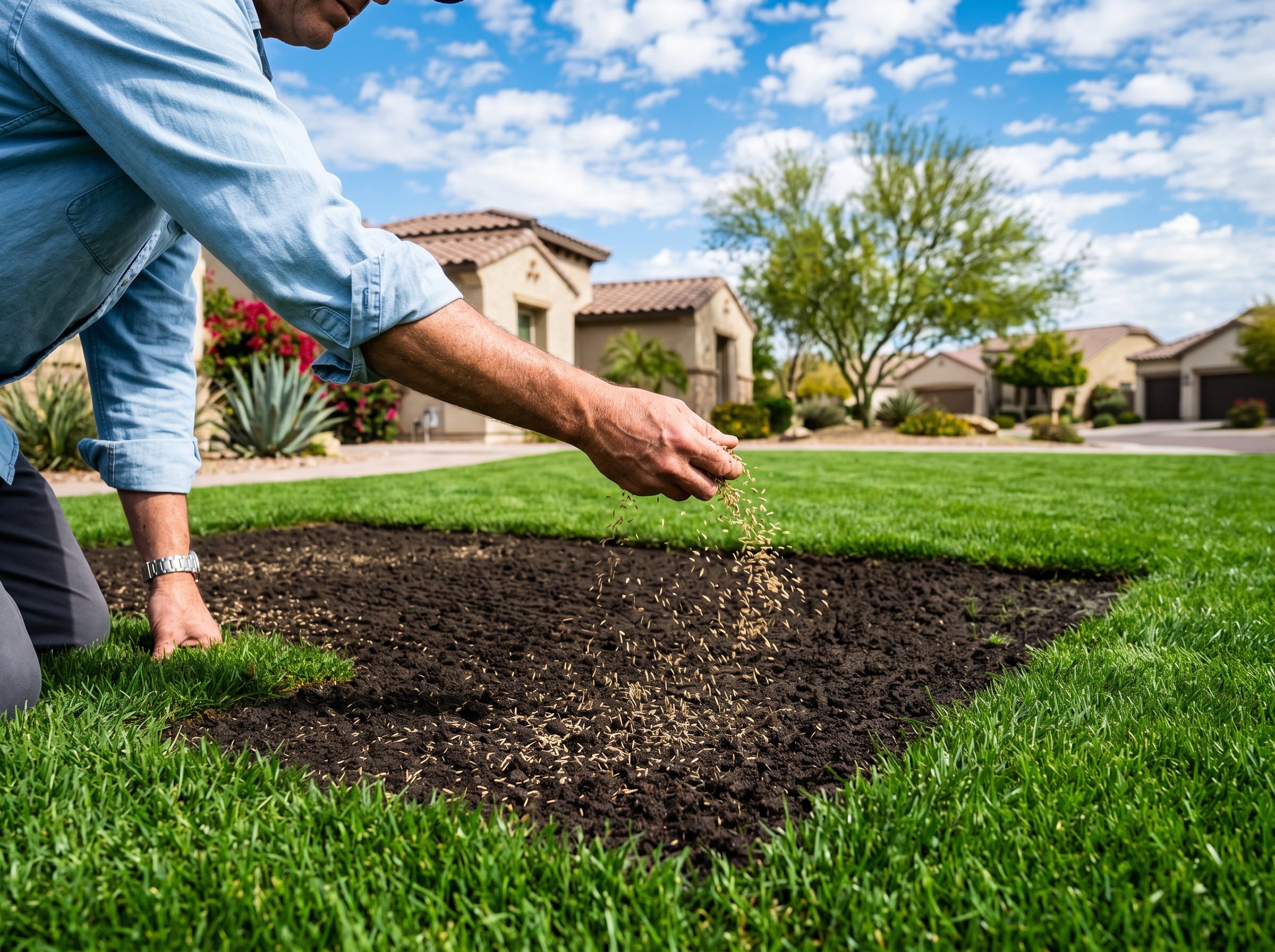
Why Planting Timing Is So Different in Phoenix
Phoenix doesn't follow the same lawn calendar as the rest of the country. Sitting in USDA Hardiness Zone 9b, the Valley of the Sun sees average summer highs that routinely push past 110°F, an annual rainfall of just 8 inches, and soil that can reach scorching temperatures capable of killing germinating seeds outright[1]. At the same time, Phoenix's mild winters — with a last frost averaging around February 5 and a first frost around December 13 — create a surprisingly productive window for cool-season grass overseed that homeowners in Scottsdale, Tempe, Mesa, Chandler, and Gilbert can take full advantage of[4].
Phoenix's low humidity and desert soils also present unique challenges. The sandy, alkaline soils common across the Valley drain quickly and hold little moisture, meaning freshly seeded lawns dry out fast[2]. Watering frequency during germination needs to be higher than in more humid climates, often requiring light irrigation two to three times per day until seedlings establish. Understanding how Phoenix's climate diverges from national averages is the first step to getting your grass seed to actually grow.
When to Plant Grass Seed in Phoenix by Grass Type
Warm-Season Grasses: Late April Through Early June
Bermudagrass is the dominant warm-season turfgrass in Phoenix and across the Sonoran Desert region, prized for its heat tolerance, drought resilience, and ability to recover from heavy foot traffic[1]. Buffalograss is another warm-season option gaining popularity for its low water needs, though it's less commonly established from seed in urban Phoenix yards.
For Bermudagrass seed to germinate reliably, soil temperatures must be at or above 65°F — and ideally closer to 75–80°F for optimal germination rates[3]. In Phoenix, soil temps typically cross the 65°F threshold in late April. Planting between late April and early June gives your Bermudagrass enough time to establish a strong root system before the most punishing heat of July and August arrives.
Avoid planting warm-season grass seed:
- Before mid-April, when cool nights can stall or halt germination
- After mid-June, when seedlings will be hit with extreme heat before they've rooted deeply
- During the monsoon season (July–September), when unpredictable rainfall and humidity can complicate establishment
Cool-Season Overseed: Mid-October Through Early November
Many Phoenix homeowners — especially in premium neighborhoods like Scottsdale and Gilbert — choose to overseed their dormant Bermudagrass lawns with annual or perennial ryegrass each fall to maintain a green yard through winter[1]. This practice, called winter overseeding, is a Phoenix lawn care tradition.
The target window for overseeding in Phoenix is mid-October to early November. You want daytime temperatures to have dropped consistently below 90°F so the cool-season ryegrass can germinate without heat stress, but you also want to plant at least six weeks before Phoenix's average first frost date of December 13 so the grass has time to establish[4]. Planting in late September is too early — the heat will cook the seedlings. Waiting until late November is too risky given frost exposure.
Best Grass Seed for Phoenix Arizona Lawns
Bermudagrass: The Phoenix Standard
Common Bermudagrass and its hybrid varieties are the workhorses of Phoenix lawns. It thrives in Zone 9b's intense heat, tolerates low water once established, and bounces back from the kind of high-traffic use that backyard living in Mesa or Chandler demands[1]. Seeded Bermudagrass varieties — not hybrids, which require sod — are widely available at local garden centers and germinate in 7–14 days when soil temps are optimal[5].
Ryegrass: For Winter Color
Annual ryegrass is the budget-friendly choice for winter overseed, dying off naturally as temperatures climb in spring. Perennial ryegrass offers a finer texture and better appearance but requires more water and careful transition management in spring so it doesn't compete with the returning Bermudagrass[6]. Both types germinate quickly — often within 5–10 days — when soil temps are between 50–65°F, which Phoenix typically sees from mid-October onward.
Buffalograss: A Low-Water Alternative
Buffalograss is increasingly recommended for water-conscious homeowners in the Phoenix area. It requires minimal irrigation once established and handles heat well, though it goes dormant in winter[2]. Unlike Bermudagrass, Buffalograss seed often requires scarification or pre-soaking to break dormancy, and germination can take significantly longer — anywhere from 14 to 30+ days under optimal conditions[3]. Set realistic expectations if you're seeding Buffalograss, and plant it in spring using the same timing guidelines as Bermudagrass.
Phoenix Grass Seed Planting Guide: Soil Prep and Setup
Soil Prep Matters More in the Desert
Phoenix soils are often compacted, alkaline, and low in organic matter — not exactly a seed's dream environment[2]. Before seeding, aerate your lawn to break up compaction and work in a thin layer of compost or topdressing to improve moisture retention. A soil test — available through the University of Arizona Cooperative Extension — can reveal pH imbalances or nutrient deficiencies that need to be corrected before planting[1].
Watering: The Make-or-Break Factor
In Phoenix's dry climate, consistent moisture is critical during germination. Plan to water lightly two to three times daily — approximately 5–10 minutes per irrigation zone per session — to keep the top inch of soil moist without washing seeds away or causing runoff. Once seedlings reach about an inch tall, gradually reduce frequency and increase depth to encourage deep root growth. A smart irrigation controller can help automate this process and prevent the under- or over-watering that kills most seeding attempts in the Valley[2].
Soil Temperature: Don't Skip This Step
Knowing your soil temperature is non-negotiable before you scatter seed. Use an inexpensive soil thermometer — available at most Phoenix garden centers — to check the temperature at a 2-inch depth before planting. Target 65°F minimum for Bermudagrass, 50–65°F for ryegrass, and 65°F+ for Buffalograss[3][5]. Planting based on calendar dates alone without confirming soil temps is one of the most common seeding mistakes Valley homeowners make.
Watch for Local Pests
Phoenix lawns are vulnerable to white grubs, Bermuda mites, and billbugs — pests that can devastate a newly seeded lawn before it has a chance to establish[1]. Inspect your soil before seeding and treat any active infestations. A newly germinated lawn has no tolerance for pest pressure, so addressing problems before you seed is far more effective than treating after.
Your Next Steps as a Phoenix Homeowner
Getting the timing right is the single most important factor in Phoenix grass seeding success. Mark your calendar: late April to early June for Bermudagrass, and mid-October to early November for ryegrass overseed. Prep your soil, set up a reliable irrigation schedule, and don't skip the pest check before you scatter a single seed.
For variety-specific recommendations and local soil resources, the University of Arizona Cooperative Extension is your best local resource — their agents understand Zone 9b conditions in the Phoenix metro area better than any national publication can[1]. Whether you're in a Scottsdale luxury community or a Mesa family neighborhood, the right seed at the right time makes all the difference in the desert.