
Quick Answer
The best time to plant grass seed in Houston is late spring through early summer, roughly mid-April through June, after soil temperatures consistently reach 65–70°F and the risk of frost has fully passed. If you're wondering when to plant grass seed in Houston, the city's average last frost falls around February 14, but warm-season grasses need warm soil — not just frost-free air — to germinate and establish before the brutal summer heat arrives[1]. Homeowners in Katy, Sugar Land, and The Woodlands should follow the same general window, as Harris and surrounding counties share similar Zone 9a conditions.
Key Takeaways
- The ideal planting window in Houston is mid-April to June, timed after the last frost (avg. Feb 14) and once soil temps hit 65–70°F
- Bermudagrass is the most seed-friendly warm-season option for Houston; St. Augustinegrass and Zoysiagrass are better established via sod or plugs
- Planting too early risks seed failure from cold soil; planting too late exposes new grass to Houston's extreme summer heat and drought stress
- Houston's clay-heavy soils require amendment and proper seedbed preparation for successful germination
- Texas A&M AgriLife — Harris County is the go-to local resource for soil testing, variety selection, and planting guidance
Introduction: Why Houston's Climate Makes Grass Seeding Unique
Houston is a lawn grower's paradox. With 50 inches of annual rainfall, warm winters, and a long growing season in USDA Hardiness Zone 9a, it sounds like the perfect place to grow a lush lawn[2]. And it can be — but only if you work with the climate, not against it.
The city's notorious humidity, summer temperatures that regularly exceed 95°F, and heavy clay soils create a narrow window where grass seed can actually germinate and establish before stress kicks in. Plant too early and cold soil stalls germination. Plant too late and new seedlings get scorched before their root systems can support them. Add in local threats like chinch bugs and armyworms that target young, vulnerable turf, and timing suddenly matters more than almost any other factor[3].
Understanding Houston's specific frost dates, soil behavior, and grass type options is the foundation of a successful seeding project — and that's exactly what this guide covers.
When to Plant Grass Seed in Houston: The Complete Timing Guide
Houston's last average frost is February 14, but that date alone shouldn't trigger your planting schedule[1]. Warm-season grasses — the only practical choice for Houston's climate — require soil temperatures of at least 65°F, and ideally 70°F, before seeds will germinate reliably[4].
In practice, Houston soil typically reaches those temperatures in mid to late April. That makes the window from mid-April through the end of June your primary planting zone. Here's how to think about timing within that window:
April 15 – May 15: The Sweet Spot
This is prime planting time across Houston and suburbs like Memorial, Heights, and Sugar Land. Soil is warming, spring rains are still active, and there are enough weeks before peak summer (July–August) for roots to establish. Bermudagrass planted in this window typically fills in well before heat stress becomes a factor[4].
May 15 – June 30: Still Viable, But Water Carefully
Seeding in late May or June is still possible but requires more attentive irrigation. Houston's summer heat ramps up quickly, and seedlings will need consistent moisture — often daily watering in short cycles — to survive establishment. If you miss the April–May window, late June is your cutoff[5].
What About Fall Seeding?
Fall seeding is common in cooler climates, but not recommended for Houston. Warm-season grasses planted in fall don't have time to establish before the first frost (avg. December 10), leaving new turf vulnerable to winter kill. Stick to the spring-summer window[1].
What Grass Seed Works Best in Houston?
This is where many Houston homeowners hit a wall: not all grass types common in Houston can be easily grown from seed. Choosing the right variety is just as important as knowing when to plant grass seed in Houston.
Bermudagrass: The Best Seed Option for Houston
Bermudagrass is the most widely seeded warm-season grass in the Houston area and across Zone 9a[2]. It germinates quickly in warm soil, tolerates Houston's heat and humidity, and recovers well from summer stress. Common and improved varieties are available as hulled seed, making it accessible and affordable for large lawns in areas like Katy and The Woodlands[6].
- Seeding rate: 1–2 lbs of hulled seed per 1,000 sq ft
- Germination time: 7–14 days in warm soil (70°F+)
- Best use: Full sun areas, high-traffic lawns
St. Augustinegrass: Sod or Plugs Only
St. Augustinegrass is the most popular lawn grass in Houston — and for good reason. It handles the heat, tolerates partial shade, and has a thick, lush appearance that homeowners in neighborhoods like Memorial and The Heights love[3]. However, St. Augustinegrass does not produce viable seed commercially. You'll need to install it via sod or plugs, ideally during the same late-April to June window.
Zoysiagrass: Slow But Worth It
Zoysiagrass is a premium option for Houston lawns, offering excellent heat tolerance and a dense turf that resists weeds. Some Zoysia varieties are available by seed, but establishment is very slow — often taking a full season or more[5]. Most Houston homeowners find sod or plugs more practical. If you do seed Zoysia, the same spring timing applies.
How to Prepare Your Houston Lawn for Grass Seed Planting
Houston's dominant soil type is heavy black clay (Houston Black Clay in many western suburbs, Beaumont Clay in the east). This soil holds water, compacts easily, and can form a hard crust that prevents seeds from making good contact with the soil below[1]. Preparation is non-negotiable.
Step 1: Get a Soil Test
Before you buy a single bag of seed, submit a soil sample to the Texas A&M AgriLife — Harris County Extension office. They offer affordable soil testing that tells you your pH, nutrient levels, and organic matter content[1]. Houston soils are often alkaline, and a simple amendment like sulfur can dramatically improve germination success.
Step 2: Address Compaction
Core aerate compacted clay areas before seeding. This opens up the soil, improves water infiltration, and gives seeds better contact with the ground. In heavily compacted areas — common in newer developments in Katy or Sugar Land — this step can make or break your results[4].
Step 3: Amend and Grade
Work a 1–2 inch layer of compost into the top 4–6 inches of soil where possible. Level low spots that collect standing water, as Houston's rainfall can drown new seedlings quickly in poorly drained areas.
Step 4: Seed, Cover, and Water
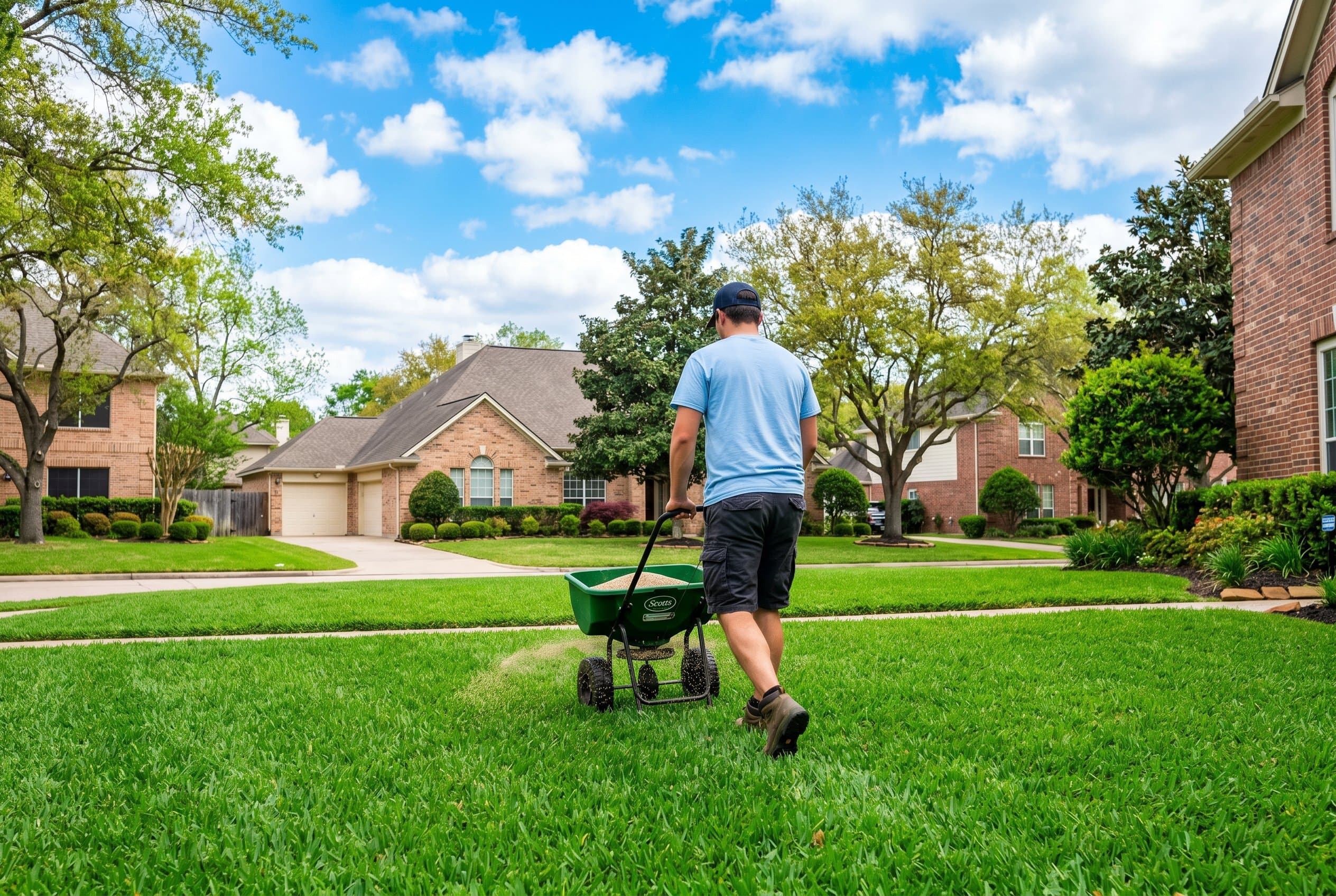
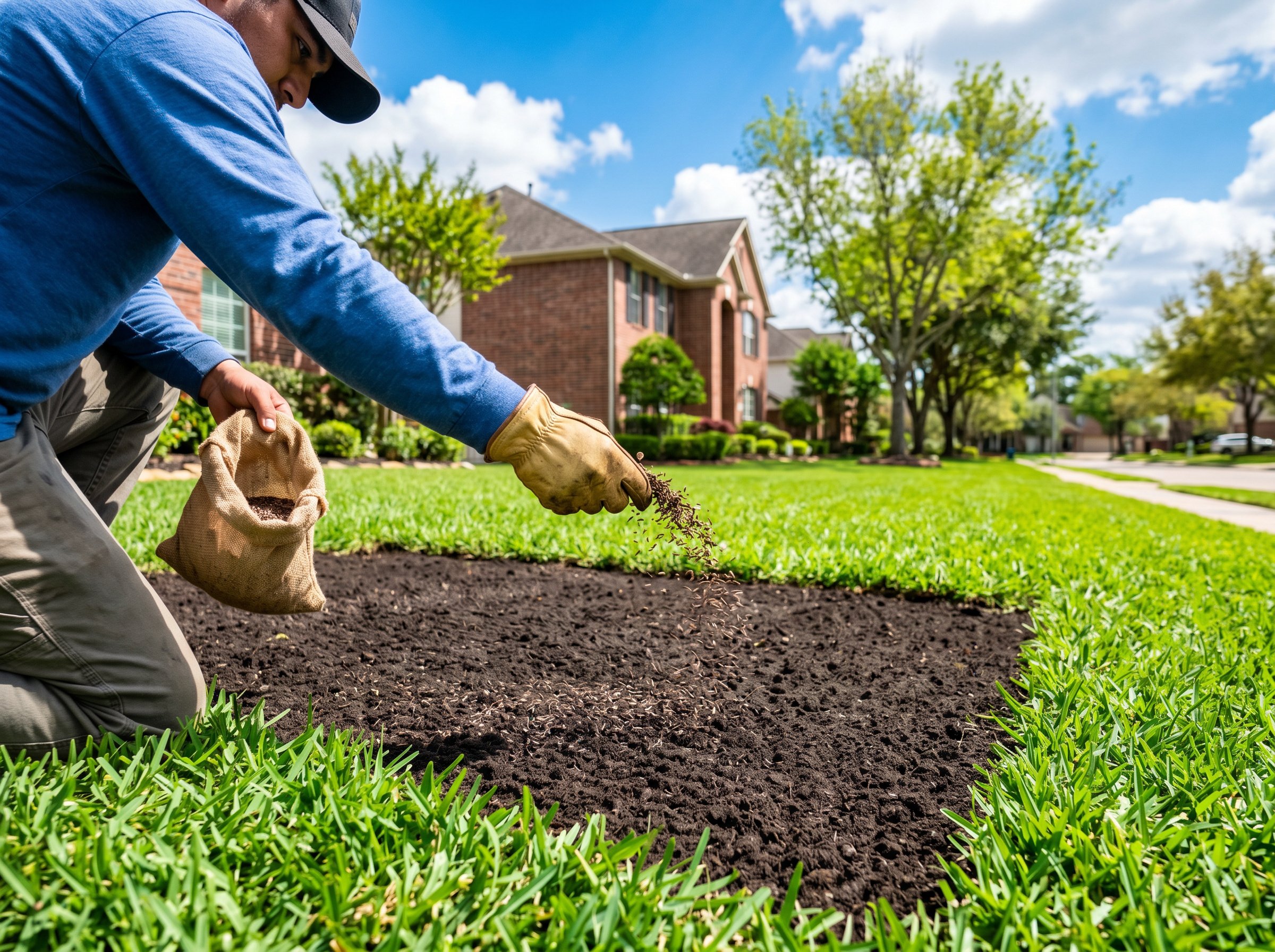
Broadcast seed evenly using a rotary spreader. Lightly rake seed into the top ¼ inch of soil and apply a thin layer of straw mulch to retain moisture. Water lightly 2–3 times per day to keep the seedbed moist until germination, then transition to deeper, less frequent watering to encourage root development[6].
A Note on Pests
Keep an eye out for chinch bugs and armyworms once your lawn is establishing — both are common Houston threats that can devastate new turf before it has a chance to fill in[3]. Monitor your lawn weekly during the growing season and consult Texas A&M AgriLife resources if you spot irregular brown patches or feeding damage.
Conclusion: Your Next Steps for a Houston Lawn
If you're planning to seed or overseed your Houston lawn, circle mid-April to late May on your calendar as your primary target window. Confirm soil temperatures with an inexpensive soil thermometer before seeding. If you're committed to St. Augustinegrass — the gold standard for Houston lawns — plan for sod or plugs instead of seed, and install them during the same warm-season window.
Before you spend money on seed or materials, reach out to the Texas A&M AgriLife — Harris County Extension for a soil test and local variety recommendations tailored to your specific neighborhood and soil type[1]. Their guidance is free or low-cost and will save you from costly mistakes.
Houston's climate gives you a genuinely great lawn-growing environment — if you respect the timing. Nail the planting window, prepare your soil, and stay ahead of pests, and you'll have the thick, green lawn that makes your neighbors in The Woodlands or Sugar Land stop and stare.