
Quick Answer
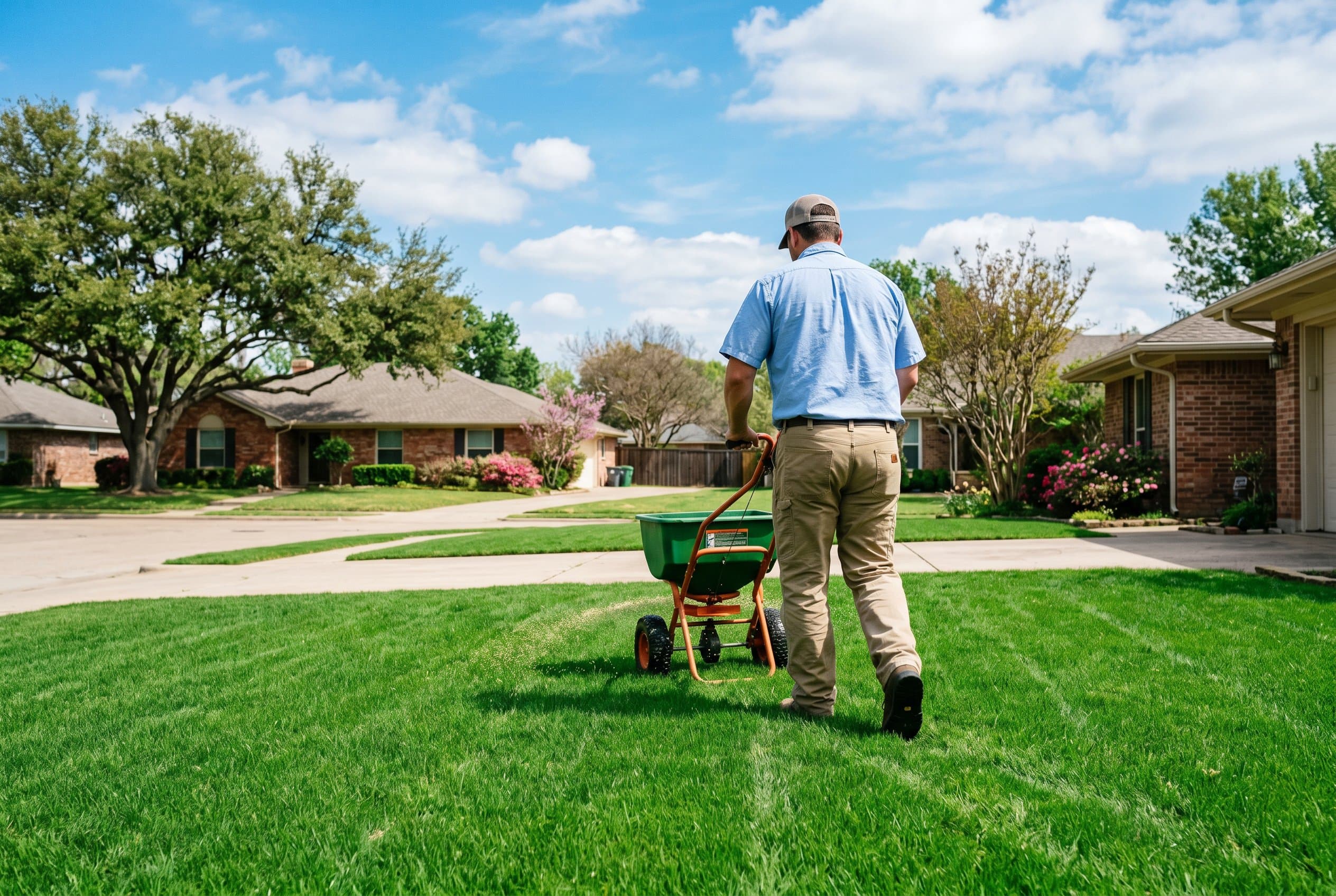
The best time to plant grass seed in Dallas, TX is late spring — typically mid-April through June — for warm-season grasses like Bermudagrass and Zoysiagrass, once soil temperatures consistently reach 65–70°F and frost risk has passed[1]. Dallas's average last frost falls around March 12, and the average first fall frost arrives around November 22[2]. If you're overseeding dormant Bermudagrass with cool-season ryegrass for winter color, target mid-October through early November.
Key Takeaways
- Knowing when to plant grass seed in Dallas starts with soil temperature — warm-season grasses need 65–70°F at a 2-inch depth, typically reached mid-April to early May
- Dallas's average last frost is March 12; avoid seeding warm-season grasses before this date
- Cool-season overseeding with annual ryegrass works best from mid-October to early November, ahead of the November 22 average first frost
- Dallas's heavy clay soils require proper preparation — aeration, dethatching, and pH correction — before seeding
- Bermudagrass is the most widely adapted and commonly seeded grass for Dallas's USDA Zone 8a climate
- Texas A&M AgriLife Extension is your most reliable local resource for variety recommendations and planting timing
Why Timing Is Everything for Dallas Lawns
Dallas sits in USDA Hardiness Zone 8a, where summers are brutally hot and long, winters are mild but punctuated by occasional hard freezes, and the climate transitions from humid in the east to more arid conditions moving west[3]. That combination makes grass seed timing more nuanced than in most U.S. cities.
Plant warm-season seed too early in March, and a late frost can wipe out tender seedlings before they establish. Plant too late in July or August, and your new grass faces relentless 100°F heat with no established root system to survive it. Neighborhoods like Lakewood and Highland Park, which feature older, established lawns with dense tree canopies, add shade variables that can further shift optimal planting windows.
Dallas also sits atop expansive clay soils in many areas. These soils drain poorly, compact easily, and can form a surface crust that prevents seed-to-soil contact — one of the most common reasons grass seed fails to germinate[4]. Getting the timing right means nothing if the seedbed isn't properly prepared.
When to Plant Grass Seed in Dallas by Grass Type
The answer to when to plant grass seed in Dallas depends primarily on which type of grass you're planting.
Cool-Season Overseeding (Annual Ryegrass)
Many Dallas homeowners overseed dormant Bermudagrass lawns in fall with annual ryegrass to maintain green color through winter. This is a cosmetic practice, not a permanent grass replacement[5].
The window for cool-season overseeding in Dallas runs from mid-October through early November — far enough past the summer heat for ryegrass to germinate, but well ahead of the average first frost on November 22[2]. Seeding too late risks frost damage to young ryegrass seedlings before they can harden off.
- Mid-October to early November: Optimal overseeding window
- Avoid: Overseeding before Bermudagrass fully goes dormant, as competition between grasses reduces establishment success
Warm-Season Grasses (Bermudagrass, Zoysiagrass)
Bermudagrass is the dominant lawn grass across Dallas and the Dallas–Fort Worth Metroplex — and for good reason. It thrives in full sun, tolerates heat and drought, and recovers aggressively from summer stress[1]. Zoysiagrass is another solid option for homeowners in areas like Frisco and Plano who want a denser, slightly more shade-tolerant lawn.
For both grasses, the seeding window opens after Dallas's average last frost of March 12, but soil temperature — not the calendar — is the real trigger[2]. Bermudagrass seed germinates reliably when soil temperatures reach 65–70°F at a 2-inch depth, which in Dallas typically occurs between mid-April and early May. Planting from late April through June gives seed time to germinate and establish a strong root system before the peak summer heat of July and August[1].
- Mid-April to June: Ideal window for Bermudagrass and Zoysiagrass seed
- Soil temp target: 65–70°F minimum for warm-season germination
- Avoid: Seeding after late June, as establishment time before summer stress becomes insufficient
How to Prepare Your Dallas Lawn for Grass Seed
Proper seedbed preparation is the single biggest factor in germination success, especially given Dallas's problematic clay soils. This is where many Dallas homeowners lose the battle before it starts.
Soil Testing First
Before you buy a single bag of seed, test your soil. Dallas soils tend to be alkaline (pH 7.5–8.0 is common), which can lock up nutrients and limit grass establishment[3]. Texas A&M AgriLife Extension offers soil testing guidance and can connect you with local resources to get an accurate read on your lawn's pH, nutrient levels, and organic matter content.
Core Aeration
If your lawn has compacted clay soil — common in older neighborhoods like Lakewood or established suburbs like Richardson — core aerate before seeding. Aeration breaks up compaction, improves seed-to-soil contact, and enhances water infiltration[4]. For best results, aerate in early spring before warm-season seeding or in early fall before overseeding. Use our aeration cost calculator to estimate what professional core aeration will run for your yard size before scheduling.
Seedbed Preparation Steps
- Mow existing grass as short as possible before seeding
- Dethatch if thatch layer exceeds ½ inch — heavy thatch prevents seed from reaching soil
- Core aerate compacted areas, especially high-traffic zones
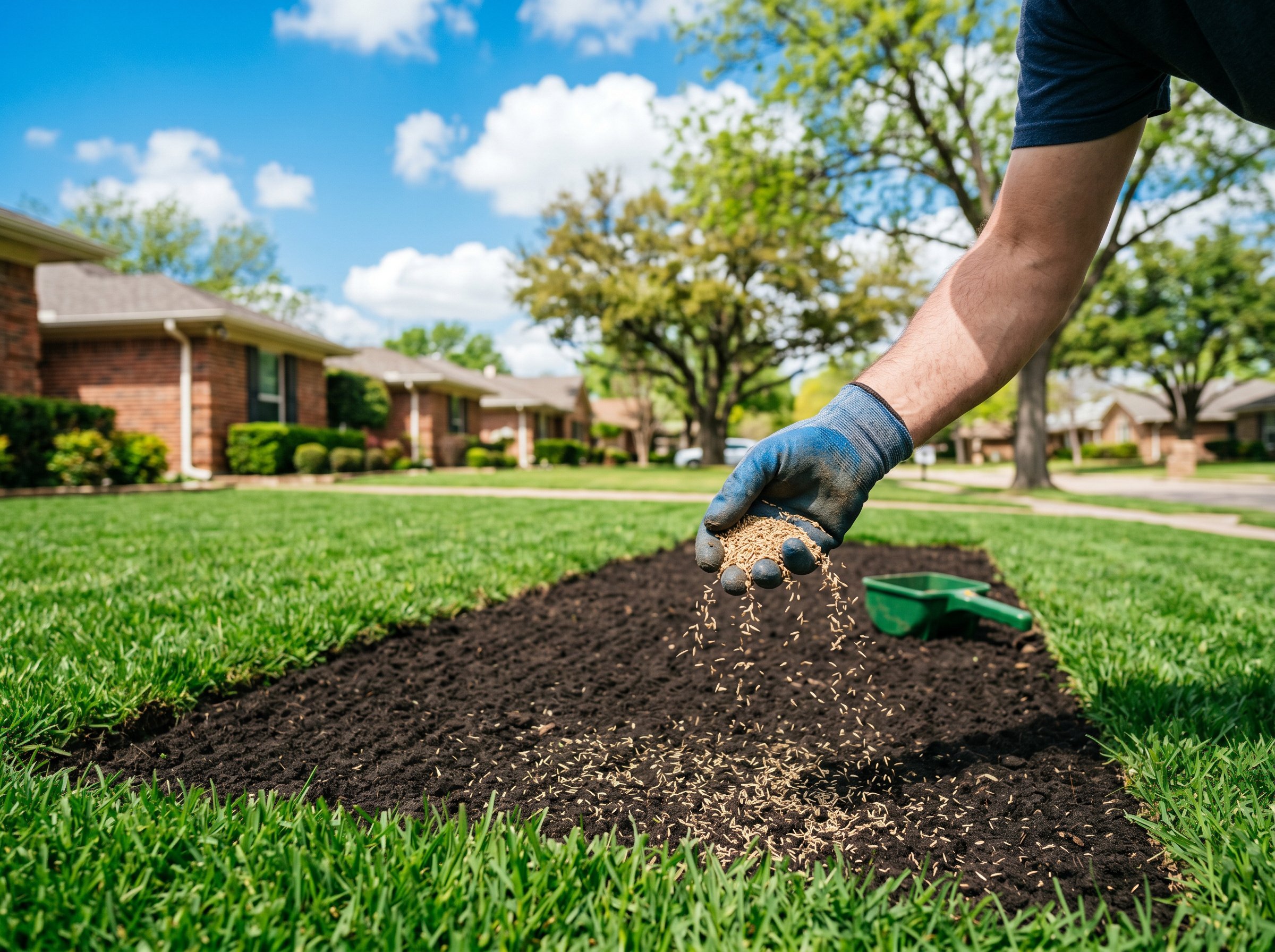
- Lightly rake or drag seed into soil surface after spreading — seed needs direct soil contact to germinate
- Apply a starter fertilizer (high in phosphorus) to support root development in new seedlings[6]
- Water lightly but frequently (2–3 times per day) until germination occurs, then transition to deeper, less frequent irrigation
Pest Awareness During Establishment
Dallas lawns face pressure from chinch bugs, white grubs, and fire ants year-round. New seedlings are especially vulnerable. Chinch bugs, in particular, thrive in hot, dry conditions and can devastate newly seeded Bermudagrass in late spring[1]. Scout your lawn weekly during establishment and treat early if pest populations are detected. Avoid applying broad-spectrum insecticides during germination, as some products can inhibit seedling development.
What Grass Seed Works Best in Dallas?
Not all grass seed is created equal for Dallas's Zone 8a conditions. Here's a quick breakdown of your best options.
Bermudagrass
The gold standard for Dallas lawns. Heat-tolerant, drought-resistant, and highly traffic-tolerant. Seeded varieties — look for improved turf-type Bermudagrass cultivars — perform well across sun-drenched yards in Highland Park, Frisco, and throughout the metroplex[4]. Requires full sun — at least 6–8 hours daily.
Zoysiagrass
A slower-establishing but durable option that handles moderate shade better than Bermudagrass. Ideal for homeowners in Lakewood or tree-dense areas of Richardson. Zoysia seed can be slow to germinate (up to 3 weeks), so planting earlier in the warm-season window — late April to May — is important[1].
St. Augustinegrass
St. Augustine is widely grown in Dallas but is typically not available as seed — it's established via sod or plugs only. If St. Augustine is your goal, sodding in late spring is your path, not seeding.
Annual Ryegrass (Winter Overseeding Only)
Not a permanent grass — used solely to maintain winter color over dormant Bermudagrass. Germinates quickly in cool temperatures and dies off naturally as summer heat returns[5].
When to Plant Grass Seed in Dallas: Your Action Plan
Timing your grass seed correctly in Dallas comes down to respecting the city's frost dates, monitoring soil temperatures, and choosing a grass type matched to your yard's sun exposure and soil conditions.
Here's a simple action plan:
- Now (late winter/early spring): Test your soil through Texas A&M AgriLife Extension and plan your seed variety
- After March 12 (last frost): Monitor soil temps; begin seedbed preparation — aeration, dethatching, and fertilizer application
- Mid-April to June: Seed Bermudagrass or Zoysiagrass once soil temps hold at 65°F+
- Mid-October to early November: Overseed with annual ryegrass if desired for winter color
- Year-round: Scout for chinch bugs and other Dallas-specific pests, especially during new seedling establishment
For personalized guidance on grass selection, soil amendments, and local pest management, bookmark the Texas A&M AgriLife — Dallas County extension at dallas.agrilife.org. Their team understands Dallas's specific growing conditions far better than generic national guides.